

Xiaomi 18 Fold: The new mid-foldable will be presented on September 7
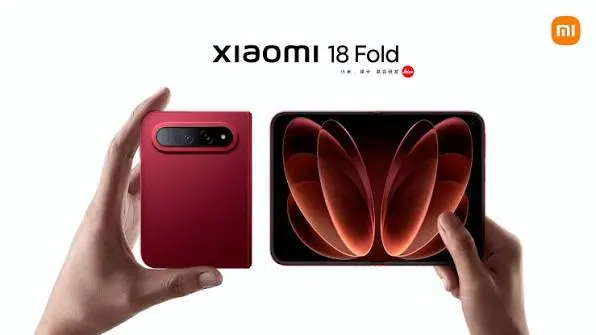
Xiaomi is set for a major launch this fall, with the firm confirming that the Xiaomi 18 Fold will be unveiled on September 7 at its autumn flagship event. The design has been officially revealed following numerous leaks in recent days.
The brand refers to its approach as “mid-fold”, aiming to create a foldable device that is more compact than traditional large formats yet spacious enough when opened for multitasking and content consumption. This intermediate positioning is already being touted as a potential direction for future foldable smartphones by Xiaomi.
A foldable in passport size
The Xiaomi 18 Fold features a 5.38-inch external display and a main screen of 7.58 inches. Xiaomi emphasizes the balance between compactness and usability. When closed, the smartphone is about the size of a passport, making it lightweight and easy to use with one hand. Once opened, the 7.58-inch display adopts a new aspect ratio suitable for multitasking and video.
This combination is what the brand refers to as “mid-fold.”
The company believes that while current large foldables provide excellent display areas when opened, users frequently utilize the external screen. On the other hand, more compact formats offer improved mobility but require compromises for a true large-screen experience.
The Xiaomi 18 Fold aims to find a middle ground.
Xiaomi aims to avoid the traditional compromise of large foldables
This consideration regarding proportions is likely more critical than just the screen diagonal. Early large foldable smartphones often emphasized having a massive internal display, even at the cost of making the closed device somewhat thick or cumbersome.
Recent generations, however, have sought to align the external experience closer to that of a traditional smartphone.
Xiaomi has taken this approach further by intentionally reducing the overall bulk of the product. The goal isn’t to create the largest foldable on the market but to design a device that can be comfortably used while closed throughout the day, only opening it when extra space is genuinely required.
If the ergonomics are on point, this strategy could solve one of the primary challenges in the segment.
Design officially showcased in red
Xiaomi showcased the phone in a striking red finish. At the back, the brand replaces the large, circular camera modules typical of its Ultra models with a horizontal camera bar. This module houses three cameras and a flash, giving the Xiaomi 18 Fold a distinct identity compared to previous foldables and emphasizing that Xiaomi aims to create an independent flagship rather than a simple foldable iteration of its traditional smartphones.
The design remains relatively understated despite the vivid color, which may help it stand out in a market where bulky camera modules have become almost standard.
Leica contributes to the camera system
Xiaomi has also confirmed Leica’s involvement in developing the camera system. While specific details about the three sensors have not been revealed, this collaboration clearly indicates that the 18 Fold will not be treated as a secondary model.
This is an important point; foldables have historically imposed photographic compromises due to their architecture, leaving less room for large sensors, long focal lengths, and stabilization systems. Xiaomi appears to be avoiding this trend by positioning the 18 Fold among its most ambitious products.
Lu Weibing, who oversees Xiaomi’s smartphone operations, describes it as the most advanced flagship in the lineup and as a model intended to compete directly with traditional numbered series.
The Xring O3 will power the Xiaomi 18 Fold
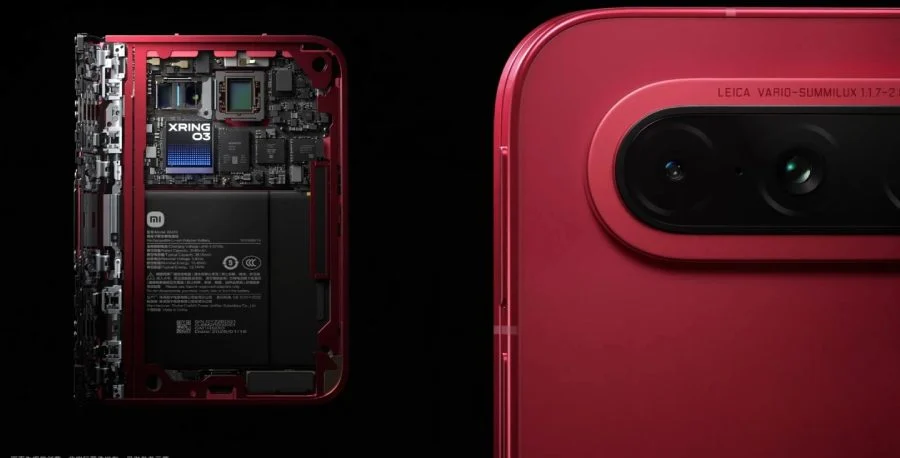
Under the hood, the Xiaomi 18 Fold will be powered by the new Xring O3, the second major generation of mobile chip designed in-house by Xiaomi. The SoC has already appeared in several benchmarks prior to its official launch and is a key component of the company’s verticalization strategy.
Integrating it into such a strategic foldable is significant.
Xiaomi could have opted for a more proven Qualcomm chip to mitigate risks associated with a premium product. Instead, by using the Xring O3, the company shows it believes its silicon is now mature enough for its most ambitious devices.
The Xiaomi Pad 9 Pro Max, revealed at the same event, will also utilize this chip.
LPDDR6: Another technological showcase
The Xiaomi 18 Fold will also be among the first smartphones to feature the new LPDDR6 memory from CXMT. Xiaomi had already confirmed this integration ahead of the event. This upgrade can provide increased bandwidth while potentially improving energy efficiency, both crucial for local AI applications and multitasking.
In a foldable device, where the main display naturally encourages the simultaneous use of multiple applications, faster memory can significantly impact overall fluidity.
The combination of Xring O3 and LPDDR6 highlights Xiaomi’s intent to use the 18 Fold as a demonstrator of its latest technologies.
Surge OS 4 and MiMo for local AI
The smartphone will ship with Surge OS 4 and will integrate the local AI model MiMo. This software component will be particularly vital in justifying the new format. A 7.58-inch screen is only beneficial if the system can effectively leverage the additional space for multitasking, windows, productivity tools, and tailored AI features.
Xiaomi appears to want to bring its hardware, silicon, and software closer together, similar to what Apple and Huawei do within their ecosystems.
The Xiaomi 18 Fold thus becomes a strategic product beyond the foldable market: it serves as a showcase for how far Xiaomi can go when it controls a growing part of the platform.
A new “dragon bone” hinge
The brand also presented a new hinge structure named “dragon bone”. Xiaomi has yet to provide extensive public details about the mechanical aspects, but this design is meant to enhance durability while maintaining a compact format.
The company also claims to have developed a new simulation-based testing system to evaluate the foldable’s durability. This is a critical issue, as the thinness has become one of the main selling points of foldable smartphones but can conflict with long-term rigidity and resistance.
The market is beginning to show the limitations of this race for thinness, particularly during severe torsion tests on certain competing models. Xiaomi will need to prove that its new format does not sacrifice robustness.
The “mid-fold” could emerge as a new category
Lu Weibing doesn’t present the Xiaomi 18 Fold as merely an isolated product. According to him, the intermediate format could represent a significant direction for the entire market.
This hypothesis is credible. Manufacturers have already experimented with various types of foldables: large book models, compact clamshells, tri-folds, and particularly thin devices. The next differentiation terrain may thus involve general proportions rather than hinge technology.
A slightly smaller foldable smartphone may be more enjoyable to carry while still providing enough space to deliver real value when opened. This is precisely the compromise Xiaomi wants to test with the Xiaomi 18 Fold.
Samsung has shown that proportions can make all the difference
The reported success of the Galaxy Z Fold 8 illustrates the importance of this parameter. Samsung recently revised the proportions of its Fold thoroughly to offer a larger and more comfortable experience when closed. Demand has reportedly exceeded the company’s initial forecasts.
This evolution shows that after several generations focused on thinness or performance, general ergonomics has returned to the forefront. Xiaomi seems to be drawing a similar conclusion but with an even more compact interpretation. The “mid-fold” could thus become one of the new battlegrounds in the market.
A product designed to compete with traditional flagships
Xiaomi’s messaging is also revealing. The company wants foldables no longer to be viewed as experimental products or niche devices laden with compromises.
The Xiaomi 18 Fold is presented as a true flagship capable of competing with the best traditional smartphones in the brand’s lineup. This means expectations will be high in all areas: photography, battery life, performance, software, finish, and durability. The mere ability to crease will no longer suffice to justify its positioning.
This is likely a healthy evolution for the segment.
The September 7 event will be especially packed
The Xiaomi 18 Fold will not be the only star of the event. Xiaomi is also set to unveil the N70 Pro, N70 Max, N90 Max, along with the Xiaomi Pad 9 Pro Max. The tablet will share the Xring O3 chip with the foldable smartphone, reinforcing the idea of a unified platform around the new in-house silicon.
The event promises to be much more than just a smartphone launch.
Xiaomi appears to be preparing a comprehensive demonstration of its new generation of products, with the 18 Fold serving as the technological showcase.
The 18 Fold could be more significant for Xiaomi than its actual sales
Foldables remain a relatively limited volume segment compared to traditional smartphones. However, their role extends far beyond sales figures. They serve as a testing ground for new batteries, hinges, displays, internal architectures, and multitasking software.
In the case of the Xiaomi 18 Fold, they also serve as a showcase for Xring O3, LPDDR6 memory, and MiMo. Even if the product remains expensive and somewhat niche, it can thus impact future traditional smartphones from the brand.
This is also why Xiaomi emphasizes its flagship status so much.
The real test will be balance, not specs
On paper, the Xiaomi 18 Fold already boasts many strengths: a more compact design, a sufficiently large internal screen, an in-house SoC, LPDDR6 memory, a collaboration with Leica, and a new hinge. However, the success of the concept will primarily depend on how these elements work in harmony.
If the phone is genuinely pleasant to use when closed without compromising the size of the internal screen too much, Xiaomi may have found a particularly relevant compromise. Conversely, an overly compact device could undermine the very appeal of the foldable format. Thus, it is less about the exact size of the screens than the overall coherence that will determine whether the “mid-fold” deserves to become a new category.
September 7 will allow the unveiling of the last details, but Xiaomi has already set the tone: with the 18 Fold, it aims to redefine the very proportions of the product.



