

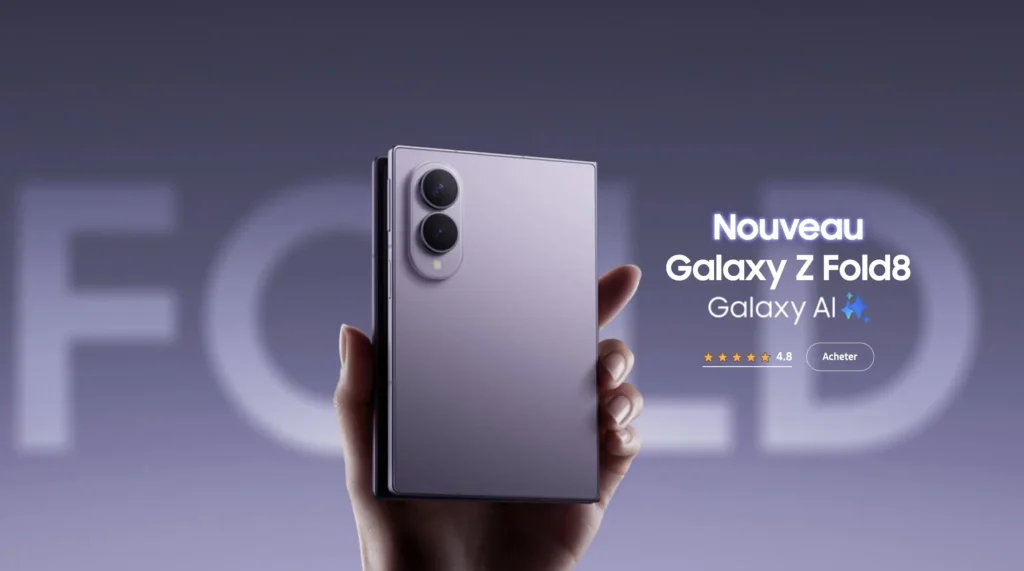
Galaxy Z Fold 8: the new format is a hit, but Samsung is already lacking components to meet demand
Samsung’s gamble on a wider and more compact Galaxy Z Fold 8 appears to have found its audience sooner than expected. According to a report from South Korea, the demand for the new foldable has significantly exceeded internal forecasts, leading to an unexpected problem: Samsung is now facing a shortage of specific components to keep up with production.
The bottleneck isn’t due to the foldable display or the battery but involves a much smaller component—the Display Driver IC (DDI). Due to insufficient production capacity at its foundry, Samsung has even begun reallocating chips initially meant for certain smartphones scheduled for 2027 to the Galaxy Z Fold 8.
The Galaxy Z Fold 8 is selling much better than anticipated
The Galaxy Z Fold 8 marks a significant departure from previous generations. Samsung has abandoned the very elongated format that historically characterized its Fold series in favor of a shorter, wider design often referred to as a “passport” format.
This change might have seemed risky. The narrow silhouette of earlier Folds had become instantly recognizable, and Samsung could have continued refining a well-established formula.
However, early indicators suggest that this risk is paying off. According to ZDNet Korea, demand has exceeded the manufacturer’s initial projections, creating unusual pressures on certain components.
Samsung has already authorized additional production of about one million units to meet this unexpectedly high interest.
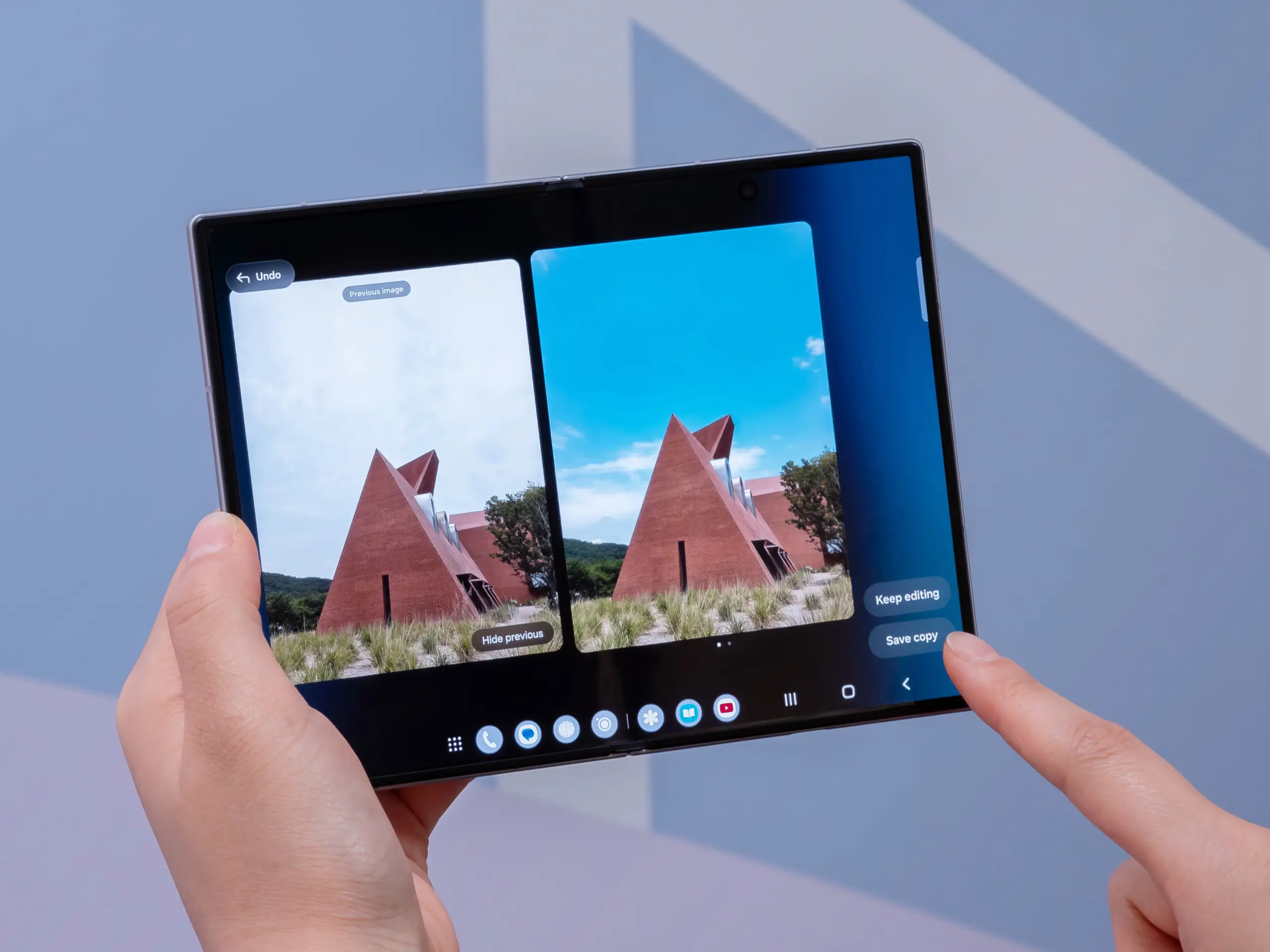
A small component is now blocking all production
The issue concerns the Display Driver ICs, commonly abbreviated as DDI. These integrated circuits enable communication between the smartphone’s processor and the display. They control how pixels are activated and are thus an essential part of the display system.
On a conventional smartphone, this type of component may seem relatively mundane. However, on a unique foldable like the Galaxy Z Fold 8, the situation is different: the controller is designed around the specific characteristics of the panel and cannot be easily replaced by a generic chip.
The DDI used in the Galaxy Z Fold 8 was designed by Samsung’s System LSI division and then sent to the Taiwanese foundry UMC for manufacturing.
UMC manufactures the chip using a 22 nm process
The component is manufactured using a 22 nm process at UMC. Such precision may seem outdated compared to the 2 or 3 nm processes used for the most advanced processors, but display circuits don’t require the same manufacturing technologies as a high-end SoC.
Mature processes are still widely used for this type of component, particularly because they offer better cost management and high yields. The issue is that these production lines are heavily stressed.
According to the report, UMC’s 22 nm capacities are already largely reserved by its existing clients, preventing the foundry from rapidly increasing production for Samsung.
Samsung reportedly requested a priority order, but to no avail
In light of the unexpected surge in demand, Samsung reportedly sought to obtain more capacity from UMC. However, the foundry did not agree to treat the order as a priority, as its lines were already engaged with other contracts.
This situation illustrates an essential reality of the semiconductor industry: even when a smartphone manufacturer has the financial resources needed, rapidly increasing production of a specific chip remains extremely challenging.
Wafers take several weeks, sometimes months, between the start of production and the actual availability of usable components. Therefore, Samsung could not simply order more DDIs and expect to receive them a few days later.
Components originally slated for 2027 were reallocated
To sustain the production of the Galaxy Z Fold 8, Samsung ultimately chose a more immediate solution: reallocating a portion of the DDI volume initially reserved for smartphones planned for 2027. This decision addresses current demand, but it obviously does not create any additional capacity.
Samsung is merely shifting the problem in its supply chain timeline. The manufacturer will have to replace these volumes later or adjust orders for its future devices when more capacity becomes available.
This decision is quite revealing of the importance of the Galaxy Z Fold 8 within the current priorities of the company.
The new format seems to have changed the perception of the Fold
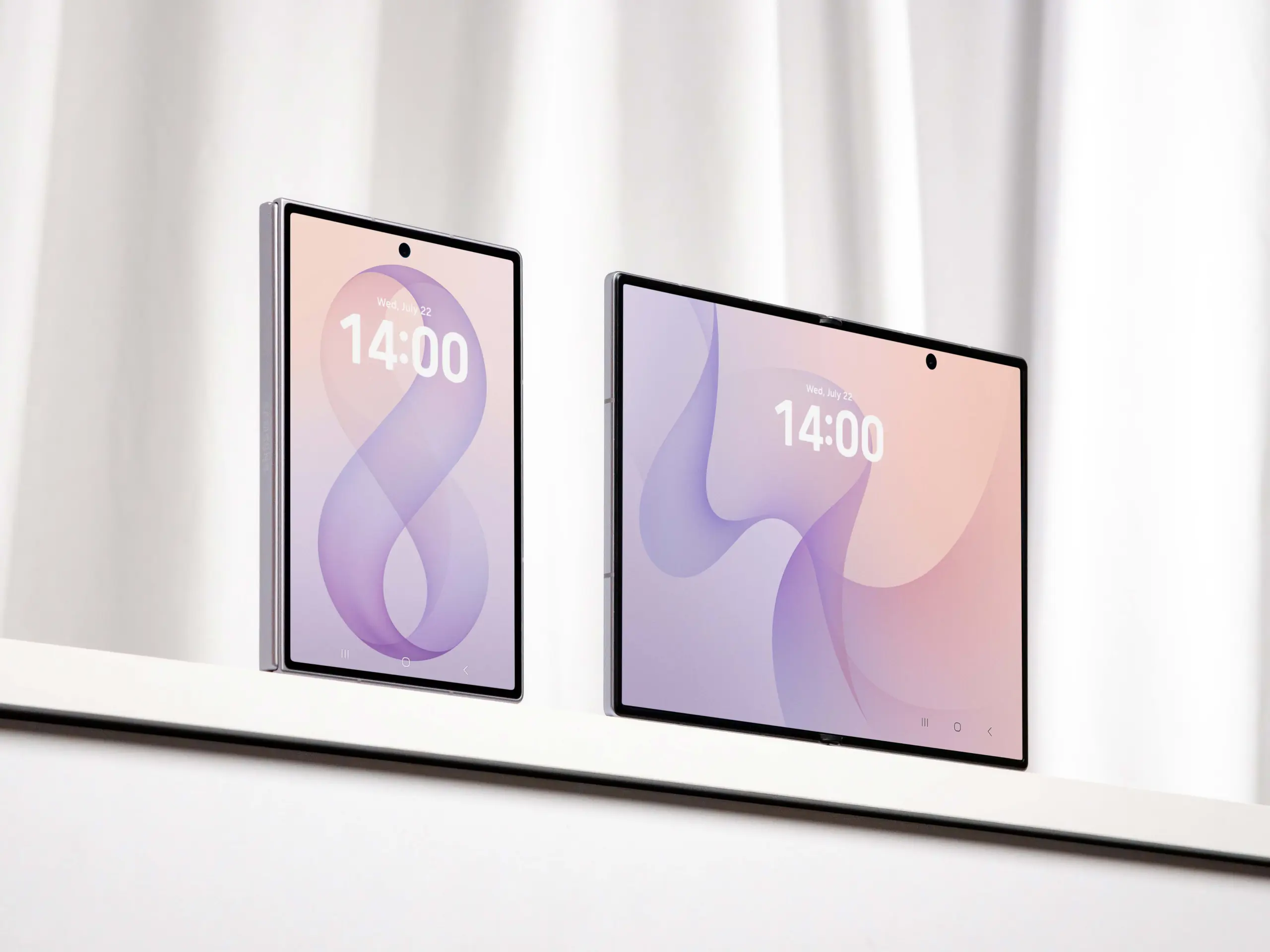
The interest surrounding the Galaxy Z Fold 8 stems not solely from improvements to its technical specifications. Samsung has primarily modified the device’s proportions. Previous generations featured a narrow outer screen, giving the smartphone a very vertical silhouette when closed. While this choice allowed for a relatively compact device in width, it made some interactions with the outer screen less intuitive.
The Galaxy Z Fold 8 adopts a wider format that resembles a traditional smartphone when closed. Once opened, the proportions also shift to resemble more of a compact tablet.
This change may seem simple, but it directly addresses one of the main criticisms addressed to the Folds over several generations: the device was sometimes excellent when open but less pleasant to use when closed.
Samsung might have found a better balance
The reported success of the Galaxy Z Fold 8 suggests that the manufacturer may have discovered a more comprehensible formula for the general public. An ideal foldable should function as an excellent smartphone when closed and then provide real additional value when opened.
If the external screen imposes too many compromises, users might feel compelled to open their phones constantly to enjoy a good experience. The wider format alleviates that burden.
Samsung is thus no longer just trying to make the chassis thinner or the hinge less obtrusive. It is rethinking how the product is used in daily life.
The contrast with the Galaxy Z Flip 8 is notable
The report also mentions a different situation for the Galaxy Z Flip 8, whose initial demand appears to be below expectations. This divergence is intriguing. For several years, the Flip series has played a crucial role in popularizing Samsung’s foldables due to a more accessible price and a format closer to traditional flip phones.
Conversely, the Fold has remained a more expensive and specialized device.
With the Galaxy Z Fold 8, this dynamic could begin to shift. The change in proportions seems to have improved the experience sufficiently to attract more users to the more ambitious model. Naturally, consolidated sales data will be needed to gauge the true extent of this phenomenon.
Some configurations are already showing shortages
Supply tensions are starting to manifest in distribution. Some configurations of the Galaxy Z Fold 8 are becoming unavailable on the Samsung store, while delivery times may extend based on markets and colors. A temporary shortage alone cannot measure demand because it may also reflect regional allocation or initial cautious stocks.
However, when combined with the DDI report and the decision to add an additional million units, it reinforces the idea that Samsung underestimated the interest in its new format.
For the company, this is clearly a better problem to have than excess inventory.
The foldable remains a difficult market to predict
This situation also highlights why production volumes of foldable smartphones are challenging to calibrate. These devices are expensive to manufacture, their demand is more volatile, and certain components are specific to a single generation.
Overproducing creates a significant risk of unsold stock. Conversely, producing too few can lead to delays and leave potential sales on the table. Samsung seems to have chosen a relatively conservative estimate for the Galaxy Z Fold 8, only to find that the new design resonated more than expected.
The problem is that such a unique product cannot be replenished as easily as a conventional smartphone.
The supply chain remains the Achilles’ heel of highly specific designs
The more a device uses custom components, the more challenging it becomes to rapidly increase production. The DDI of the Fold 8 is a prime example. A standard component could theoretically be purchased from various suppliers. However, a chip designed specifically for a particular display imposes many more constraints.
Switching foundries would require time, additional validations, and potentially design adaptations.
Samsung thus finds itself dependent on a single production chain for a component that only represents a small fraction of the total smartphone cost but is sufficient to halt the final assembly if volumes are lacking. In the electronics industry, the least conspicuous component can thus become the one that limits overall production.
Samsung is reliant on an external foundry despite its own industrial strength
This situation is particularly interesting given that Samsung has its own semiconductor manufacturing operation. Samsung Foundry produces advanced chips for various clients and divisions within the group. However, this does not mean that all components of a Samsung smartphone are manufactured in-house.
Manufacturing chains are specialized, costs vary, and some productions may be entrusted to external partners when they have the most suitable process.
In the case of the Fold 8’s DDI, UMC was presumably chosen for its mature 22 nm process. However, this external dependence becomes much more apparent when demand suddenly exceeds forecasts.
The success of the Fold 8 could influence the entire 2027 lineup
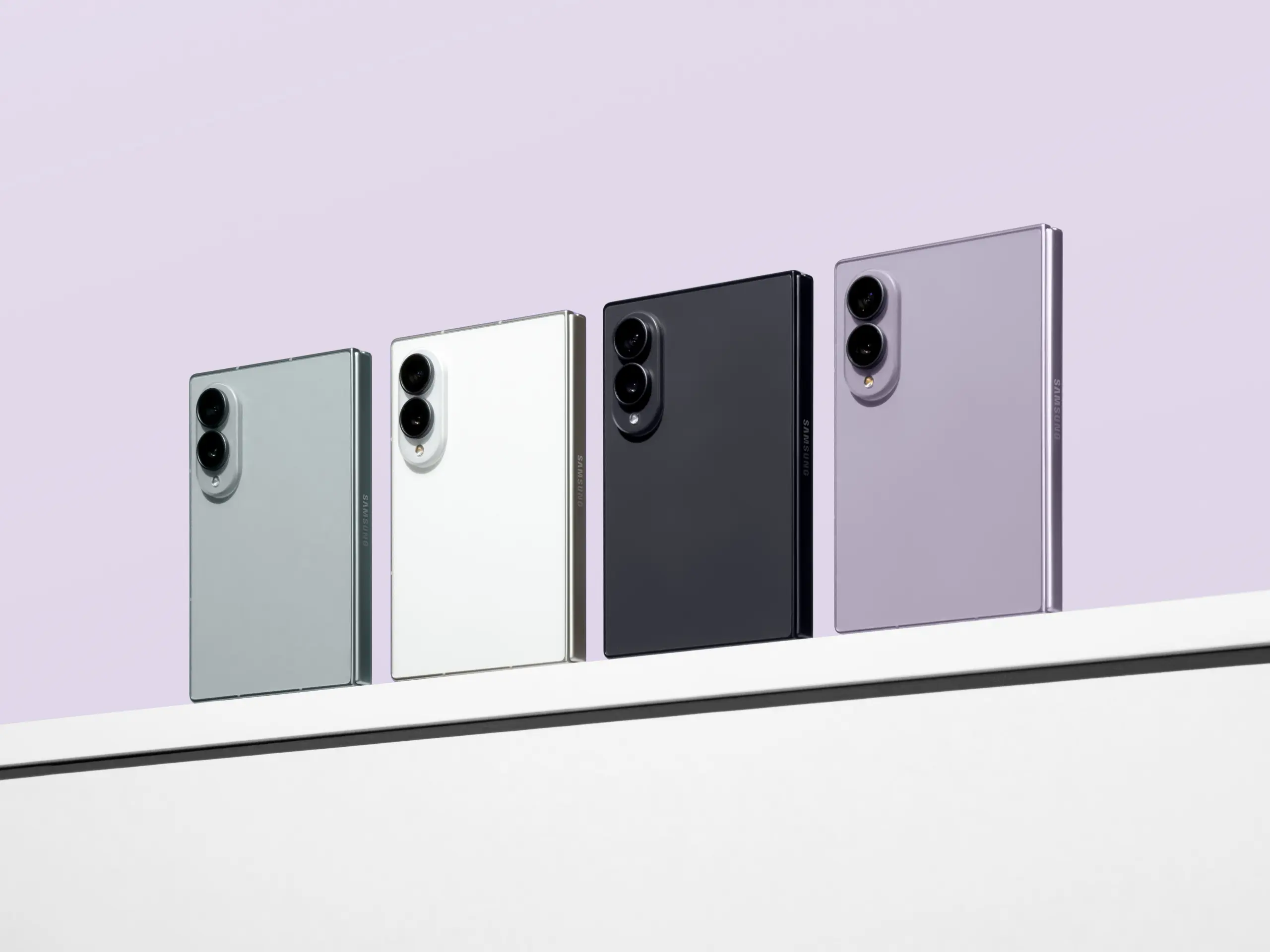
The most intriguing consequence could emerge next year. If Samsung is indeed reallocating components initially intended for its 2027 models, the company will need to revisit part of its supply chain timeline. This does not necessarily mean that future smartphones will be delayed. Orders can be adjusted, and new capacities may open up by then.
However, the manufacturer now has an important data point: the format adopted by the Galaxy Z Fold 8 seems to perform commercially better than expected. Samsung may choose to extend this philosophy to its upcoming generations or even apply it to other foldable devices.
Commercial success rarely influences only production volumes. It also shapes design decisions.
The foldable market needed a fresh boost
Samsung has long dominated the foldable smartphone segment, but competition from Chinese manufacturers has intensified significantly. Honor, Huawei, OPPO, Vivo, and Xiaomi have pushed thinner formats, larger batteries, and proportions often closer to traditional smartphones.
Samsung has sometimes seemed to move more slowly, favoring gradual improvements and software ecosystem maturity.
The Galaxy Z Fold 8 demonstrates a different approach. Radically changing the product’s proportions indicates an acceptance that a historical characteristic of the lineup may no longer be the best solution. This reevaluation could help explain some of the current interest.
The impending arrival of Apple makes timing even more critical
The foldable market could be entering a new phase with the anticipated arrival of Apple in this space. The first foldable iPhone is the subject of many rumors and could significantly increase the visibility of this product category.
Samsung thus has a vested interest in consolidating its lead before the market becomes even more competitive.
A Galaxy Z Fold 8 that finally finds a particularly compelling formula arrives at a perfect time. The manufacturer already possesses several generations of experience, a mature software pipeline, and a brand strongly associated with foldables.
An increase in demand now provides further commercial validation.
The component issue is almost good news for Samsung
No manufacturer wishes to find itself facing shortages. Supply gaps lead to delays, frustrate buyers, and may drive some customers to competitors. However, in this specific case, the reason behind the problem is positive: Samsung appears to have simply underestimated the success of its own product. After several generations of Folds that were sometimes criticized for their cautious evolution, the new design seems to have provoked a much stronger reaction.
The challenge now lies in converting this enthusiasm into actual sales before potential buyers change their minds.
A small DDI can cost a lot in sales
The Galaxy Z Fold 8 ultimately serves as a reminder of just how dependent the smartphone industry is on a complex supply chain. Samsung can design a new hinge, improve the display, develop its software, and invest billions in marketing. However, if a single display circuit is missing, the entire production slows down.
The manufacturer has already chosen to sacrifice part of its allocations originally planned for 2027 in order to keep the Fold 8 lines running, a testament to the priority given to this model.
The paradox is favorably skewed: Samsung seems to have finally found a Fold formula that is sufficiently distinct to surpass its own expectations, but it must now convince its supply chain to keep pace.
After years of seeking ways to make foldable smartphones more desirable, Samsung’s current problem is not finding buyers; it is producing enough of them.



