

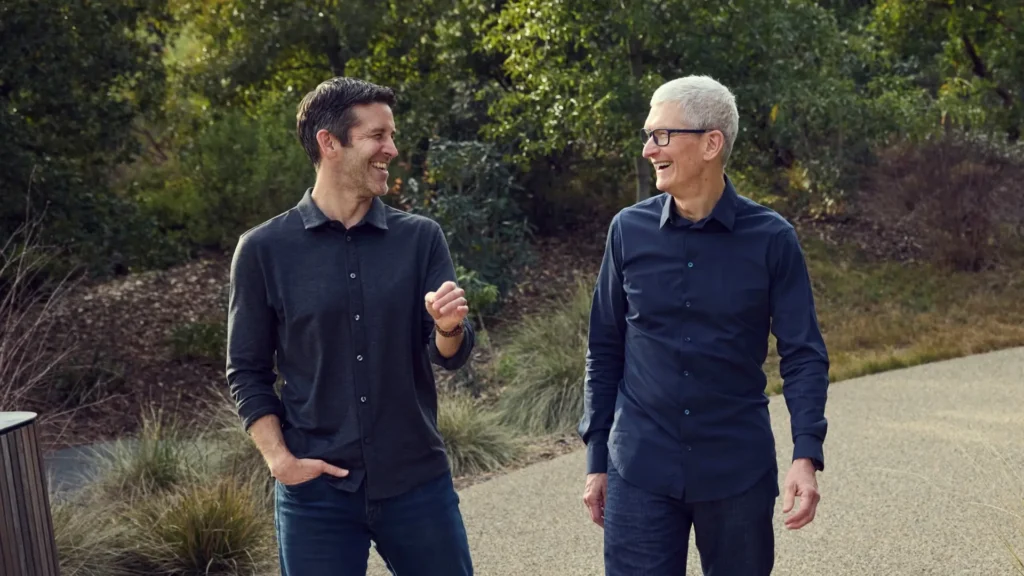
John Ternus takes charge of Apple and promises an ‘enormous launch’ next week
John Ternus wasted no time setting the tone for his tenure. On his first day as CEO of Apple, he shared a message with employees thanking Tim Cook, who is now the executive chairman, and immediately looked ahead. Time is of the essence, as Apple is set to hold one of its most significant events of the year next week.
In this initial internal memo, Ternus specifically mentions an ‘enormous launch’ planned for September 9, while pledging to bring forth products already in development as well as those yet to be imagined. This unifying message clearly indicates where the new chief wants to focus attention: on products, engineering, and the next phase of innovation at Apple.
A First Message Marked By Continuity
John Ternus begins his first memo by expressing gratitude to employees for their messages, but he places significant emphasis on Tim Cook. The new CEO praises the knowledge and experience shared during the transition and highlights how his predecessor has led Apple over the years.
He describes Cook as a leader who steered the company with its core values, decency, and humanity, while reminding that Cook will remain directly involved as executive chairman.
The tone is crucial. Ternus is not attempting to establish an immediate break from the Cook era. Instead, his first action is to affirm continuity while gradually ushering in a new chapter for Apple.
This is arguably the most natural transition for a company that relies heavily on operational stability while simultaneously driving new product cycles.
Ternus’s First Major Event Arrives on September 9
However, the new CEO swiftly shifts to what likely occupies a significant portion of Apple’s teams today: the upcoming product launch. “We have an enormous launch next week that is going to be phenomenal,” he writes to his teams, thanking them for their efforts to make the event possible.
He is, of course, referring to the keynote on September 9, during which Apple is expected to unveil its new generation of iPhones. The iPhone 18 Pro is anticipated, but all attention may focus on the highly awaited foldable iPhone, often rumored under the moniker ‘iPhone Ultra.’
Apple has not confirmed this name or the complete lineup to be revealed. However, the timing places John Ternus in a unique position: his first major event as CEO could also turn out to be one of the most significant hardware launches in recent years.
The Foldable iPhone Could Symbolize the Ternus Era
If Apple indeed unveils its first foldable iPhone on September 9, the association with the new leader will be almost inevitable. This product was not developed during his time as CEO, as a device this complex is conceived over several years and was therefore prepared under Tim Cook’s leadership. However, Ternus is well-versed in the matter, having previously overseen Apple’s hardware engineering.
His ascent to the top of the company comes at a time when it is potentially ready to introduce a new category of iPhone, possessing significant symbolic weight.
After years of exploration by Samsung, Huawei, Honor, OPPO, and Google in the foldable market, Apple may finally be entering the race with its own interpretation of the format.
For Ternus, it’s hard to envision a better showcase to emphasize his product and hardware-oriented profile.
A Hardware Engineer at the Helm of Apple
John Ternus’s appointment represents an interesting shift in the profile of Apple’s leadership. Tim Cook was primarily recognized for his operational expertise, command of the production chain, and ability to transform Apple into an extraordinarily efficient industrial and financial machine. While his tenure introduced many new products, his leadership identity has remained distinctly different from that of an executive coming directly from engineering.
Ternus brings a different backstory. Before becoming CEO, he led hardware engineering at Apple and oversaw the development of much of the product lineup, from the iPhone to the Mac, including the iPad and other devices.
This profile difference does not imply that Apple will suddenly abandon its operational culture or services. However, it may place physical products even more at the center of the company’s narrative.
His first memo clearly indicates this direction.
‘Products We Haven’t Even Imagined Yet’
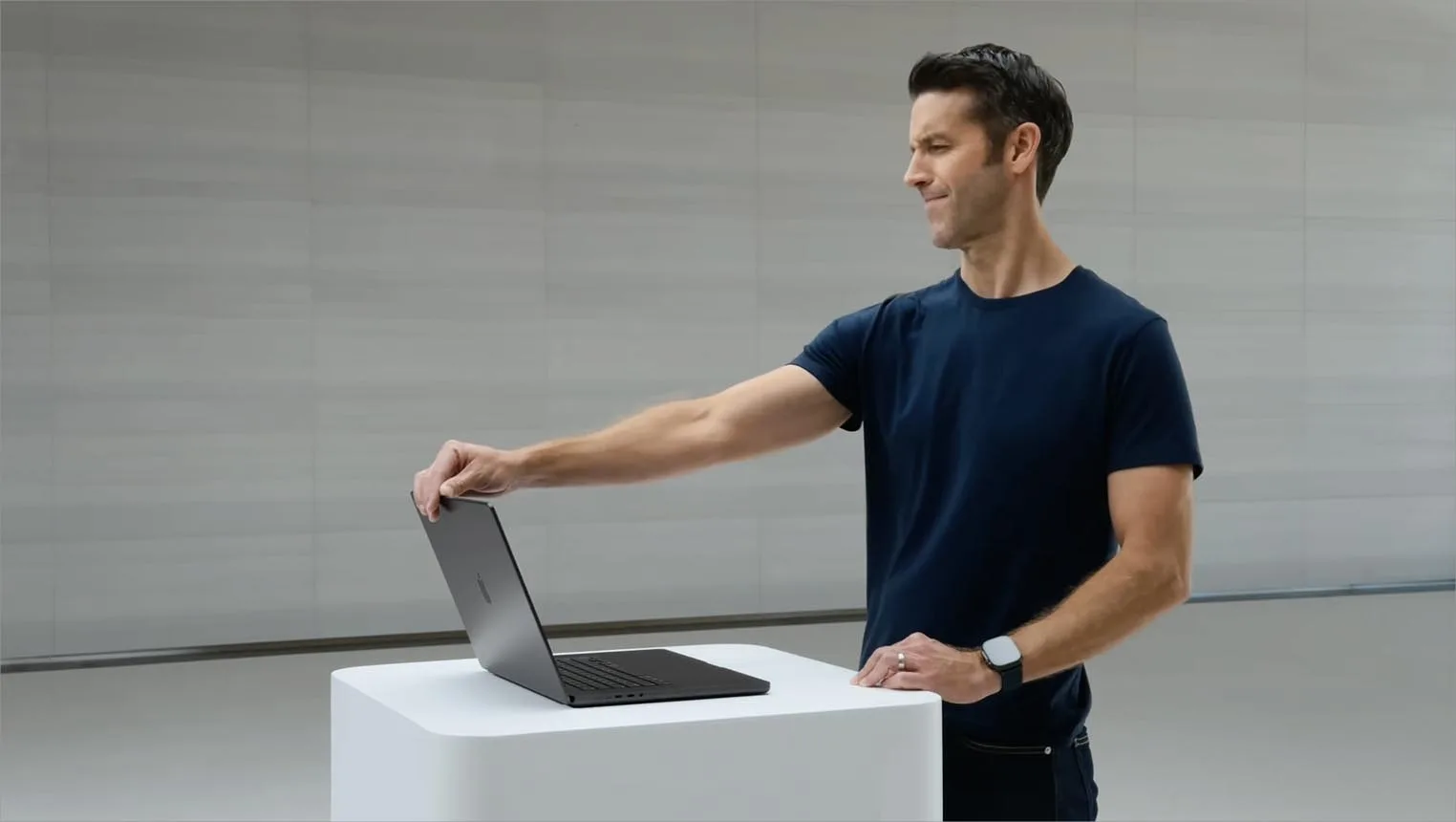
After discussing the launch on September 9, Ternus immediately expands his view toward what follows. The new CEO expresses equal enthusiasm for the ‘incredible products already in development’ and for those the teams haven’t ‘even imagined yet’.
The wording is naturally quite general. It could have appeared in nearly any internal message intended to rally the teams. However, it carries more weight in the current context at Apple, as several new product categories have been circulating in rumors for months.
The company is reportedly working on AirPods with cameras, various smart home devices leveraging artificial intelligence, home robots, and new generations of OLED screens across an increasing segment of its catalog.
Not all of these concepts will necessarily lead to commercial products, as Apple frequently explores dozens of ideas before discarding some. Yet, they provide insight into the wide range of areas Ternus may need to navigate over the coming years.
The Post-iPhone Era Becomes More Important Than Ever
The new CEO’s message arrives at a crucial moment when Apple must prepare for its next major growth phase. While the iPhone remains the company’s gravitational center, the smartphone market has matured. Replacement cycles are lengthening, and the differences between generations are often less noticeable.
The foldable could provide an initial answer by creating a new premium branch of the lineup, but Apple must also continue developing categories that complement the iPhone rather than simply depending on it.
Wearables, health, smart home technology, and artificial intelligence appear to be the most obvious territories.
This is also what makes Ternus’s reference to future products particularly intriguing in his first message: he is not merely celebrating the next-generation iPhone but immediately emphasizing what should come next.
AI Will Remain One of His Most Challenging Issues
Even with a strong hardware focus, John Ternus cannot lead Apple solely through physical products. Artificial intelligence will remain one of the group’s most important strategic priorities.
Apple needs to further integrate generative AI into its devices while upholding its traditional promise concerning privacy, local processing, and vertical integration between hardware and software.
This equation is particularly complex as its main competitors are advancing rapidly. Google is pushing Gemini in Android and its own devices, while Samsung is multiplying Galaxy AI features, and new players are working on building much more autonomous assistants.
Nonetheless, Apple holds a significant advantage: a vast installed base and a meticulous control over its hardware.
For a leader with a hardware engineering background, the question will be how to transform this mastery of silicon, sensors, and devices into genuinely differentiated new experiences.
Future AirPods Could Symbolize This Convergence
The rumors surrounding AirPods equipped with cameras particularly illustrate this direction. The idea is not necessarily to transform the earbuds into traditional cameras but to enable them to better understand the user’s environment through visual sensors coupled with AI functions.
The AirPods could then become more than just an audio peripheral. They would contribute to a form of contextual intelligence distributed across multiple Apple devices.
An iPhone in the pocket, an Apple Watch on the wrist, and AirPods capable of perceiving more information could form a much richer platform for future personal assistants.
This kind of convergence between hardware and artificial intelligence aligns perfectly with the terrain on which Ternus’s profile may find relevance.
The Smart Home Remains Another Strategic Frontier
Apple has long been working to bolster its presence in the home. HomePod, Apple TV, and HomeKit already exist, but the company has never managed to establish itself in this space with the same strength as it has with smartphones or smartwatches.
The various projects for home robots and smart displays frequently mentioned could change this situation.
Here again, AI becomes central. A home device capable of understanding its environment, following the user, or interacting more naturally could provide Apple with a new platform upon which to organize its services.
However, the company must avoid a classic pitfall: adding AI merely because it has become a buzzword in technology discourse. The challenge will be to create products whose utility is immediately apparent.
Tim Cook Remains Part of the Equation
The handover does not mean Tim Cook will disappear. The former CEO becomes the executive chairman and will therefore retain an important role in the governance and strategic direction of the group.
This arrangement offers Ternus a distinct advantage. He can gradually take control of the company’s operations while keeping a leader nearby who fully understands the partners, supply chain, regulatory challenges, and political relations.
For Apple, this is also a way to mitigate the risks associated with such a significant transition. The group changes its CEO but does not abruptly shift its system.
Ternus’s Style Begins to Emerge
The first memo is undeniably too brief to define precisely the new leader’s management style. However, a few elements stand out. The message is direct, relatively sober, and deeply focused on the teams and products. Ternus acknowledges Cook but does not spend several paragraphs celebrating the past. After a few lines, he immediately talks about the upcoming launch and what Apple must build next.
The closing line, “More to come,” almost encapsulates this stance.
He is not yet trying to present a complete doctrine; he simply indicates that the transition is complete and that the work continues.
The September 9 Event Will Be Viewed as a Test
Even though the products showcased next week were conceived long before his appointment, the September 9 keynote will inevitably be analyzed through the lens of this new leadership.
How Apple presents its future, the emphasis on hardware, the role of AI, the potential introduction of the foldable phone, and the messaging around new uses will all contribute to shaping the first impressions of the Ternus era.
It will take several years to distinguish products genuinely conceived under his tenure from those inherited from Cook’s period. However, in a company as iconic as Apple, leadership transitions always begin before their true effects are visible on the shelves.
A New Era Begins Without Abrupt Disruption
John Ternus seems intent on avoiding the trap of the new leader who immediately vows to transform everything. His first message, on the contrary, rests on an assumed continuity with Tim Cook, accompanied by strong confidence in the products already in the pipeline.
This is probably the most logical strategy for Apple. The company does not need an immediate organizational revolution; it must simply prove that it can continue to surprise even as its traditional markets have matured significantly.
The first appointment will come very soon, with the September 9 keynote and potentially the first foldable iPhone in its history. Yet, the most intriguing line in the memo likely pertains to products that do not yet exist. It is on these, far more than on the upcoming iPhone 18 models, that John Ternus’s tenure will ultimately be judged.



