

HarmonyOS à l’international : Huawei veut enfin sortir son OS de Chine pour défier Android et iOS
The mobile market may soon witness a credible third player. During its recent HarmonyOS conference, Huawei confirmed its intention to prepare pilot programs outside of China, aiming to position its operating system as a global alternative to Google and Apple platforms.
However, caution remains warranted. No specific timeline or testing countries have been announced, and Huawei has previously mentioned plans for HarmonyOS’s international expansion that did not materialize. The key difference this time is the maturity of the ecosystem, which has sufficiently developed for the idea to seem much more plausible.
Huawei Plans to Test HarmonyOS Outside of China
At the HarmonyOS Ecosystem Conference, Eric Xu, Vice President and rotating chairman of Huawei, explained that the company seeks to launch pilot programs in other countries to validate its model, gather experience, and prepare for a potential larger-scale expansion.
The executive outlined this ambition, noting that the success of an operating system also relies on its ability to internationalize. Therefore, Huawei aims not only to strengthen HarmonyOS in its domestic market but also to test its viability in regions where Android and iOS hold almost complete dominance.
The company discusses the prospect of providing the market with “a second option.” In reality, HarmonyOS is striving to become a third significant mobile platform that offers a sufficiently coherent alternative to attract developers, service providers, and users.
HarmonyOS Has Evolved Since 2024
Initially, HarmonyOS was viewed as a response to US sanctions that deprived Huawei of access to Google services on its new smartphones. The early versions were quite close to the Android ecosystem and could run Android applications, facilitating the transition.
The real shift came with HarmonyOS Next in 2024. At that point, Huawei abandoned native compatibility with Android apps to create a more independent environment, complete with its own development tools and application catalog.
This decision was particularly risky. Developing an operating system that works well is one thing, but convincing banks, public services, social networks, streaming platforms, and mobility applications to create specific versions is another.
Two years later, Huawei believes it has made enough progress to contemplate the next steps.
Over 400,000 Applications Available
Huawei claims that HarmonyOS currently has more than 400,000 applications, with approximately 100,000 being native applications. These figures should be interpreted cautiously, as the way different application categories are counted is not always clear. Nevertheless, they indicate that the ecosystem is no longer at an experimental stage.
In China, HarmonyOS has become capable of handling a vast array of daily tasks, notably thanks to the support of major local services. Huawei has thus constructed a software environment rich enough for its smartphones to operate independently of Android in its domestic market.
The critical question now is whether this dynamic can be replicated elsewhere.
In China, HarmonyOS Surpasses iOS
HarmonyOS has achieved a significant presence in the Chinese market. According to Counterpoint Research, the system captured around 24% of smartphone sales in China in the second quarter of 2026, compared to 18% for iOS. This is a meaningful milestone, showcasing HarmonyOS’s ability to surpass Apple in its home market, a feat unthinkable a few years back when the system was seen as a defensive measure against the impact of US sanctions.
Globally, however, the situation remains quite different, with HarmonyOS accounting for approximately 5% of smartphone sales, far behind Android and iOS.
Still, this figure is notable given Huawei’s limited presence in many major Western regions and the fact that HarmonyOS is not yet widely deployed internationally.
The Real Concern Is Not HarmonyOS, But the Applications
This aspect is likely where the future of the project will be determined. An operating system can be fast, smooth, and technically convincing, but that alone won’t drive a platform shift. Users primarily want to retain their applications, services, and routines.
In Europe, for instance, a smartphone must be able to seamlessly offer essential banking apps, WhatsApp, Instagram, Spotify, Netflix, local transport services, and commonly used professional tools.
It is precisely in this regard that Huawei must put forth the greatest effort. The brand needs to convince international developers to support a third platform, which entails maintenance, testing, and additional costs.
The Windows Phone Precedent Remains Fresh in Memory
The history of mobile technology has shown that a good system is not sufficient. Microsoft had Windows Phone, which boasted a recognized interface, substantial financial resources, and interesting hardware products. Yet, the lack of major applications ultimately limited platform adoption.
HarmonyOS is now facing a similar network effect: developers want a large user base before they invest, while users seek a complete app catalog before making a purchase.
Nevertheless, Huawei has a significant advantage: it already controls a vast hardware ecosystem.
Huawei Can Rely on More Than Just Its Smartphones
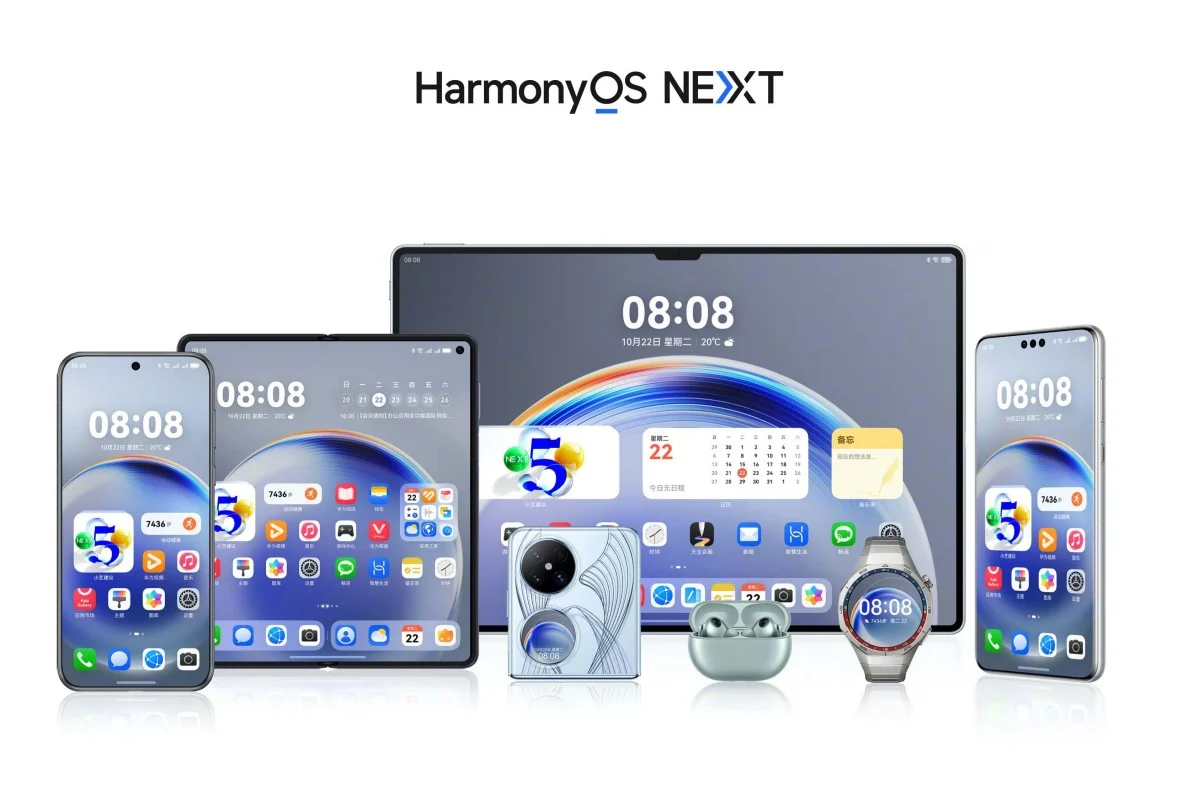
The company is not developing HarmonyOS solely for phones. Its ecosystem also encompasses tablets, smartwatches, earbuds, televisions, smart home devices, and certain automotive solutions.
This diversity provides Huawei with more levers to entice developers. A HarmonyOS application can potentially be integrated across various product types, enhancing the economic appeal of the platform.
This differentiates HarmonyOS from many previous attempts. Huawei is not merely trying to create a third mobile OS; it is building a common software layer across much of its catalog.
Europe Could Serve as a Testing Ground
If Huawei genuinely decides to test HarmonyOS internationally, Europe appears to be one of the most logical territories. The brand has long enjoyed an excellent reputation there, especially for its high-end smartphones, which are celebrated for their photographic capabilities, battery life, and build quality. Huawei also maintains a commercial presence in several European countries.
Currently, its international smartphones primarily run on EMUI. Transitioning to HarmonyOS would signify a much deeper change than merely updating the interface.
Nonetheless, the challenge remains substantial, particularly due to the absence of Google services.
Replacing Android Does Not Mean Replacing Google
Android is only one component of the experience users now associate with an Android smartphone. Gmail, Google Maps, YouTube, Google Photos, Drive, and Wallet play integral roles in daily usage, creating a dependency that extends far beyond the operating system itself.
Even if HarmonyOS offers alternative applications, persuading a user to switch platforms often means asking them to reconstruct part of their digital environment. For many, this hurdle may outweigh any differences in interface or performance between the two systems.
This is one area where Huawei must be particularly convincing.
Hardware Could Make the Difference
Huawei continues to maintain a strong capacity for hardware differentiation. The manufacturer consistently offers smartphones that are remarkably ambitious in terms of photography, foldable screens, satellite communications, and high-capacity batteries.
This differentiation could prove vital for HarmonyOS.
A user is more likely to embrace a change in ecosystem if the product provides something genuinely distinct. Conversely, a smartphone that is technically similar to a Galaxy or Pixel will struggle to justify the effort required to abandon Android.
Therefore, Huawei will likely need to showcase its most advanced products to promote its system.
The U.S. Market Seems Out of Reach
The prospect of HarmonyOS entering the United States appears highly unlikely in the short term. The political and commercial constraints surrounding Huawei remain too great, and the brand no longer has the distribution it once enjoyed in other regions.
Europe, Latin America, the Middle East, and parts of Asia appear much more credible for potential pilot programs. These markets provide Huawei with a more favorable terrain, often benefiting from a stronger historical presence and a less polarized perception of the brand.
No Timetable Has Been Announced Yet
This is the primary element that prevents considering this expansion as a certainty. Eric Xu did not specify which countries would be involved, which devices might be used, or when the pilot programs would launch.
Huawei has made similar statements in the past, without transforming them into an actual international launch of HarmonyOS on smartphones. Thus, we must await more concrete announcements before discussing a global return of the system.
The notable change in 2026 is that the company now has a much more robust technical and application foundation to attempt this endeavor.
Android and iOS Have Little Real Competition Left
The interest in HarmonyOS extends beyond just Huawei itself. Since the demise of Windows Phone, the mobile market has functioned almost as a duopoly. Apple controls iOS, while Google oversees Android and a significant portion of the services that structure the experience on competing smartphones.
Android manufacturers can customize their interfaces, yet they remain dependent on the same software foundation.
HarmonyOS proposes an alternative logic. Huawei controls the system, a growing portion of the services, and the hardware on which it all operates. This integration grants it a strategic freedom that most Android manufacturers lack.
Huawei Does Not Need to Beat Android to Succeed
The success of HarmonyOS does not necessarily hinge on its ability to become the global number one. Achieving a significant market share in some major regions would already shift the dynamics. Once a certain threshold is reached, developers would begin to perceive HarmonyOS as a key platform rather than a secondary market.
This critical mass could change everything.
If Huawei can attract enough users outside of China, the ecosystem could gradually become self-sustaining: more users would draw in more developers, making the platform increasingly appealing to new users.
HarmonyOS Fits into a Broader Independence Strategy
This evolution aligns with Huawei’s industrial transformation. The manufacturer has been striving for several years to reduce its technological dependencies, both in software and hardware. HarmonyOS serves this purpose on the operating system side, while Kirin processors and other internal developments fulfill a similar role on the silicon side.
Huawei is progressively constructing an environment in which it controls more critical layers of its products. What started as a response to American restrictions has thus transformed into a genuine long-term strategy.
China Has Served as the Laboratory; International Expansion Will Be the True Test
HarmonyOS has already demonstrated its capacity to become a significant platform in a conducive environment. The real challenge now lies in replicating this success in markets where users have no compelling reason to abandon Android or iOS.
Huawei must convince developers, banks, operators, streaming services, and local platforms. It also needs to adapt its system to each country’s regulatory requirements and offer sufficiently attractive products to offset the cost of changing ecosystems.
This is an enormous task, but Huawei is one of the very few companies capable of pursuing it seriously.
If the announced pilot programs eventually lead to genuine commercial launches, HarmonyOS could become the first platform in a long time to introduce some competition into a mobile market controlled by two players. However, the toughest part will not be exiting China, but convincing users that a third option genuinely merits a change in their habits.



