

Fitbit Air Pokémon Sleep: Google transforms sleep tracking into a game for $129
Google takes advantage of Pokémon’s 30th anniversary to add a playful dimension to its screenless fitness tracker. The new Fitbit Air Special Edition Pokémon Sleep combines Google’s health tracking with Pokémon Sleep, allowing the sleep recorded on your wrist to directly influence gameplay.
Available for pre-order at $129, this special edition will ship starting September 15. The partnership with Pikachu is primarily a clever strategy: transforming sleep tracking, often viewed as a series of dreary graphs, into a more engaging daily experience.
A Fitbit Air Designed Around Pokémon Sleep
The Fitbit Air Pokémon Sleep utilizes the same technical foundation as the tracker launched by Google in May 2026. It maintains a minimalist approach: no screen, a lightweight design meant for all-day wear, and much of the experience carried over to the Google Health app.
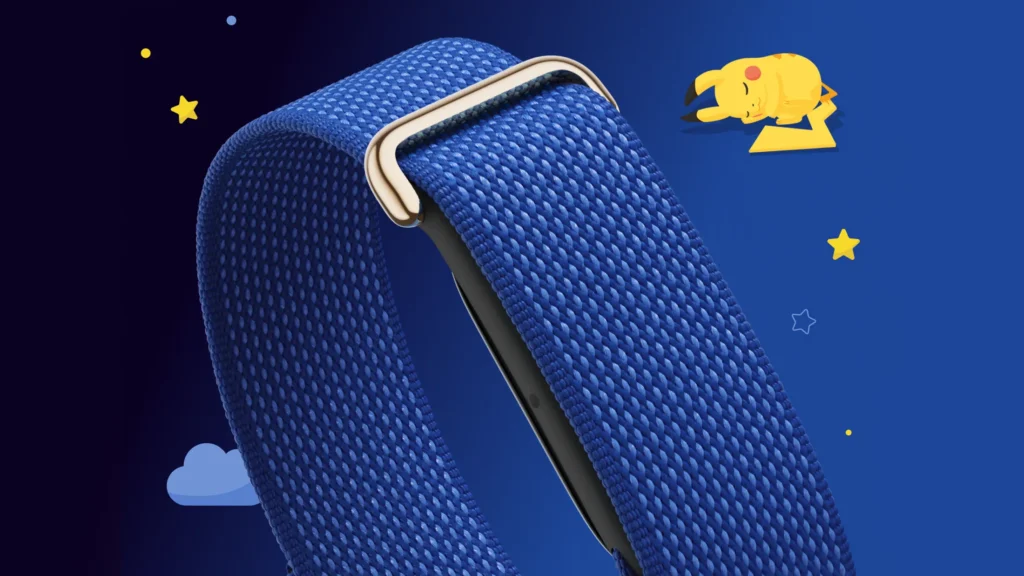
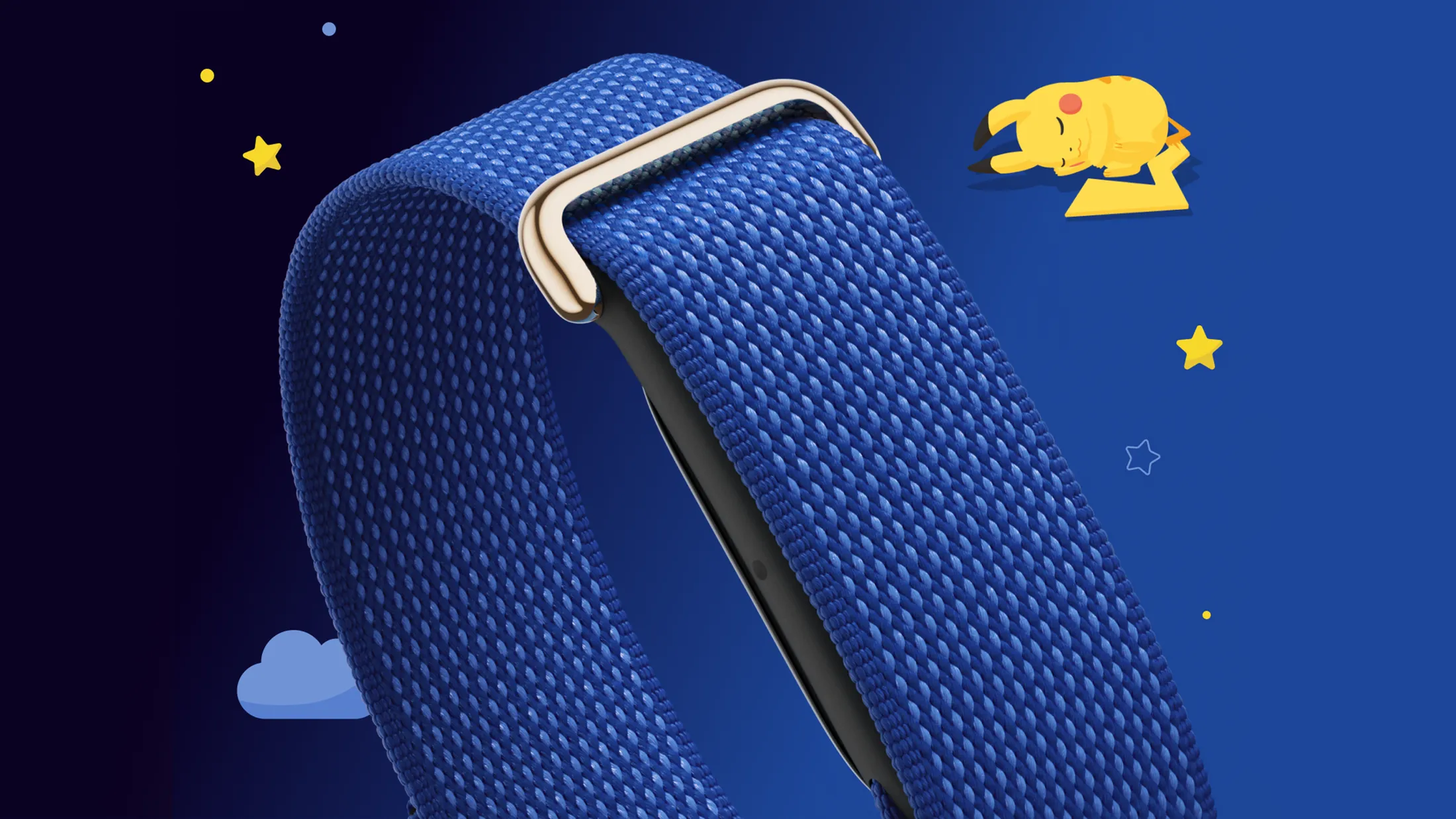
The main difference lies in its visual identity and integration with Pokémon Sleep. Google has opted for a Sleepy Blue finish, featuring various shades of blue and a pattern of a sleeping Pikachu on the band.
The design remains intentionally subtle. This isn’t a wearable with garish colors but rather a collector’s edition that references the game while keeping the relatively understated look of the Fitbit Air.
Real Sleep Fuels Pokémon Sleep
The integration is based on a particularly straightforward concept. The Fitbit Air tracks the duration and different phases of sleep overnight. This data can then be sent to Pokémon Sleep.
The game uses recorded sleep to calculate the player’s progression. Since its launch in 2023, Pokémon Sleep has relied on a mechanic where sleeping becomes part of the gameplay.
Each morning, sleep data contributes to generating a Sleep Score, which in turn helps calculate the well-known Drowsy Power. The higher this value, the more Pokémon the player can attract around Snorlax and discover new sleeping styles.
Snorlax Becomes Almost a Consistency Indicator
The operations of Pokémon Sleep are intentionally user-friendly. The recruited Pokémon collect berries that increase Snorlax’s powers. Upon waking, this power combines with the score derived from sleep duration. A better result then increases the chances of encountering more Pokémon or discovering rare sleeping styles.
Google thus transforms an abstract health data point into an immediately visible reward. Rather than just a chart showing that the user slept for seven hours and twenty minutes, the outcome also produces a consequence in the game.
Google Health Maintains the Serious Side
This gamification certainly doesn’t replace traditional tools of the Fitbit Air. The tracker continues to feed Google Health with daily health and activity data. The Fitbit Air can monitor movements, heart rate, and various effort-related indicators before tracking sleep during the night.
Google Health notably distinguishes between light and deep sleep phases, presenting the information in an interface designed to facilitate interpretation. The Google Health Coach can also analyze trends over a longer period to offer personalized recommendations.
The Pokémon edition includes three months of Google Health Premium, by the way.
Synchronization Occurs Through Smartphone Health Systems
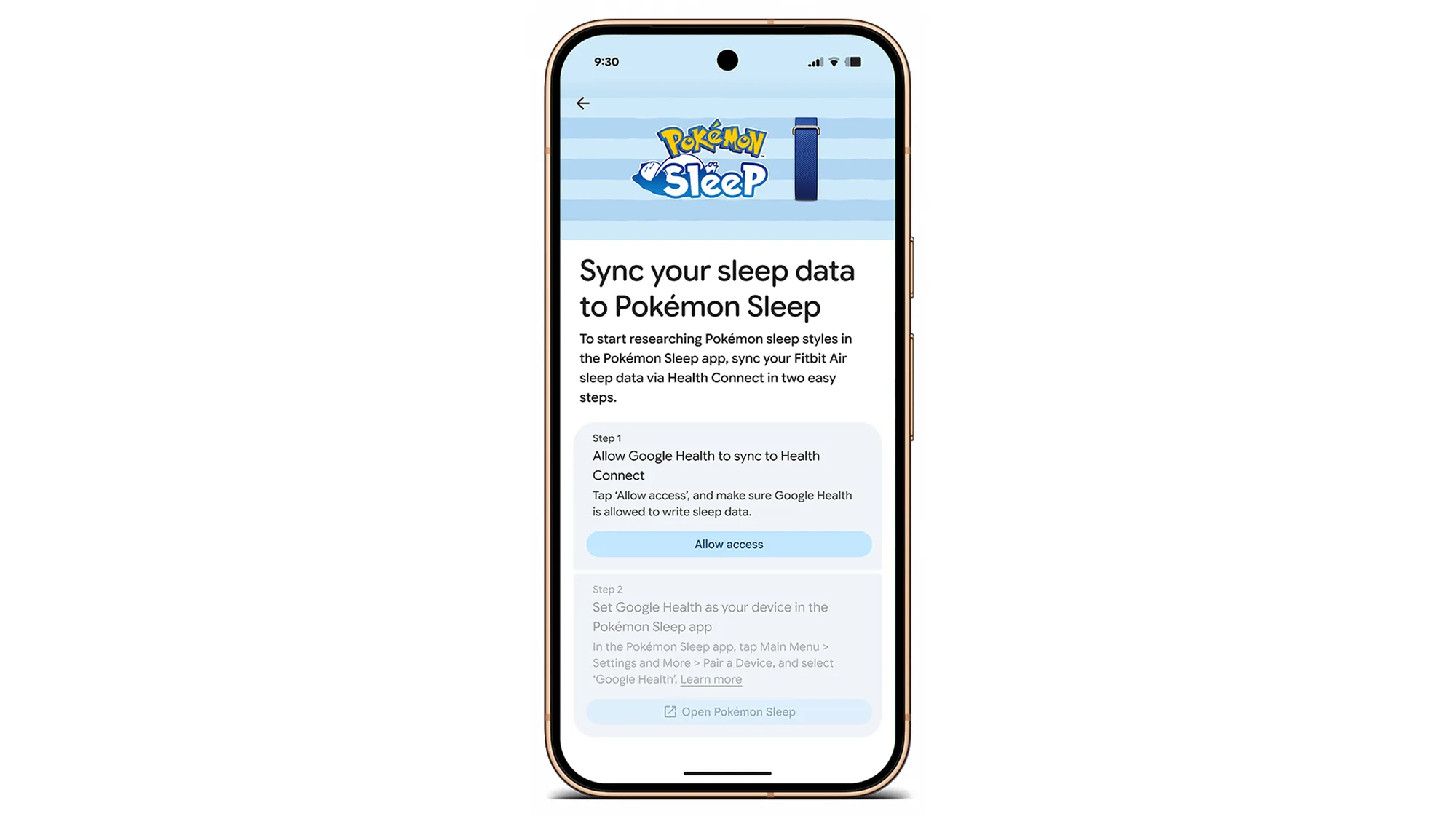
Google does not create a completely closed proprietary gateway between Fitbit and Pokémon Sleep. On Android, data notably passes through Health Connect. On iPhone, integration can utilize Apple Health. Once permissions are granted, sleep data recorded by Google Health syncs with Pokémon Sleep each morning.
This principle also applies to a nap recorded during the day. This architecture allows Pokémon Sleep to retrieve information without the user needing to initiate a manual process after every night.
Pokémon Sleep Already Worked with Wearables
However, the integration is not exclusive to the new Fitbit Air. Pokémon Sleep already supports several wearables, including Apple Watches, Galaxy Watches, Pixel Watches, and other Fitbits. The game can even be used without a watch or fitness tracker. Therefore, the true interest in this special edition lies less in an exclusive function and more in the combination of a device designed for sleep and an official Pokémon design.
The Fitbit Air has a clear ergonomic advantage here: its lack of a screen makes it lighter and more discreet than a typical smartwatch during the night.
A Screenless Band Can Make Sense for Sleep
This is precisely one of the Fitbit Air’s important arguments. Smartwatches have significantly improved in sleep tracking, but they are still relatively bulky and require regular charging. A minimalist band can be more comfortable for users looking to record their nights consistently.
Google highlights the lightweight design and accurate adjustment system of the Fitbit Air so that it can be forgotten on the wrist. Pairing it with Pokémon Sleep gives the product an additional reason to be worn every night.
Gamification Could Solve a Classic Quantified Self Problem
The main barrier to health tracking isn’t always the quality of the sensor. Often, it’s motivation. After a few weeks, many users stop checking their statistics or forget to wear their device regularly. Sleep graphs may be useful, but they aren’t necessarily engaging enough to change a habit.
Pokémon Sleep adopts a different logic: tracking becomes a progression mechanic. Going to bed regularly and recording nights yields a reward in a familiar universe, making it more appealing to users. The partnership for Google thus renders retention much more natural.
A Particularly Logical Crossover for Pokémon’s 30th Anniversary
This special edition arrives as Pokémon celebrates its 30th anniversary in 2026. Choosing Pokémon Sleep aligns cohesively with the Fitbit Air. While Google could have opted for a standard Pikachu band, this collaboration directly connects the franchise’s identity to the main function of the product.
The relationship thus appears more functional than aesthetic.
Pokémon benefits from a new object that strengthens daily engagement with the game, while Google gains a license that makes health tracking more accessible and less clinical.
Although the collaboration between Fitbit and Pokémon may seem trivial amidst major advancements in AI or medical sensors, it touches on one of the core issues of health-connected devices: they are useful only when worn regularly. By linking each night’s sleep to progression in Pokémon Sleep, Google turns a monitoring obligation into a small daily ritual.
Therefore, the Fitbit Air Pokémon Sleep doesn’t reinvent any material technology. It attempts something more subtle: providing an extra reason to put on your band before bed. And in health tracking, establishing a lasting habit can sometimes be more valuable than adding a new sensor.



