

Apple is cutting over 200 jobs in Vision Pro and Siri and accelerating into smart glasses
Apple is reshaping two of its most strategic projects. Over 200 jobs are being eliminated in the Vision Pro, Siri, and associated software teams, with a notable reduction in the gaming and immersive video sectors.
The headset is not being abandoned, but the focus appears to be shifting toward AI and more affordable smart glasses.
Over 200 Jobs Affected at Apple
According to Bloomberg, Apple is cutting more than 200 positions across the Vision Pro, Siri, and various software teams. Approximately 100 jobs are affected within the Vision Products Group, while around another hundred positions will be eliminated in the Siri and surrounding software teams.
Apple presents this move as a reallocation of resources, rather than a cessation of these activities. The company states it is also creating new positions that align better with its current priorities.
Gaming Vision Pro is Particularly Affected
The most drastic change impacts the gaming sector. The team dedicated to gaming on Vision Pro is being largely dismantled. This is a significant signal. At the headset’s launch, Apple had showcased entertainment as one of the pillars of spatial computing, alongside productivity, video, and communications.
However, Vision Pro has struggled to cultivate a gaming ecosystem large enough to justify investments comparable to those of more established platforms.
While the hardware is technically powerful, its cost, weight, and limited installed base severely restrict the potential market for developers.
Apple is Also Reducing Its Investments in Immersive Video
The other team significantly impacted is the one responsible for Apple Immersive Video. Apple will continue content production, but at a reduced pace. The primary reasoning appears to be economic. Immersive production demands multiple teams, specialized cameras, heavy post-production, and substantial data volumes. According to Bloomberg, some episodes can cost several million dollars.
For a platform with limited audience reach, the equation becomes challenging to justify.
Great Content, But Too Few Viewers
Apple Immersive Video offers one of the most compelling experiences on Vision Pro. The high-resolution stereoscopic videos place viewers on the edge of a field, within a studio, or at the heart of a documentary, evoking a sense of presence difficult to achieve on a traditional screen.
The issue isn’t necessarily the quality; it’s the scale. Creating a multi-million dollar production becomes hard to monetize when the number of users able to watch it remains low.
Apple may now rely more on external partners to enhance its catalog.
Vision Pro is Not Disappearing
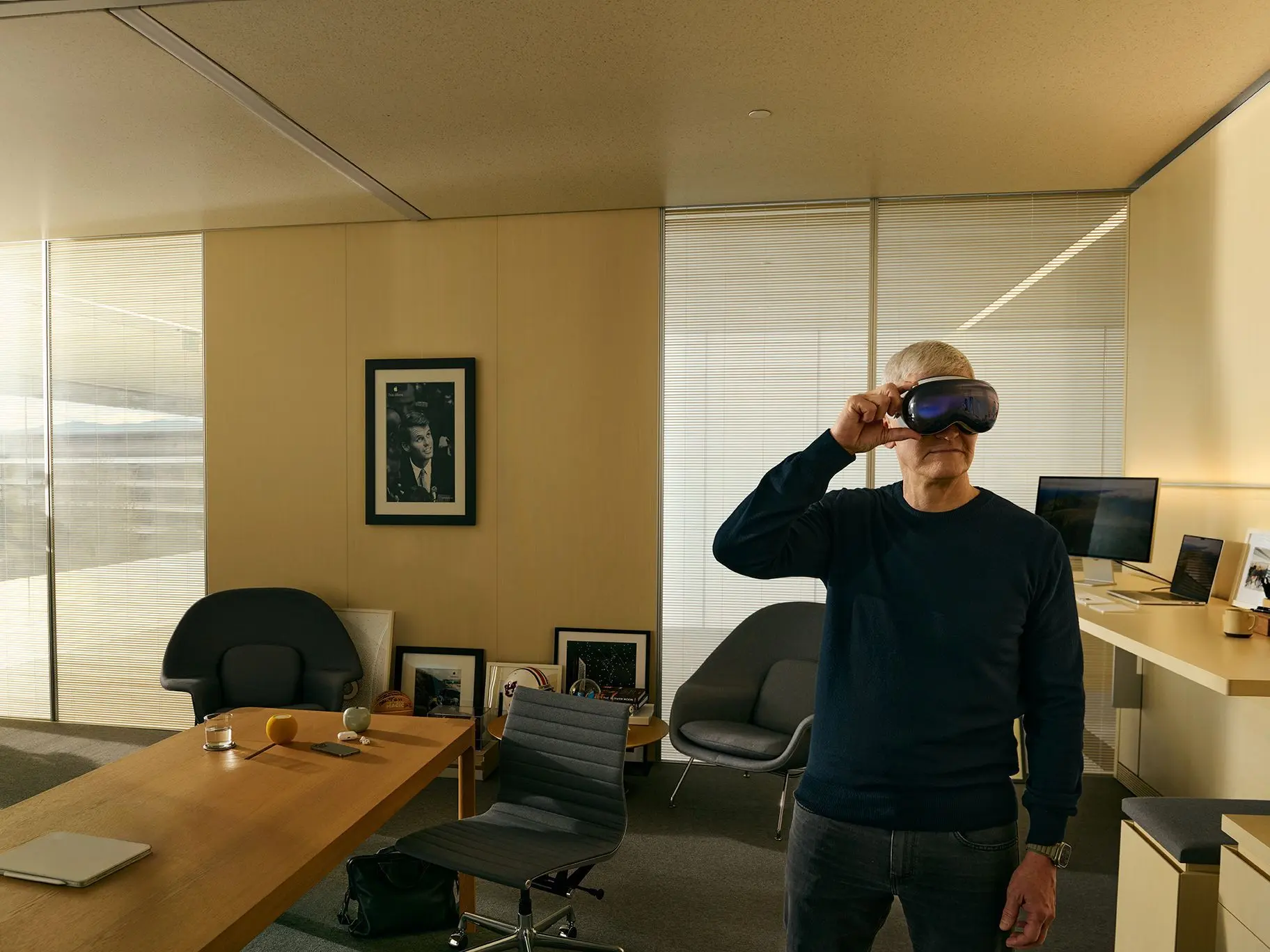
However, these job cuts do not signal the end of the platform. Employees have been informed that Apple Vision Pro and visionOS will continue. Apple is still marketing the version equipped with the M5 chip, launched in 2025, and continues to develop software for the headset.
A successor is also being contemplated. Current information suggests that a new model could arrive as early as late 2028. The timeline is, therefore, much less aggressive than one might have expected following the initial generation.
Apple Seems to Have Paused the Cheaper Headset
The real change relates to the ambition of quickly building an entire Vision family. Apple previously worked on a lighter and cheaper version of Vision Pro, but this project has reportedly been put on hold.
The priority is no longer necessarily to democratize the headset as it exists today. Apple seems to prefer to allocate more resources to another form of face-worn device: smart glasses.
Future Apple Glasses Become Much More Important
Apple is developing connected glasses designed to compete more with Meta’s products than with traditional VR headsets. Current information suggests that the first generation will offer neither an immersive screen nor true advanced augmented reality. Instead, it will function more as an extension of the iPhone and Apple Intelligence.
Equipped with cameras, microphones, speakers, Siri, and visual comprehension of the environment, the goal is to create a device light enough for all-day wear.
Four Frame Designs Are Currently Being Tested
Apple is testing at least four frame shapes. Two are rectangular, with one being quite wide and the other slimmer, while the other two adopt more oval shapes. The material chosen is acetate, commonly used in premium eyewear. This diversity indicates that Apple is not merely treating the matter as an electronic issue.
A pair of glasses must also be acceptable as a fashion accessory. This is precisely one of the lessons learned from Meta’s success with EssilorLuxottica.
Meta Has Demonstrated That Smart Glasses Can Reach the Mass Market
Meta successfully moved connected glasses beyond the niche market thanks to its partnership with EssilorLuxottica. The Ray-Ban Meta products have shown that a device equipped with a camera and an AI assistant can be sold as a genuine pair of glasses rather than just a tech gadget.
In June 2026, Meta took it a step further with models marketed under its own brand. The Meta Glasses Adventurer and Fury were launched at €309. This price point is entirely different from that of Vision Pro.
€309 Compared to €3,699
In France, the Apple Vision Pro with the M5 chip still starts at €3,699. The comparison with glasses priced at €309 highlights the economic disparity between the two categories. Of course, this is not a comparison of equivalent products. The Vision Pro offers advanced micro-OLED displays, full spatial tracking, and unparalleled computing capabilities.
Yet, regarding market size, the difference is fundamental.
The Future of Spatial Computing Might Ultimately Be Less “Spatial”
Apple presented Vision Pro as the beginning of a new era of computing. Three years later, internal decisions appear to illustrate a more nuanced reality. The market may not yet be ready for a spatial computer costing several thousand euros worn on the face.
In contrast, lightweight glasses capable of taking a photo, answering a question, translating a conversation, or recognizing an object have already begun to attract a much broader audience.
The future of the Vision strategy could gradually shift from headsets to glasses.
Job Cuts at Siri Follow a Different Logic
The situation with Siri is less directly related to declining demand. Apple is reconstructing its assistant around a new AI architecture. This transformation requires different skill sets. Some traditional roles are becoming less central, while new positions emerge around AI models, inference, agents, and Siri’s new functions.
Therefore, the cuts should be viewed as a technical restructuring rather than a decrease in Siri’s importance.
On the contrary, Siri is becoming one of the key pieces of Apple’s future hardware strategy.
Siri is Essential for Future Glasses
Connected glasses without a screen rely almost entirely on voice and contextual understanding. They must be capable of hearing a request, discerning what the user is looking at, and providing an immediate response. A poor Siri experience would be far more problematic than on an iPhone, where a user can always touch the screen and open an app.
The software project and the glasses initiative are therefore closely linked. Apple cannot truly succeed with this new type of product if its assistant lags behind.
It’s Not the End of Vision Pro, But the End of a First Hypothesis
The more than 200 job cuts give a clearer picture of how Apple is adjusting its ambitions. Vision Pro continues, visionOS continues, and a new headset remains under consideration. However, Apple is scaling back investments in two uses that were initially meant to help the platform take off: gaming and immersive video.
Simultaneously, the group is accelerating on Siri AI and connected glasses. Thus, the pivot is not from extended reality to something else. It’s more about a change in form. Apple seems to be shifting from a vision where future computing is worn on the head to one where it resembles enough of a pair of glasses to be accepted for all-day wear.



