

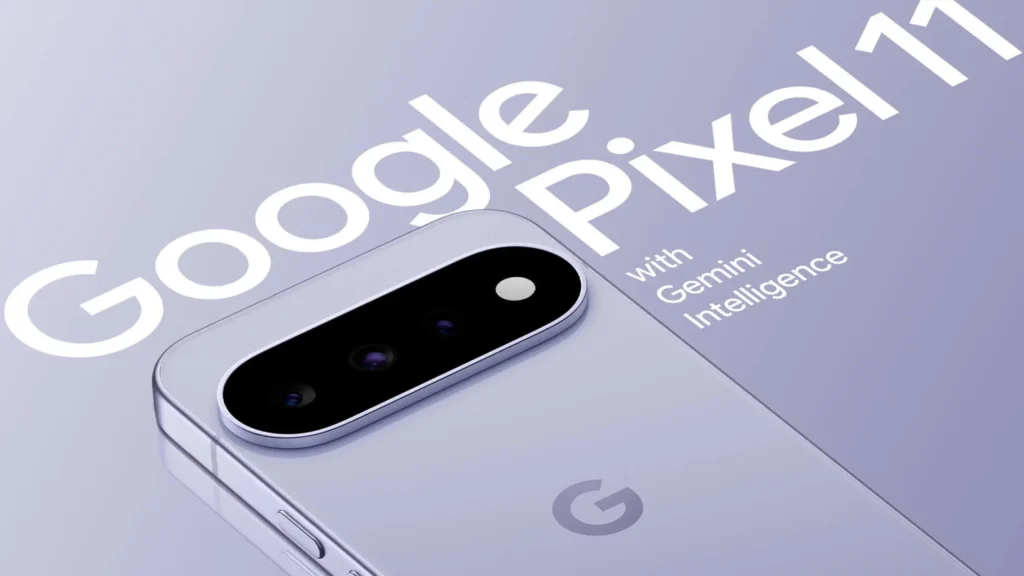
Why choose the Google Pixel 11? The most balanced model in the new range
With the Pixel 11, Pixel 11 Pro, Pixel 11 Pro XL, and Pixel 11 Pro Fold, Google expands the possibilities. However, for a significant number of users, the standard Pixel 11 might just be the most sensible choice from the entire range.
While it does drop some features reserved for the Pro models, it retains the key components of the new generation: Tensor G6, Gemini, a minimum of 256GB of storage, a primary camera of 48 megapixels, Super Zoom x30, Pixelsnap, a battery that lasts over 30 hours, and the new Titan M3 security chip.
So why opt for the Google Pixel 11 over a Pixel 11 Pro or another high-end Android smartphone? Here are some compelling arguments that could sway your decision.
The Same Tensor G6 as the Pixel 11 Pro
The first notable argument is that Google does not restrict its new processor to the priciest smartphones. The Pixel 11 employs the same Tensor G6 as its Pro counterparts. This latest chip lies at the heart of nearly all the enhancements Google has introduced this year.
According to the manufacturer, the new chip offers up to 20% improved energy efficiency, 25% faster web browsing, and applications that launch 15% quicker than the previous generation. The TPU tasked with handling AI-related processes also boasts a 50% performance boost.
Thus, the standard Pixel 11 benefits from the same technological advancements as the Pro models.
Accompanied by 12GB of RAM and 256GB of storage, the base storage capacity has become standard across the range. For most daily tasks, the difference with the 16GB of RAM on the Pro models will mainly be noticeable in the most demanding scenarios.
Gemini Becomes Truly Integrated into the Smartphone
Choosing a Pixel in 2026 also means opting for Google’s vision regarding mobile artificial intelligence. The Tensor G6 has been engineered to run Gemini Nano directly on the device more efficiently. As a result, Google can implement its AI in more situations without constantly directing users to a chatbot.
Voice input, for instance, can now automatically remove hesitations like “uh” and reformat the user’s speech into cleaner text. The writing assistance can utilize what appears on the screen to suggest context-appropriate responses that match the user’s writing style. Instant translation can also be applied to videos, podcasts, or voice messages.
Google is further enhancing the functionality to search directly via the camera. The Pixel can identify what you’re viewing, translate text, or find a distant object without the need to capture a photo first.
With the Pixel 11, AI is no longer merely an assortment of additional features; it is becoming an integral part of the smartphone’s operation.
A 48-Megapixel Significantly Improved Camera
You don’t have to upgrade to the Pixel 11 Pro to enjoy substantial advancements in photography. The Pixel 11 features a new 48-megapixel main sensor. Google claims this sensor offers a 56% better low-light sensitivity compared to the Pixel 10, which should primarily benefit portraits and low-light photography.
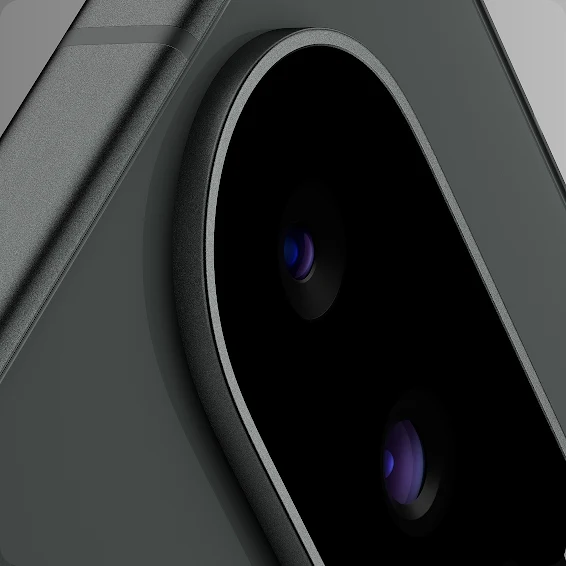
The standard model also features Super Zoom x30. While it falls short of the impressive Pro Zoom x120 available on the Pixel 11 Pro and Pro XL, a x30 zoom still covers many common situations for most users.
This reflects one of the main arguments for the Pixel 11: being willing to forgo the extreme photographic capabilities of the Pro models while retaining a large part of the Pixel experience.
Magic Capture Aims to Solve the Problem of Late Photos
Google is also introducing a new mode called Magic Capture. Instead of relying solely on when the user presses the shutter button, the smartphone records the moment so that it can later retrieve a photo or a video. The system automatically applies cropping and defocusing to produce a share-ready image.
The goal is simple: reduce the number of missed shots due to a child turning their head, an animal moving, or the user pressing the button a fraction of a second too late.
This type of feature encapsulates Google’s photographic approach: more computing to require less effort from the user taking the photo.
A 3,000 Nits Screen
While the Pixel 11 does not get the Super Actua screen of 3,600 nits found in the Pro models, Google still significantly upgrades its standard model. Its Actua display can reach a maximum brightness of 3,000 nits, greatly enhancing outdoor visibility.
It also features Corning Gorilla Glass Victus 2 for protection, while the smartphone is IP68 certified against water and dust. Additionally, Google has redesigned the camera bar to make it slimmer and less protruding.
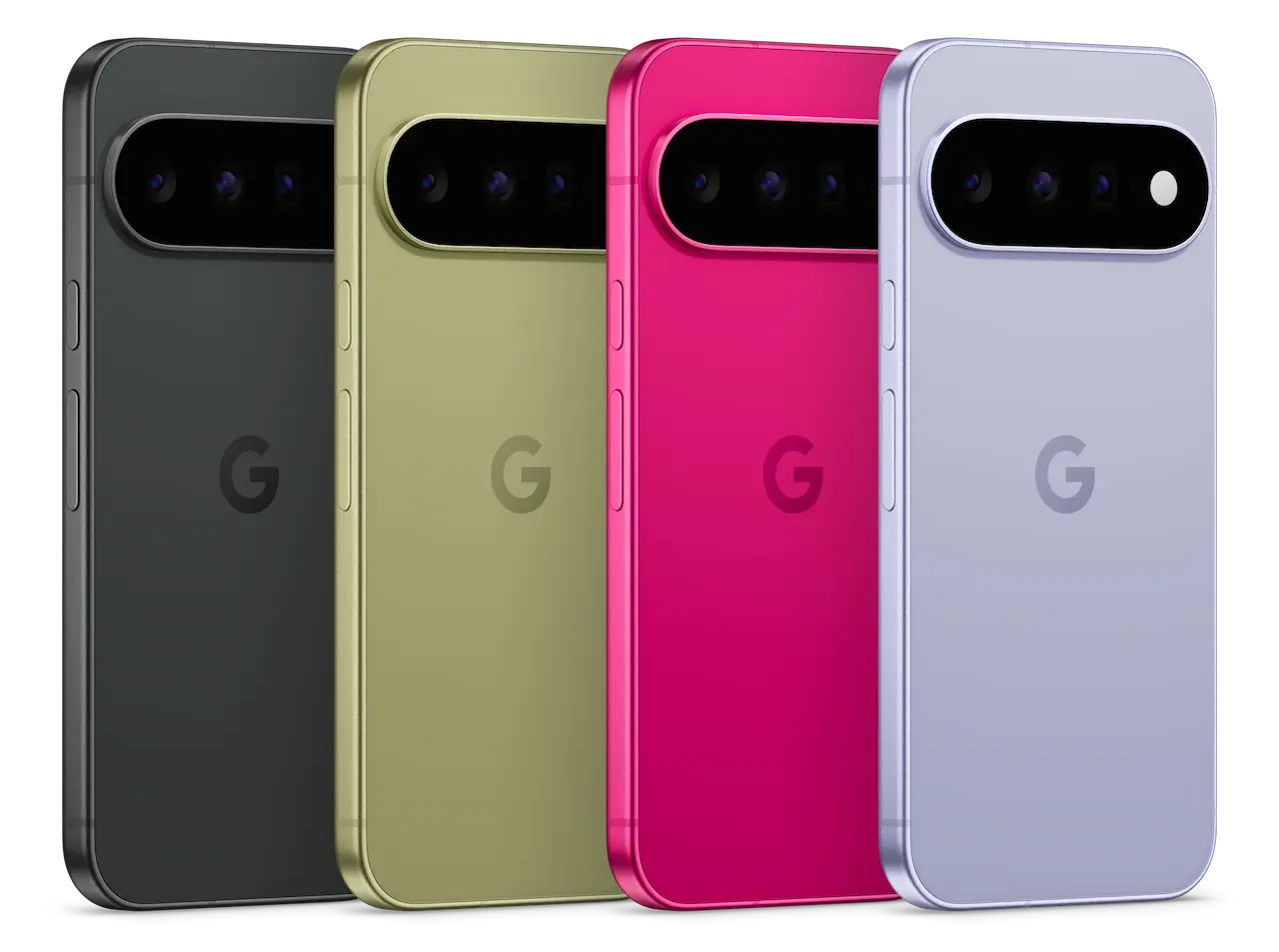
There are four color options: Frost, Fuchsia, Pistachio, and Volcanic Black.
Over 30 Hours of Battery Life
Battery life is another significant selling point for the Pixel 11. Google reports more than 30 hours of usage thanks to its adaptive battery, which analyzes user habits to limit power consumption from infrequently used applications. Wired charging allows users to recover about 55% of battery life in 30 minutes with the appropriate equipment.
While this may not be the most impressive charging speed on the smartphone market, Google seems focused on achieving a balance between battery life, thermal management, and longevity.
Pixelsnap: Magnetic Becomes a Central Feature of the Pixel
Another evolution that could significantly enhance daily use is Pixelsnap. The Pixel 11 supports Google’s magnetic system that facilitates the automatic alignment of chargers and accessories to the back of the smartphone.
Google claims its wireless charging is up to 25% faster than that of the Pixel 10.
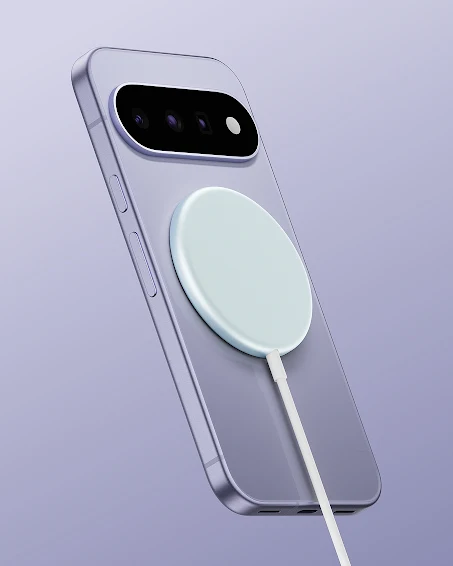
Including Pixelsnap on the standard model is significant. Google is not reserving it for the Pixel 11 Pro, thereby creating a coherent ecosystem across the entire range. Supports, desktop chargers, and other magnetic accessories should all operate on the same principle.
Titan M3: Google Focuses on Long-term Security
The Pixel 11 also introduces the new Titan M3 security chip. It works in conjunction with the Tensor G6 and employs post-quantum cryptography mechanisms to better prepare devices for future forms of cryptographic attacks.
Google continues to include its call screening features for unknown callers and detection of scam attempts in calls and messages. While this area may not sound as exciting as a new camera sensor, it can be a crucial consideration for a smartphone intended for long-term use.
Quick Share and AirDrop Finally Start Communicating
Google is also addressing one of the historical barriers between Android and the Apple ecosystem. The announcement reveals that Quick Share is now compatible with AirDrop, allowing the exchange of photos, videos, and files with compatible iOS and macOS devices without needing an Internet connection.
For households where Android, iPhone, and Mac coexist, this advancement could significantly impact daily life more than some AI functions.
Pixel users are now less isolated when they want to swiftly share a photo with a friend using an iPhone.
Why Not Go Straight for the Pixel 11 Pro?
The Pixel 11 Pro, of course, comes with superior specifications. It features a Super Actua display that can reach 3,600 nits, more RAM and storage, a more ambitious camera with a telephoto lens and Zoom Pro capabilities up to x120, vapor chamber cooling, and the HiLight function.
Thus, the Pixel 11 does make some concessions.
However, it retains many of the essential features: Tensor G6, Gemini, 12GB of RAM, 256GB of storage, 48 megapixels, x30 zoom, 3,000-nit display, over 30 hours of battery life, Pixelsnap, and Titan M3. This is precisely what might make it the preferred Pixel choice for most users.
Pixel 11: Probably the Reasoned Choice
The Google Pixel 11 does not aim to outshine the Pro models in every aspect of its specifications. Its appeal lies in its balance. It incorporates the structural advancements of the Pixel 11 generation — Tensor G6, Gemini, new computational photography, Pixelsnap, and Titan M3 — without multiplying the more specialized functions of the Pro models.
The Pixel 11 Pro will attract those seeking the best camera experience from Google. The Pro XL will appeal to those prioritizing a larger display and greater battery life, while the Fold caters to entirely different needs.
However, for anyone simply desiring the complete Pixel 11 experience without necessarily looking for the most sophisticated smartphone in the lineup, the standard Pixel 11 may well prove to be the most relevant model.



