

Google Maps evolves into a true personal assistant with AI: Ask Maps takes a significant step forward
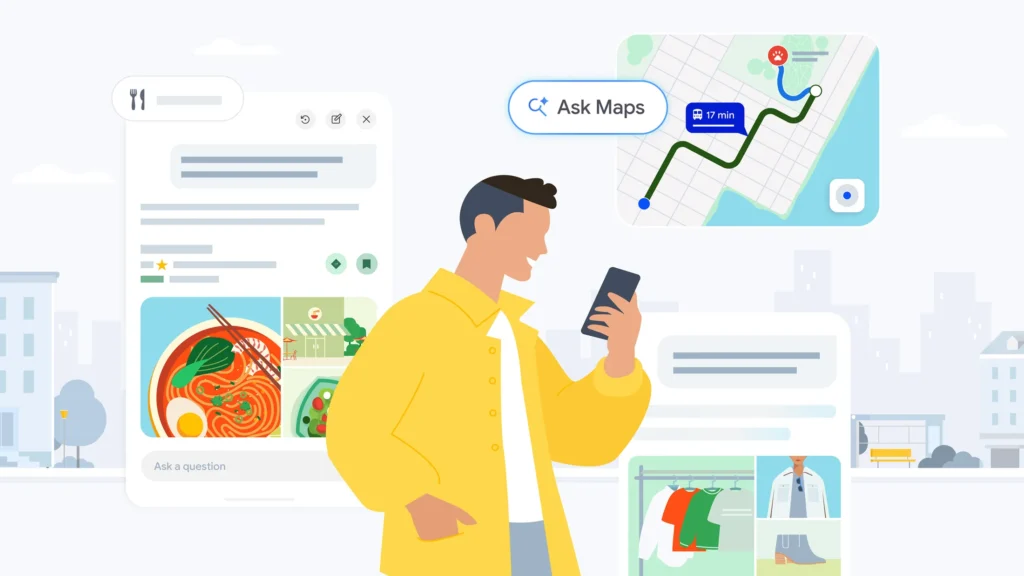
Google aims to enhance Google Maps beyond just providing directions. With a major update to Ask Maps, its conversational AI search engine, the application is evolving into a genuine assistant capable of planning outings, booking hotels, and even ordering meals.
Additionally, Google is introducing Personal Intelligence, a personalized AI layer that utilizes, with user consent, information from Gmail and Google Calendar to offer contextualized recommendations.
Ask Maps transitions from search to action
Since its launch, Google Maps has assisted billions of users in finding restaurants, businesses, or points of interest. The new aim is to go well beyond mere discovery.
With the new agentic capabilities of Ask Maps, users can now conduct searches in natural language. No more need to sift through dozens of establishments manually; simply describe what you are looking for.
For instance, you might request a restaurant that serves a specific cuisine, has a particular ambiance, or is located in a certain neighborhood. The AI identifies matching establishments and can automatically relay your order to partner services such as Uber Eats, Toast, or Square, even preparing the cart before final confirmation.
Google applies the same approach to travel.
Instead of browsing through a long list of hotels, users simply describe their needs: a property near a conference center, a gym, or major restaurants. Ask Maps then compares available offers, rates, and desired criteria before suggesting the most relevant options.
Personal Intelligence tailors recommendations
The most strategic new feature is likely Personal Intelligence. With the user’s permission, Google Maps can now access certain information from Gmail and Google Calendar to better understand the context of a search.
If a business trip is already logged in your calendar or a reservation is in your inbox, Ask Maps can automatically adjust its suggestions. The app can recommend hotels near the location of an event, suggest restaurants that align with your schedule, or anticipate certain needs without requiring you to provide all the details.
However, Google underscores that this personalization is entirely based on user consent, allowing individuals to choose whether or not to connect their Google services.
Outings, shows… and even ticket purchases
The AI also extends to entertainment. Users can inquire with Ask Maps about concerts, comedy shows, or events happening nearby that evening. The assistant will display different available options along with links to purchase tickets directly through partner platforms.
The clear goal is to minimize the back-and-forth between multiple apps and centralize the entire user journey directly within Google Maps.
Google steadily transforms Maps into an intelligent platform
This evolution reflects a broader trend at Google. Following the integration of Gemini into its ecosystem, the company is now focused on making each of its applications more proactive. Maps is evolving from merely functioning as a GPS to becoming a platform capable of understanding user intentions, contextualizing searches, and executing specific tasks on their behalf.
This strategy brings Google Maps closer to new AI assistants that can act rather than just respond to a query. Ultimately, the line between search engine, personal assistant, and navigation app may become increasingly blurred.
Currently, these new features are being gradually rolled out in the United States. Google has yet to provide a timeline for their availability in international markets.
This evolution nonetheless confirms an increasingly evident ambition: to make Google Maps one of the cornerstones of the company’s AI experience, capable of supporting users far beyond just their travels.



