

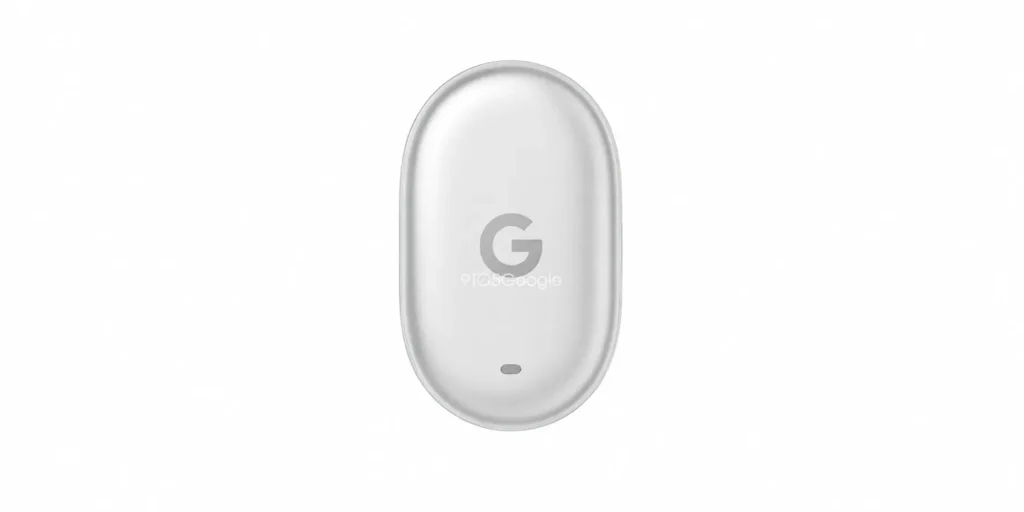
Google Pixel Tag: A Price Almost Identical to the AirTag Before Its Expected Launch on August 12
Google is finally preparing to enter the Bluetooth tracker market. After years of speculation, the Pixel Tag could be unveiled at the upcoming Made by Google event on August 12. However, according to a recent leak, the tech giant from Mountain View does not plan to attract users with a competitive price.
The Pixel Tag is expected to be priced at €34.90 in Europe, just ten cents less than Apple’s AirTag. This negligible difference suggests that Google prefers to focus on its ecosystem rather than engage in a price war.
A Pixel Tag Positioned Against the AirTag, Not Below It
According to information published by Dealabs, the Pixel Tag should launch at a price of €34.90, nearly identical to the AirTag, priced at €35 in various European markets. This pricing strategy leaves little room for deviation. Google seems to believe that Android users primarily seek an accessory that integrates perfectly with their smartphones, rather than a low-cost alternative.
This approach places the Pixel Tag directly in competition with Apple’s product, making an implicit promise: to provide a similarly smooth location experience within the Android ecosystem.
Integration with Find Hub Will Be a Major Selling Point
The upcoming tracker is expected to work with Find Hub, Google’s location network designed to help locate smartphones, connected devices, and compatible accessories. Like its competitor, the Pixel Tag will likely feature a speaker to help users find nearby objects by making the device emit a sound.
On paper, Google covers all the essential functions expected from a modern Bluetooth tracker. However, several technical details remain unknown.
The Ultra-Wideband Remains a Big Uncertainty
The main question mark revolves around the presence of an Ultra-Wideband (UWB) chip. This technology enables highly precise location tracking through directional guidance, one of the most appreciated features of the AirTag when used with a compatible iPhone.
At this point, no leaks confirm whether the Pixel Tag will have this feature. If Google does not include it, the accessory may lose one of the most distinguishing advantages of Apple’s product.
Another point of concern is the battery. Google has yet to clarify whether it will be replaceable, like the AirTag, or rechargeable.
More Than Just an Accessory, a Test for the Android Ecosystem
The Pixel Tag represents much more than just a connected accessory. In recent months, Google has accelerated the development of its Find Hub network to provide a credible alternative to Apple’s Find My network. The goal is clear: to strengthen the Android ecosystem with accessories that can integrate seamlessly between smartphones, smartwatches, and everyday items.
The Pixel Tag could thus become a showcase of this strategy, as long as the location network’s performance meets expectations.
A Launch That Could Strengthen the Pixel Offerings
The Made by Google event on August 12 is expected to be particularly eventful. In addition to the Pixel Tag, Google is set to unveil the new Pixel 11 series, the Pixel Watch 5, and the Pixel 11 Pro Fold.
The arrival of a house tracker would complete an increasingly coherent range of accessories, where each device integrates with the rest of the Pixel ecosystem.
Google Can’t Afford Any Mistakes
By choosing a price that is nearly identical to the AirTag, Google changes the nature of the comparison. The Pixel Tag will not be judged as an economical alternative, but as a direct competitor. Users will expect a level of accuracy, reliability, and integration comparable to what Apple has been offering for several years.
Everything will now hinge on three elements: the quality of the Find Hub network, the possible presence of Ultra-Wideband, and the everyday user experience.
Price will not make a difference. It will be performance that determines whether Google can finally provide a true benchmark for Android users.



