

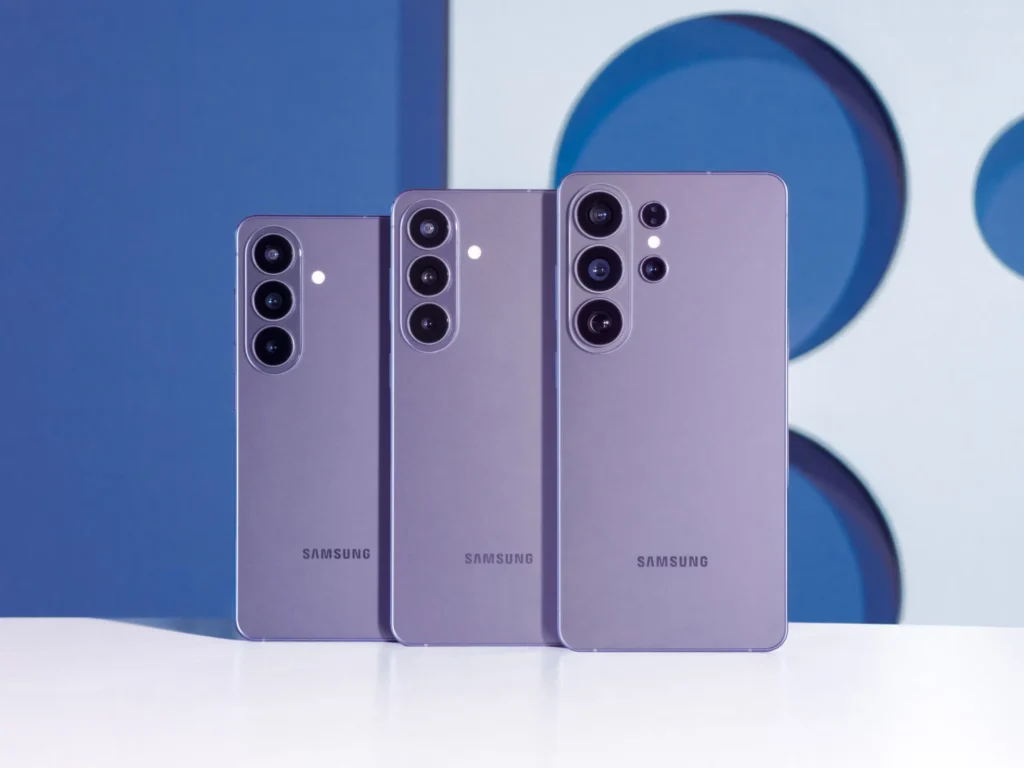
Galaxy S27: Samsung may adopt a Sony camera sensor for its future smartphones
Just after the official launch of the Galaxy Z Fold 8 and Z Flip 8, rumors around the next generation of Galaxy S smartphones are already heating up. According to various sources, Samsung is allegedly preparing a significant evolution in the camera department for the Galaxy S27 series, featuring an unprecedented change that could represent a break from several years of continuity.
The company is reportedly considering replacing its own ISOCELL sensors with a camera sensor developed by Sony on certain models.
Samsung may rely on Sony for its main sensor
According to information released by GalaxyClub, the upcoming Galaxy S27 and Galaxy S27 Plus may feature a new 50-megapixel Sony main sensor. If this rumor proves to be true, it would mark a significant shift in Samsung’s strategy.
Since the introduction of the Galaxy S22 series in 2022, the brand’s premium models have utilized internally designed ISOCELL main sensors.
Switching to a Sony sensor would represent the first substantial hardware evolution for the main camera of standard models in several generations. However, this wouldn’t be the first collaboration between the two companies.
Galaxy devices already use Sony components in certain camera modules. Notably, the ultra-wide sensors in the Galaxy S23, S24, S25, and S26 are based on a 12-megapixel Sony IMX564.
A broader overhaul of the Galaxy S27 lineup
Previous leaks have also mentioned other significant updates. The future Galaxy S27 Pro and Galaxy S27 Ultra might feature a new 16-megapixel front camera, an enhancement representing the first evolution of the selfie sensor since the Galaxy S23 generation.
At this point, it remains uncertain whether this update will also apply to the Galaxy S27 and S27 Plus models.
Samsung may reserve this upgrade for the more premium versions.
The Galaxy S27 Ultra may opt for three sensors instead of four
The Ultra version could adopt a new photographic approach. According to several rumors, Samsung is likely to keep a 200-megapixel main sensor but will drop its traditional four-camera system in favor of a setup with only three lenses.
The camera module would reportedly include a 200-megapixel main sensor, a new 50-megapixel ultra-wide sensor, and a 50-megapixel telephoto sensor. The exact specifications of these new sensors remain undisclosed, but several sources mention significant improvements in image quality and photoprocessing.
New display technologies and a new processor expected
The updates will not be limited to photography. Several pieces of information also hint at the introduction of a Privacy Display across the entire Galaxy S27 range. This technology would limit viewing angles to protect the information displayed on the screen from prying eyes.
In terms of performance, Samsung is gearing up for a new generation of processors. The Galaxy S27 Ultra will reportedly utilize the upcoming Snapdragon 8 Elite Gen 6 Pro, while some markets may see the Galaxy S27, S27 Plus, and S27 Pro adopting the new Exynos 2700.
According to various rumors, this new in-house chip could reduce or even exceed the performance of Qualcomm solutions in specific scenarios.
A strategic generation for Samsung
These insights should naturally be taken with caution, as the launch of the Galaxy S27 series is still some time away. Nevertheless, they sketch out an intriguing direction. After several generations characterized by gradual advancements, Samsung appears ready to reconsider some nearly immutable technical choices, particularly in photography.
The potential adoption of a Sony main sensor would signify a bold statement. More than just a supplier change, it reflects a commitment to seeking out the best available solutions to enhance the competitiveness of the Galaxy lineup against increasingly aggressive competition. Combined with a new camera architecture, the possible Galaxy S27 Pro model, and innovations in display and processors, these changes could render the upcoming generation one of the most ambitious for Samsung in years.
As always at this stage of the development cycle, none of this information has been officially confirmed. The coming months will reveal whether Samsung is indeed preparing the deep renewal that many observers are anticipating.



