

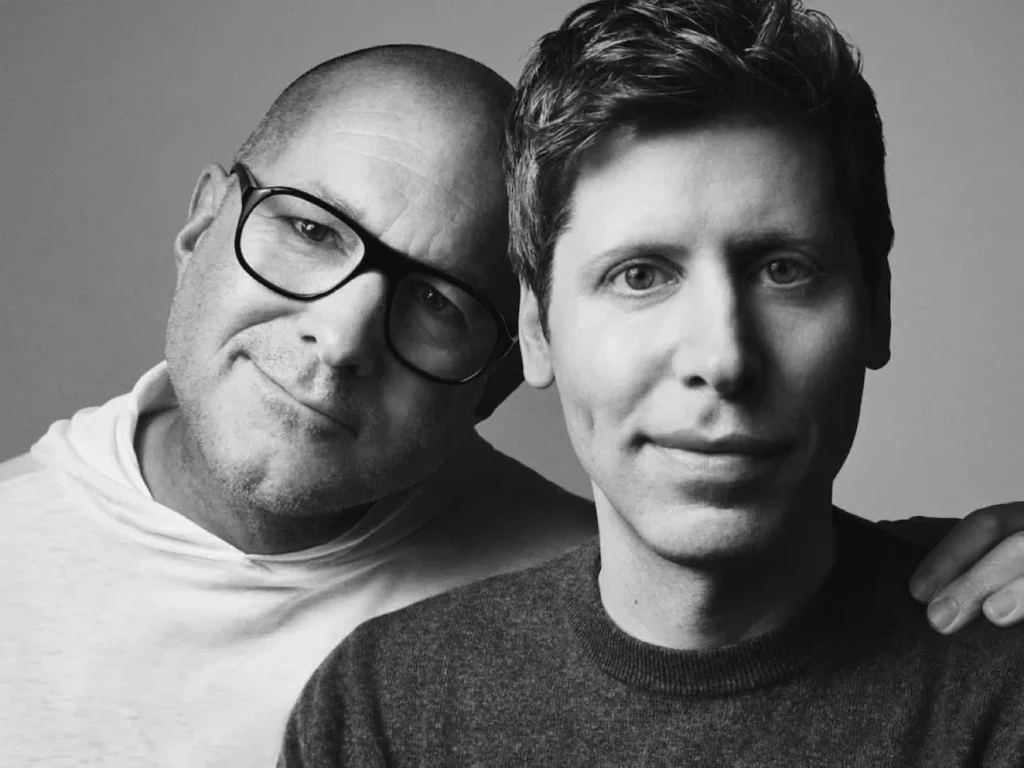
Apple sues former employees linked to OpenAI… but carefully avoids mentioning Jony Ive
The battle between Apple and OpenAI is taking a new legal turn. The California-based company accuses two former employees of taking confidential information related to its upcoming hardware projects. However, one name is notably absent: Jony Ive, the former design chief of Apple, who is now leading OpenAI’s hardware ambitions.
According to Mark Gurman from Bloomberg, this omission is not by chance, but rather a result of a carefully considered strategic choice.
Apple targets two former executives, not Jony Ive
The lawsuit, filed in a federal court in Northern California, targets Tang Tan, a hardware executive at Apple for nearly twenty-four years and now the hardware director at OpenAI, alongside Chang Liu, a former engineer at the company.
Apple claims they improperly utilized internal code names during recruitment efforts, obtained confidential documents after leaving the company, and took information regarded as trade secrets.
The aim of this legal action is to protect internally developed technologies as Apple also prepares to launch a new generation of devices featuring extensive artificial intelligence capabilities.
An astonishing silence regarding Jony Ive
The absence of Jony Ive from this case is intriguing especially since the former Chief Design Officer at Apple plays a central role in OpenAI’s hardware strategy. Following the acquisition of his startup by OpenAI for approximately $6.5 billion, he is overseeing the future hardware products developed around artificial intelligence.
Reports suggest that over 400 former Apple employees have also joined this new venture. Despite his significant role, his name does not appear at any point in Apple’s forty-page lawsuit.
A decision that may be both legal and relational
In his Power On newsletter, Mark Gurman offers several explanations. The first is legal: at this stage, there’s no indication that Jony Ive was directly involved in the actions Apple accuses others of. The allegations primarily focus on employee recruitment and the management of confidential documents, tasks that fell more to operational leaders like Tang Tan.
However, Gurman also suggests a political dimension. According to the journalist, Apple may have been reluctant to confront such an iconic figure from its history directly.
The lasting influence of Laurene Powell Jobs
Mark Gurman highlights the close ties between Jony Ive and Laurene Powell Jobs, the widow of Apple’s co-founder. They have maintained a close relationship for several years, and Laurene Powell Jobs has invested in various entrepreneurial projects of Jony Ive.
Gurman notes that a public confrontation with the former designer could have created unnecessary tensions surrounding a figure still strongly associated with Steve Jobs’s legacy.
However, this hypothesis has not been confirmed by Apple or the parties involved.
A rivalry that now extends beyond software
Beyond the legal proceedings, this case illustrates the shifting dynamics of competition between Apple and OpenAI. Once focused on software and AI models, the rivalry is now expanding into hardware. OpenAI is developing its first devices designed under Jony Ive’s direction, while Apple is accelerating the development of its own products integrating Apple Intelligence.
In this context, talent, technologies, and industrial secrets are becoming particularly sensitive strategic assets.
Apple’s choice to leave Jony Ive out of its lawsuit could either signify a desire to target only those directly involved in the alleged actions or reflect a broader strategy to avoid confrontation with one of its most iconic figures. Whatever the motives, this case confirms that competition between the two companies will no longer be limited to AI software, but will also encompass the devices that deliver them into users’ daily lives.



