

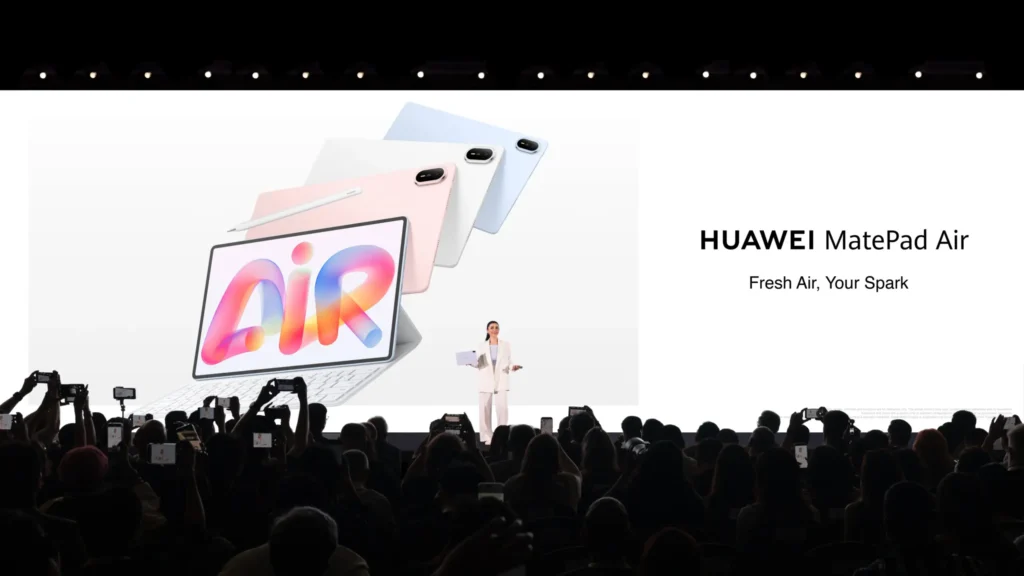
Huawei MatePad Air 2026: This 144 Hz OLED Screen Makes the iPad Air Look Too Conservative
The iPad Air remains one of the easiest tablets to recommend due to its power and software ecosystem. However, in terms of hardware, Huawei clearly shakes up the hierarchy. The new MatePad Air 2026 is launching internationally with a 144 Hz OLED screen, a 10,100 mAh battery, and included accessories, showcasing several ongoing compromises from Apple.
The tablet will be available starting August 1st in select international markets.
A Screen That the iPad Air Should Have Offered Long Ago
The standout feature of the MatePad Air is undoubtedly its display. Huawei has opted for a 12-inch OLED panel with a resolution of 2,800 × 1,840 pixels, a refresh rate of 144 Hz, a peak brightness of 1,200 nits, P3 color gamut coverage, and a claimed contrast ratio of 2,000,000:1.
The PaperMatte version includes a nano-engraving treatment designed to reduce glare and provide a writing experience closer to paper.
In contrast, the iPad Air M4 features an IPS LCD display limited to 60 Hz. The 11-inch model caps at 500 nits, while the 13-inch version reaches 600 nits. At Apple, OLED, ProMotion, and nano-textured glass are only available on the much pricier iPad Pro.
The difference will be immediately noticeable in scrolling, high-refresh-rate gaming, or while enjoying HDR content.
A Particularly Slim Tablet
The MatePad Air doesn’t just offer an attractive display. With only 5.3 mm thick and weighing 509 grams, it ranks among the slimmest tablets on the market, while still being light enough for portable use.

Huawei also offers it in three vibrant colors, enhancing its more expressive positioning compared to most traditional professional tablets.
A 10,100 mAh Battery with 66 W Charging
Battery life is another strong point of the tablet. Huawei integrates a 10,100 mAh battery that supports 66 W wired charging. The company claims up to 16 hours of local video playback.
The technical specifications also include six speakers, Wi-Fi 7, a 12-megapixel front camera, and a 50-megapixel rear sensor. On paper, Huawei aims to impress not just with the display, but also by offering a comprehensive tablet for multimedia, productivity, and creation.
M-Pencil Pro, Multitasking, and AI Tools

The M-Pencil Pro features several advanced functions. It can serve as a remote for presentations or work as an air mouse, while Huawei Notes offers handwriting transcription, automatic cleaning of handwritten notes, and AI-based tutoring tools.
The tablet also supports WPS Office, floating windows, up to three simultaneous applications, and various AI functions dedicated to note-taking and productivity. However, Huawei notes that some features may vary by region or require a subscription.
Premium Prices, But Accessories Already Included
The Huawei MatePad Air 2026 will be available starting at €849 in a configuration that includes 8 GB of RAM, 256 GB of storage, and the Smart Magnetic Keyboard. The PaperMatte version, bundled with the keyboard or the M-Pencil Pro, will cost €899, while the configuration equipped with 12 GB of RAM will reach up to €999.
Huawei is thus taking a resolutely high-end position, but with an important difference compared to Apple: essential productivity accessories are included in some offers instead of being charged separately.
Impressive Hardware, But the Ecosystem Remains Crucial

The MatePad Air 2026 highlights a persistent weakness of the iPad Air: Apple maintains relatively conservative display hardware on a tablet that is still priced at a premium. Huawei offers a fast OLED panel, a generous battery, and better-integrated accessories. When it comes to strictly hardware, the comparison is difficult for Apple.
However, the iPad Air retains a major advantage: its ecosystem of applications, software longevity, and the quality of its professional creative tools. This is likely where the decision will ultimately be made.
Huawei delivers a tablet that many wish to see on the iPad Air’s spec sheet. Meanwhile, Apple continues to offer the most coherent experience. Between spectacular hardware and a proven ecosystem, the competition has never been clearer.



