

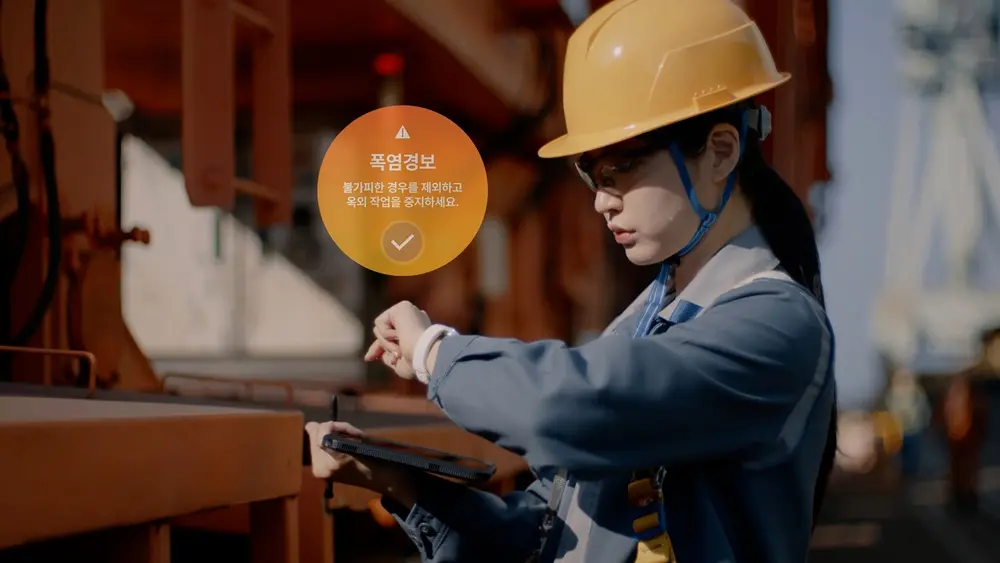
Samsung turns Galaxy Watch into a tool for preventing heat strokes at work
Smartwatches have evolved beyond merely counting steps or monitoring sleep. Samsung has announced a new feature designed to protect workers exposed to extreme heat with its Galaxy Watch.
Developed in partnership with the South Korean Ministry of Employment and Labor, this new thermal stress management system leverages data from Galaxy Watch LTE and the SmartThings Pro platform to detect risks associated with extreme temperatures.
Real-Time Monitoring of Working Conditions
Unlike standard smartwatches that only display the weather or alert users when they have been sitting for too long, this solution goes much further.
The system continuously analyzes various parameters: ambient temperature, humidity levels, the worker’s heart rate, and their level of physical activity. By combining this information, the algorithm assesses the actual level of thermal stress each individual faces.

The goal is to measure the individual risk rather than relying solely on external temperature readings.
Already in Use on a Large Samsung Construction Site
This technology is currently being implemented at the construction site of a new semiconductor factory on Samsung’s campus in Pyeongtaek, South Korea. The system calculates the perceived temperature at the work site in real time.

When certain thresholds are reached, managers receive immediate alerts via SmartThings Pro. Samsung bases its alerts on South Korean government recommendations, which include three alert levels:
- 33 °C: heightened vigilance
- 35 °C: heat alert
- 38 °C: significant danger requiring a halt to activities
Managers Can Directly Alert Employees
One of the most intriguing features is the ability to communicate directly with workers. As soon as a risk is detected, managers can send notifications directly to the Galaxy Watches of the affected employees.

These alerts recommend taking a break, staying hydrated, moving to shaded areas, or even stopping work altogether when conditions become critical.
The watch thus becomes a genuine prevention tool capable of intervening before a heat stroke occurs.
Personalized Analysis Through Biometrics
Samsung has developed its algorithm in collaboration with researchers from Incheon National University. Unlike a simple thermometer, the system considers numerous parameters unique to each worker: age, sex, height, weight, heart rate, intensity of effort, and working conditions.
The aim is to estimate internal body temperature in real time and assess risk levels far more accurately.
The manufacturer also explains that it partnered with Samsung Medical Center to compare the algorithm’s predictions with actual physiological responses observed during high heat exposure.
This personalized approach is particularly relevant since two individuals can react in vastly different ways to the same temperature depending on their physical condition, hydration levels, or health status.
Privacy Concerns Remain Unresolved
Currently, this feature is not available to the general public. It is a professional (B2B) solution integrated into SmartThings Pro, Samsung’s building and infrastructure management platform. Collected biometric data is centralized on a dashboard accessible to team leaders.
Samsung emphasizes that SmartThings Pro is ISO 27001 certified, an international standard related to information system security.
However, widespread deployment raises pressing questions regarding employee consent, data retention periods, who is authorized to access this medical information, and how employers might utilize it.
A Useful Technology, But Not a Substitute for Safety Measures
Samsung reminds users that this solution is not a miraculous safeguard against extreme heat. A smartwatch cannot replace adequate working conditions, access to water, shaded areas, or regular breaks.
However, it can assist managers in quickly identifying workers whose bodies begin to suffer from heat stress and intervene before a dangerous situation arises.
With heatwaves becoming increasingly common in many parts of the world, this type of technology could soon find applications in construction, manufacturing, and outdoor logistics sectors.



