

Apple extends its partnership with Broadcom until 2031 despite its in-house chips
Apple continues its vertical integration strategy by developing more internal components. After replacing Broadcom’s Wi-Fi and Bluetooth chips with its own solution in the iPhone 17, many speculated that their collaboration was coming to an end.
However, that’s not the case. Apple has just signed a new agreement with Broadcom, extending their partnership until 2031. This decision demonstrates that, despite its ambitions to handle everything in-house, the Cupertino giant still heavily relies on key suppliers.
Apple has replaced Broadcom… but only partially
Last year, Apple made a significant step by launching its first in-house network chip, named N1. Present across the entire iPhone 17 lineup, this chip supports Wi-Fi 7 and Bluetooth 6, replacing the Wi-Fi/Bluetooth components that Broadcom has provided since the very first iPhone launched in 2007.
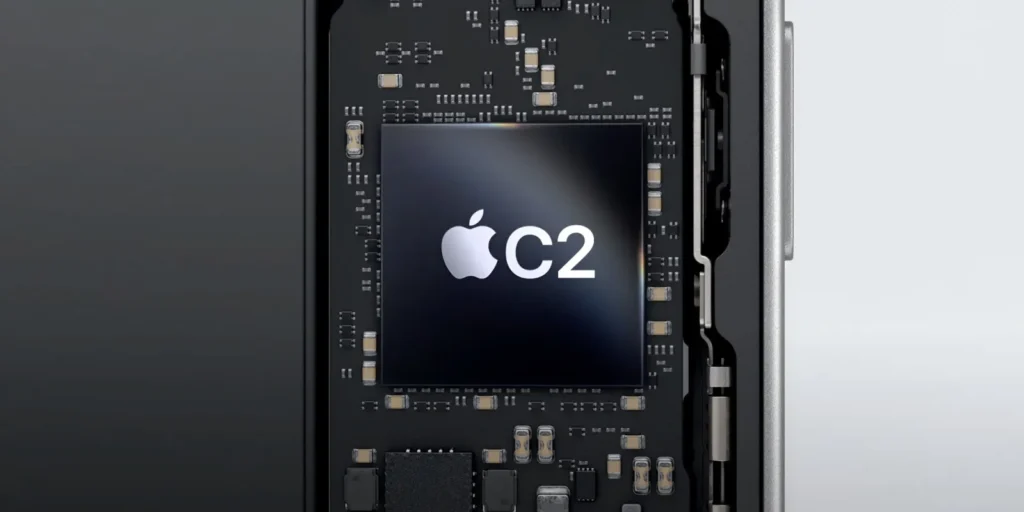
This development aligns with Apple’s goal of gradually reducing its dependence on long-standing partners, similar to what it did with Intel by developing Apple Silicon chips for Macs, and with Qualcomm through its new C-series cellular modems.
Broadcom remains essential for mobile communications
Even though Apple now masters a portion of wireless connectivity, Broadcom continues to play a vital role in iPhone design. The company still supplies several critical components of the RF Front-End, an essential part of the radio chain that enables smartphones to communicate with cellular antennas.
Among these components are RF filters that eliminate interference, power amplifiers that enhance signal range, and various modules that improve the quality of 4G and 5G communications.
Without these elements, network performance would be significantly impaired, especially in areas with weaker mobile coverage.
Broadcom also supplies some power management circuits used in iPhones.
A partnership extended until 2031
Apple and Broadcom have decided to prolong their collaboration for several more years. According to various analysts, Apple accounts for about 20% of Broadcom’s revenue, which raised concerns among investors about a substantial loss of income if Apple chose to produce all these components in-house.
This new agreement reassures the markets.
The reaction was swift: Broadcom’s stock rose nearly 4% following the announcement, while Apple’s shares also ended the session higher.
Why does Apple continue to trust Broadcom?
At first glance, this decision may seem surprising given Cupertino’s efforts to reduce its reliance on external suppliers. In reality, developing RF components is particularly complex.
These chips must operate across hundreds of different frequency bands globally while ensuring excellent energy efficiency and impeccable performance.
Broadcom offers decades of experience in this area, making its expertise challenging to quickly replace.
According to Jacob Bourne, an analyst at eMarketer, this agreement also allows Apple to secure its supply in a context where certain electronic components remain in high demand due to the surge in AI-related technologies.
The AI-related shortage continues to impact the industry
For several months, semiconductor manufacturers have prioritized the production of components for AI accelerators, which are significantly more profitable. This situation has led to strain on other categories of chips, including DRAM memory, NAND Flash, and various radio components used in smartphones.
By locking in its partnership with Broadcom until 2031, Apple secures privileged access to essential components for its future iPhones. This strategy also allows Apple to avoid immediate investments in the development of highly specialized technologies that may not be a priority.
Apple moves towards independence… at its own pace
The replacement of Wi-Fi and Bluetooth chips with the N1 component clearly demonstrates Apple’s desire to gain greater control over its hardware. However, the renewal of the agreement with Broadcom proves that this transition will be gradual. Some technologies, particularly those linked to cellular communications, remain extremely complex to develop and still require the expertise of historical partners.
Thus, Apple continues its quest for autonomy, but without jeopardizing the performance of its devices. For Broadcom, this agreement guarantees several years of financial stability, while for Apple, it secures an essential part of its supply chain for future iPhones.



