

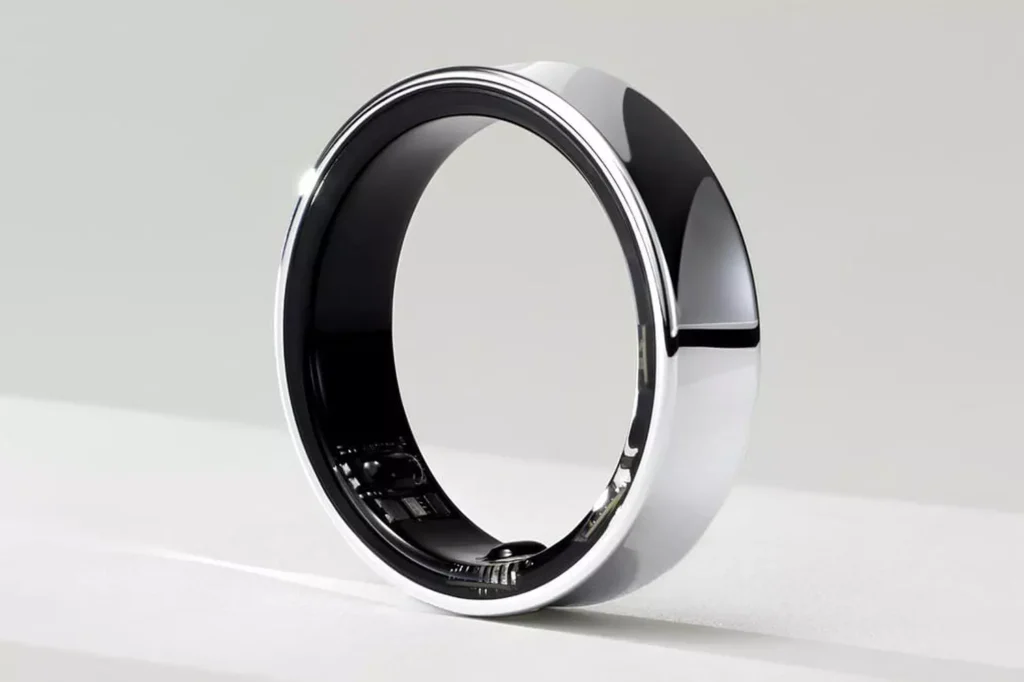
Galaxy Ring 2: Samsung develops a connected ring with smarter health AI
Samsung appears to be focused on enhancing its connected ring not just through new sensors. The upcoming generation of Galaxy Ring is expected to feature artificial intelligence that interprets daily health data to quickly identify significant changes in the user’s condition.
Galaxy Ring 2: Samsung confirms development of a new generation
In an interview with Forbes, Hon Pak, the head of Samsung’s Digital Health division, confirmed that a new connected ring is currently in development.
However, the company has not revealed its official name, launch date, or technical specifications. Until an official announcement is made, the name Galaxy Ring 2 remains a placeholder used by observers.
While the hardware details are still largely under wraps, Samsung has provided several clues about the direction of its future health ecosystem.
Continuous monitoring to better detect anomalies
The stated goal is to enable devices to better understand each user’s normal functioning before identifying deviations that may require attention.
Samsung is already developing several features based on this approach.
One such feature will analyze seven nights of sleep to establish a personalized baseline profile. The Samsung Health app will consider various indicators, including heart rate, respiratory rate, blood oxygen levels, and other physiological data recorded during sleep.
Once this baseline is established, the system will be able to detect unusual variations and suggest medical consultations or lifestyle changes if necessary.
Why is the ring an ideal format?
The Galaxy Ring has a natural advantage over smartwatches: it is much more discreet to wear at night. Sleep is currently one of the richest time frames for exploitable physiological data.
A ring capable of continuously measuring various parameters without disturbing the user is a particularly suitable tool for feeding AI-based analysis models.
Samsung seems to want this passive data collection to be the cornerstone of its health strategy.
Artificial intelligence becomes the real product
According to Hon Pak, the competition among manufacturers of connected rings will no longer be solely about the sensors. Most players are now using relatively similar technologies. The real difference will come from the software’s ability to transform these measurements into genuinely useful advice.
Samsung plans to leverage its entire ecosystem.
The Galaxy Ring will continuously feed data into Samsung Health, while a Galaxy Watch will provide complementary measurements. SmartThings devices will also enrich the analysis with observed lifestyle habits at home, whether related to sleep routines, daily activities, or certain behaviors.
The goal is to create a system capable of offering personalized recommendations rather than just statistics.
A future personalized health coach
Samsung is also discussing the development of an intelligent coaching system. The idea is for AI to learn not only the user’s habits over time but also the best ways to communicate with them.
The system could adapt when to send recommendations, the tone used, and the type of motivation employed to encourage better lifestyle choices. The goal is no longer just to measure, but to support the user in their daily habits over the long term.
An uncertain future openness
Currently, the Galaxy Ring primarily operates within Samsung’s Android ecosystem. When asked about the possibility of opening to other platforms, Hon Pak was cautious but hinted that new announcements could be forthcoming.
However, no additional details were provided regarding potential compatibility with iOS or other Android devices.
The battle of connected rings will be fought over algorithms
The next generation of smart rings will likely not be defined by the number of built-in sensors but by the quality of the analyses they can produce.
Samsung appears to have recognized this evolution. Rather than multiplying measurements, the company seeks to build a true interpretation system capable of distinguishing trivial variations from genuinely concerning signals.
However, the challenge remains significant. A health AI must strike the right balance between vigilance and discretion: too many alerts could annoy users, while a lack of responsiveness would diminish its value. If Samsung can convert passive data into genuinely useful and personalized advice, the Galaxy Ring 2 could represent a significant advancement in the evolution of connected devices aimed at well-being.



