

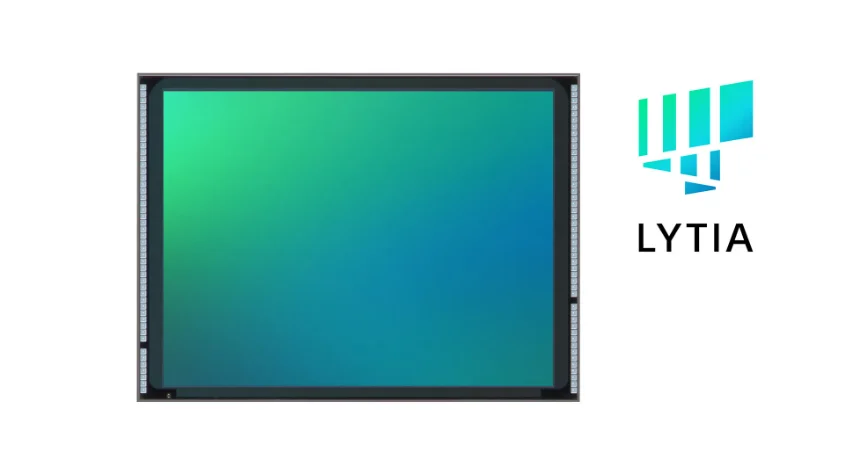
Sony unveils the LYTIA 610 sensor: a new step towards high-definition zoom on smartphones
Sony continues to strengthen its position in the mobile camera sensor market. With the new LYTIA 610, the Japanese manufacturer introduces a groundbreaking architecture that promises to enhance image quality, autofocus, and video performance—all achieving a balance rarely found in telephoto sensors.
A new pixel architecture to push the limits of zoom
The Sony LYTIA 610 is a stacked CMOS sensor in a 1/2-inch format offering approximately 64 megapixels. Its main innovation lies in the adoption of the RB2× 2 On Chip Lens (OCL) technology, hailed as a world first in a mass-produced sensor.
Unlike conventional architectures, this design employs two distinct optical structures according to the pixel colors.
Green pixels, which are crucial for perceiving detail and sharpness, benefit from a dedicated 1×1 lens, optimized to maximize resolution. Red and blue pixels are grouped under a 2×2 structure, specifically designed to enhance phase detection autofocus performance.
To fully leverage this new arrangement, Sony has also developed a new demosaicing algorithm capable of reconstructing images with greater precision.
According to the manufacturer, this combination results in over 20% additional spatial resolution compared to the LYTIA 601, even though both sensors utilize identical 0.7 μm pixels.
Significant improvements in video performance
The upgrades extend beyond photography. Sony claims to have revamped the entire internal processing pipeline and the data conversion system, enabling the LYTIA 610 to reach a reading speed approximately double that of the previous generation of 1/2-inch sensors.
This increased bandwidth paves the way for more advanced video features, including 4K recording at up to 120 frames per second, 4K HDR capture at 60 fps, and reduced exposure and colorimetry differences between photo modules during focal changes in video. These enhancements should facilitate more natural transitions between ultra-wide, main, and telephoto sensors—a significant area for improvement in many high-end smartphones.

A technical specification designed for future camera phones
The new sensor features a 1/2-inch optical format, approximately 64 effective megapixels, a Stacked CMOS architecture, the RB2× 2 On Chip Lens technology, and MIPI C-PHY and D-PHY interfaces compatible with the latest mobile platforms.
Sony indicates that the first shipments to manufacturers are set to begin by the end of June 2026.
Sony continues to focus on innovation rather than just sensor size
While many manufacturers are concentrating on increasing the size of sensors or the number of megapixels, Sony is taking a more nuanced approach. The LYTIA 610 exemplifies an underlying trend in the industry: optimizing the internal architecture of pixels to simultaneously enhance resolution, reading speed, and autofocus, without expanding the camera module’s footprint.
This strategy directly addresses the needs of periscope telephoto lenses, where every millimeter counts, and compromises between sharpness and autofocus are still prevalent.
Ultimately, this new generation of sensors could enable future premium smartphones to offer more effective optical zoom, smoother video, and significantly more natural camera transitions, all without necessitating ever-bulkier modules.



