

HMD Luma 2: An Android Smartphone Inspired by the iPhone 17 Pro
The trend is not new in the mobile industry. With every new iPhone generation, several Android manufacturers often draw, more or less freely, from Apple’s aesthetic choices for their budget and mid-range devices.
However, with the upcoming HMD Luma 2, the line between inspiration and imitation appears particularly thin.
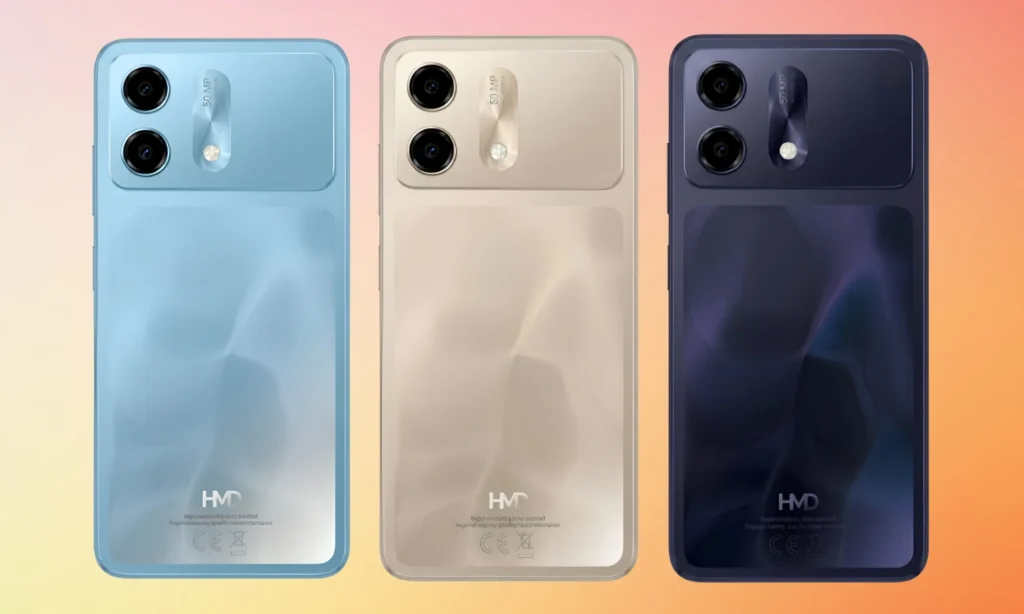
New renders leaked by @smashx_60 reveal a smartphone that borrows numerous visual elements from the upcoming iPhone Pro models. This strategy could allow HMD to offer a premium-looking device while maintaining a much more accessible price point.
A Design That Strongly Resembles the iPhone 17 Pro
At first glance, the resemblance is hard to ignore. The images unveiled showcase a large rectangular camera module occupying the entire upper portion of the device’s back. This approach immediately calls to mind the renders circulating recently around the iPhone 17 Pro.
The main difference lies in the camera configuration. While Apple would opt for a triple camera module, HMD would settle for two sensors.
The renders also suggest a two-tone finish. The bottom part of the smartphone appears visually distinct from the upper area, a characteristic reminiscent of the latest iPhone Pro models, where the camera section stands out from the rest of the chassis.
Even the “Midnight Lake” hue hinted at in the leak bears similarities to the bluish tones expected on Apple’s upcoming premium models.
A Strategy Already Embraced by HMD
This aesthetic direction is not new for the brand. The current HMD Luma already displayed several visual codes inspired by Apple smartphones, particularly with its camera module positioned in the upper left corner of the device’s back.
With the Luma 2, HMD seems to be taking this logic even further by incorporating design elements associated with the most recent iPhone generations. This approach could prove effective in the budget segment, where aesthetics often play a significant role in purchasing decisions.
HMD Luma2/M-Kopa X4
– IPS LCD 6.75” HD+, 120 Hz
– 50MP + AI Lens/8MP
– 4/128GB, 4/256GB + 1 TB Micro SD
– LPDDR4X, UFS 2.1
– Up to 8GB* RAM with Virtual RAM
– Unisoc T7280 SoC
– Android 16
– 6,000 mAh + 18W
– 3.5 mm audio, OZO Playback, IP54 etc.
Ice Blue, Light Sand, Midnight Lake pic.twitter.com/Mj15lqHyhQ— HMD_MEME’S (@smashx_60) June 19, 2026
A Modest Yet Balanced Technical Sheet
Behind this premium design, however, is a configuration oriented more toward accessibility. According to information shared by the leaker, the HMD Luma 2 would feature a 6.75-inch HD+ IPS LCD display with a 120 Hz refresh rate.
The smartphone would be powered by a Unisoc T7280 processor accompanied by 4 GB of LPDDR4X memory. A virtual RAM extension would allow it to reach up to 8 GB for certain tasks.
Two storage options would be available: 128 GB and 256 GB. The entire setup would be expandable up to 1 TB via a microSD card slot, a feature that is becoming increasingly rare in the smartphone market.
Android 16 and a Generous Battery
The upcoming device could ship with Android 16 out of the box, an appealing selling point for a model positioned in the budget segment.
The camera setup would center around a 50-megapixel main sensor accompanied by a secondary module whose function remains unknown at this stage. On the front, HMD would rely on an 8-megapixel selfie camera.
Battery life could indeed be one of the smartphone’s strong points, thanks to its 6,000 mAh battery compatible with 18W wired charging. This significant capacity suggests potentially above-average endurance for its segment.
The HMD Luma 2 may also appeal to users with its inclusion of several features that are progressively disappearing from modern smartphones. Among these are a 3.5 mm headphone jack, OZO audio technology, and an IP54 certification for splash and dust resistance.
These attributes reinforce its practical and accessible positioning, targeting users who prioritize battery life and versatility over extreme performance.
Premium Design Becomes Accessible
If these details hold true, the HMD Luma 2 exemplifies a broader trend in the mobile market: the democratization of aesthetic codes once reserved for flagship devices.
Budget smartphones are no longer just aiming to be affordable; they are now striving to replicate the look and visual experience of premium models to attract a wider audience.
It remains to be seen whether consumers will view the Luma 2 as a successful homage to Apple’s designs or as a somewhat heavy-handed inspiration. One thing is certain: in an increasingly competitive market, appearance remains a powerful selling point.



