

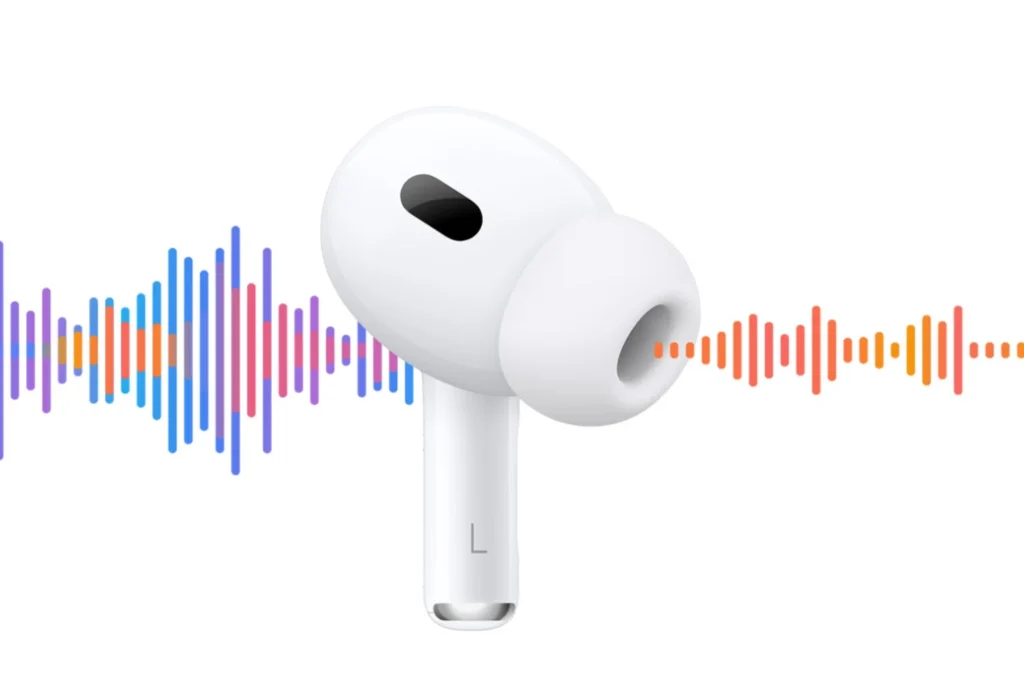
AirPods with Camera and Smart Glasses: Apple is Preparing its AI Revolution for 2027
Artificial intelligence won’t be confined to our screens. According to the latest information from Bloomberg, Apple is actively working on a new generation of devices capable of seeing the world around us. At the heart of this strategy: AirPods equipped with cameras and the brand’s first smart glasses.
If these projects come to fruition in 2027, they could represent a major turning point in Apple’s vision.
The goal would no longer be simply to provide a powerful conversational assistant, but to create an artificial intelligence capable of understanding its environment in real-time.
Apple Intelligence Wants to Move Beyond the Screen
Since the advent of Apple Intelligence, the Cupertino firm has been cautiously advancing in the field of generative AI. Unlike its competitors, Apple is not looking to multiply chatbots or showcase spectacular demonstrations. Its strategy seems more oriented towards the discreet integration of AI into everyday uses.
This is precisely where the future AirPods and smart glasses come into play.
According to reports from Mark Gurman, the integrated cameras would not be used for capturing photos or videos like a smartphone. Their mission would be much more ambitious: to provide a continuous visual context to Siri and Apple’s AI models.
In other words, Apple aims to give its assistant eyes.
AirPods Capable of Understanding Your Environment
The idea may seem surprising at first. Today, AirPods are associated with music, calls, or noise cancellation. However, Apple could assign them a completely different role.
With miniaturized visual sensors, the future AirPods Pro could analyze what is in front of the user and transmit this information to Apple Intelligence.
Imagine asking, “What building is this?” “What is this piece of art?” “Where is the entrance to this train station?” or “What product am I looking at?” Without pulling out your iPhone, Siri could respond instantly based on the visual data captured by your earbuds.
This approach is reminiscent of some features already present on Meta’s smart glasses, but with a much deeper integration into the Apple ecosystem.
Apple’s Glasses Finally Take Shape
The other piece of the puzzle concerns Apple’s future smart glasses. For several years, rumors about a lighter and more accessible successor to the Apple Vision Pro have been growing. The Vision Pro showcased the company’s technological know-how, but its bulky design limits its mass adoption.
The smart glasses would aim for a different objective: to become a part of everyday life. According to available information, these glasses would also feature cameras capable of interpreting the user’s environment.
They could identify objects, provide contextual information, translate signs, recognize places, or enhance interactions with Siri. The ambition is clear: transform AI into a permanent companion rather than a simple application accessible through a screen.
A Response to Meta and the New Generation of AI
Apple is not alone in this field. Ray-Ban Meta has already demonstrated a growing interest in devices capable of interacting with the real world through artificial intelligence. Meanwhile, players like Google, OpenAI, and several AI-focused startups are also exploring the concept of ambient assistants.
The difference is that Apple seems to want to build a system where each device plays a specific role:
- iPhone as the central personal computing hub;
- AirPods as audio and visual sensors;
- glasses as contextual interfaces;
- Siri as a unified intelligence layer.
This approach fits perfectly into the historical philosophy of the brand: to make technology disappear behind the user experience.
The Privacy Challenge Remains
As appealing as this vision may be, it inevitably raises questions. Devices equipped with cameras capable of continuously analyzing the environment are likely to fuel new debates about privacy. Apple has a strong reputation in this area and could rely on local data processing through future in-house processors and advancements in Apple Intelligence.
However, convincing the public to accept connected objects that can observe their environment continuously will likely pose a challenge as significant as the technological feat itself.
Toward Wearable AI
For decades, computing has migrated from the desktop to the pocket. The next step may be even more discreet. The AirPods with cameras and the smart glasses mentioned for 2027 indicate that Apple no longer views artificial intelligence as just a software feature. The company now seems to want to transform it into a permanent presence capable of understanding what we see, hear, and do.
If this vision materializes, 2027 might mark the beginning of a new category of products where AI is no longer just called upon on demand. It will accompany us continuously, almost invisibly.
And as is often the case with Apple, the real change may not come from the technology itself, but from how it seamlessly integrates into our daily lives.



