

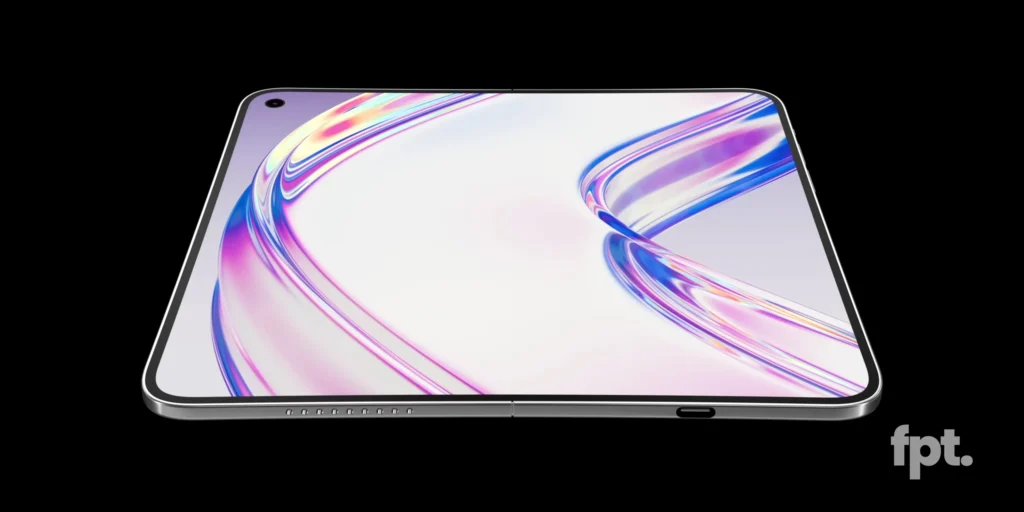
iPhone Ultra: Rumors of delay to 2027 are disputed, Apple still aiming for September
The upcoming foldable iPhone from Apple continues to generate speculation. While several recent reports suggested a potential delay until 2027 due to technical and industrial difficulties, a new leak challenges this scenario.
According to Chinese leaker Fixed Focus Digital, the rumors of a major delay for the iPhone Ultra are simply inaccurate. The device is still expected to be announced alongside the iPhone 18 Pro lineup this fall.
As often with Apple, the reality may lie somewhere between the two versions.

Announcement in September Still Favorable
According to information relayed on Weibo, Fixed Focus Digital states that Apple’s schedule remains unchanged. The iPhone Ultra is still set for an announcement at the September event alongside the iPhone 18 Pro and iPhone 18 Pro Max.
Even in the case of a slight delay, it would not exceed a few weeks. This hypothesis aligns with previous statements from Mark Gurman, who already suggested a differentiated launch: announcement in September, but potential sales at a later date.
In other words, Apple may officially unveil its first foldable iPhone while delaying its actual availability.
Production Issues Persist
The denial of a delay does not erase the difficulties that have been highlighted for several months. Multiple sources from the supply chain have reported significant challenges related to product development.
The primary concerns involve the durability of the hinge, the long-term resilience of the foldable screen, production yields, and the complexity of assembly. These constraints do not necessarily imply a delay for the product, but they could severely limit the quantities available at launch.
For a smartphone that could cost around $2,000, Apple might opt to launch the product with limited stock rather than postponing the entire project.
Supplier Statements Fuel Doubt
Part of the uncertainty also stems from recent comments by Largan Precision, a major supplier of optical modules used in iPhones. Its CEO, Lin En-ping, recently indicated that a significant American client had postponed the launch of a new product until early next year.
This statement immediately sparked speculation.
Two interpretations currently prevail:
- The product in question could be the foldable iPhone Ultra.
- The delay might actually concern the standard iPhone 18, whose launch in spring 2027 has been suggested for several months.
At this stage, there is no definitive evidence to resolve the matter.
A Strategy Similar to the iPhone X
Even if the iPhone Ultra were to be released after its announcement, it wouldn’t be a first for Apple. In 2017, the iPhone X followed a similar timeline. Announced alongside the iPhone 8, it hit stores only several weeks later.
Apple could replicate this strategy with its first foldable model:
- Announcement in September
- Later pre-orders
- Limited availability
- Gradual ramp-up in production
Scarcity Might Even Benefit Apple
Paradoxically, limited availability wouldn’t necessarily pose a problem for the brand. Apple has repeatedly demonstrated its ability to turn initial shortages into a marketing leverage. The launches of its most popular Pro models often come with delivery delays of several weeks, or, in some regions, even months.
For such an innovative product as the iPhone Ultra, limited supply could enhance its image as an exclusive, cutting-edge device.
Apart from scheduling questions, the foldable phone represents a significant strategic challenge for Apple. In light of competitors like the Samsung Galaxy Z Fold, Apple is preparing to enter a segment it has closely monitored for years without participating.
According to various leaks, the company aims to stand out with a more discreet hinge, a less visible fold, deeper integration with iOS 27, and a software experience specifically tailored for large flexible screens.
Some features identified in early versions of iOS 27 further support the notion that Apple is actively preparing a device with an unprecedented format.
A Delay to 2027 Seems Less Likely
Although technical challenges appear genuine, several factors suggest that Apple aims to keep its schedule. The software integration in iOS 27, repeated statements from multiple sources close to the matter, and the strategic importance of the project make a full delay to 2027 relatively hard to envision.
The most credible scenario remains one of announcing in September 2026, followed by a slightly delayed commercialization and initially limited quantities.
If this hypothesis proves true, the fall could mark one of the most significant launches in Apple’s recent history: the official arrival of its first foldable smartphone, a product the industry has awaited for nearly a decade.



