

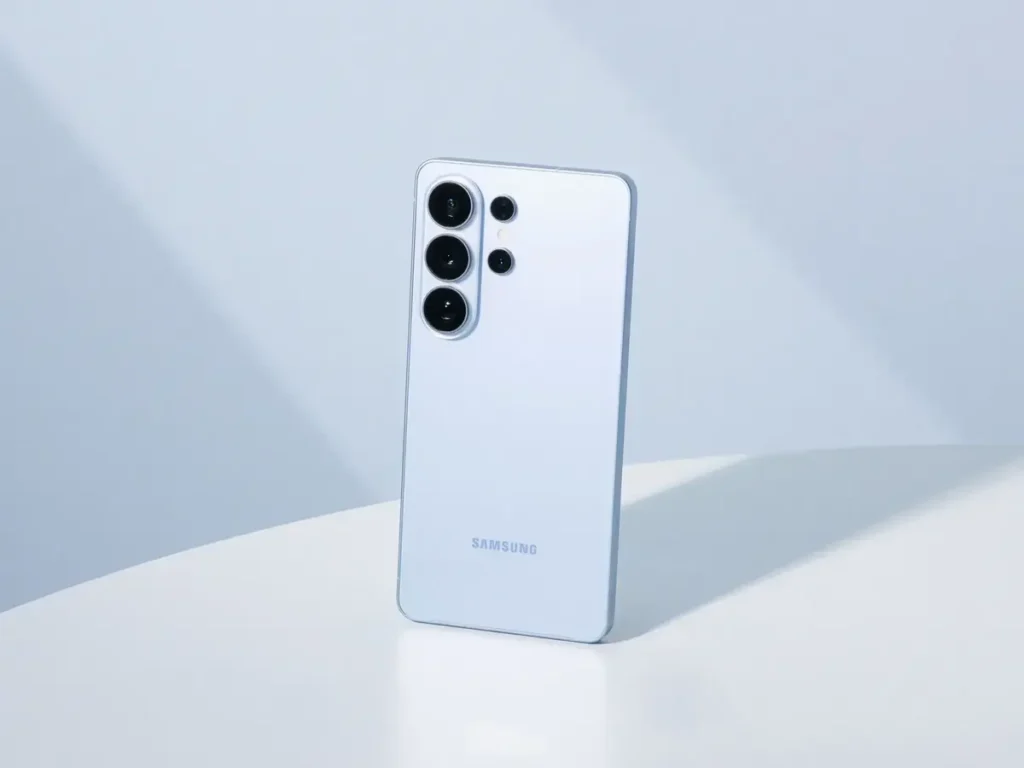
Galaxy S27 Ultra: Samsung may finally be preparing a MagSafe system thanks to a new design
Since the introduction of the Qi2 standard, many Samsung users have been hoping for an integrated magnetic system similar to Apple’s MagSafe. However, despite the Qi2 compatibility introduced in recent Galaxy models, the Korean brand has yet to take the final step: embedding magnets directly into its smartphones.
According to a recent leak from leaker yeux 1122, this may change with the upcoming Galaxy S27 Ultra, and the solution could come from an unexpected yet nostalgic element: the return of a horizontal camera module on the back of the device.
A Design Inspired by the Galaxy S10 Could Return
According to information published on Naver, Samsung is considering abandoning the current vertical arrangement of camera sensors in favor of a wide horizontal bar traversing the back of the smartphone.
This approach will bring to mind the Galaxy S10 launched in 2019.
At the time, this configuration offered several practical benefits: better stability on flat surfaces, a more uniform distribution of components, and a strong visual identity compared to competitors. Today, this choice could serve a different challenge: freeing up enough internal space to integrate a magnetic ring compatible with Qi2.
The Real MagSafe Version from Samsung?
The key advantage of the Qi2 standard lies in its integrated magnetic system. On recent iPhones, magnets allow for the instant attachment of wireless chargers, external batteries, car mounts, wallets, and desk accessories.
This experience has become a major selling point of the Apple ecosystem.
Conversely, even the latest Galaxy Ultras still require a specific magnetic case to use similar accessories. According to this leak, the upcoming horizontal camera module of the Galaxy S27 Ultra could free up enough space to directly embed the magnetic ring without disturbing the smartphone’s internal layout.
If this development is confirmed, Samsung could finally offer a complete Qi2 experience without additional accessories.
The S Pen Remains the Main Obstacle
However, the challenge is not merely mechanical. Integrating magnets into an Ultra smartphone poses a well-known issue for Samsung: the S Pen. The stylus relies on EMR (Electro-Magnetic Resonance) technology, which uses an embedded digitizer under the screen to accurately detect the stylus’s position.
The presence of strong magnets could disrupt this functionality.
Samsung is well aware of this limitation. In fact, several magnetic cases compatible with Galaxy already display warnings regarding potential interference with the S Pen.
To successfully integrate a native magnetic system, Samsung will need to find a delicate balance between Qi2 compatibility, sufficient magnetic strength, accuracy for the stylus, and the thickness of the smartphone.
This presents a technical challenge that is more complex than it may seem.
A Strategic Evolution for the Galaxy Ecosystem
Beyond wireless charging, the stakes are mainly strategic. Apple has built a genuine accessory ecosystem around MagSafe, generating additional revenue streams and enhancing user attachment to the platform.
Samsung already has a vast catalog of accessories, but the absence of an integrated magnetic system still limits opportunities for third-party manufacturers.
The introduction of a fully Qi2 compatible Galaxy S27 Ultra could accelerate the development of magnetic batteries, docking stations, photography accessories, professional mounts, and new uses around mobile AI.
In a market where hardware evolution is increasingly progressive, the ecosystem plays an ever-more critical role in distinguishing manufacturers.
Balancing Ambition and Iconic Elements
This rumor perfectly illustrates the current evolution in premium smartphones. Innovations now encompass not only processors or camera sensors but also the intelligent integration of devices within an ecosystem of accessories and services.
The return of a horizontal design might seem like a mere aesthetic choice. However, it could enable Samsung to resolve one of the last technical hindrances preventing it from fully competing with the MagSafe ecosystem.
It remains to be seen if the Korean firm can balance this ambition with one of the most iconic elements of the Ultra lineup: the S Pen.
If successful, the Galaxy S27 Ultra could become much more than just an incremental upgrade from the S26 Ultra. It might signal the dawn of a new generation of magnetic accessories for the Galaxy universe.



