HarmonyOS 7 Officialized: Huawei Focuses on Ubiquitous AI and a More Immersive Interface
Huawei took the opportunity during its annual developers conference to unveil HarmonyOS 7, the next significant evolution of its operating system. More than just a visual update, this new version represents a crucial step in the Chinese tech giant’s software strategy, which now places artificial intelligence at the core of the system.
With a redesigned interface, an significantly enhanced Celia assistant, and new security tools, Huawei aims to strengthen the integration between smartphones, tablets, PCs, smartwatches, and smart devices.
HarmonyOS 7: A More Modern and Immersive Interface
HarmonyOS 7 adopts a new spatial design language aimed at enhancing the user experience.
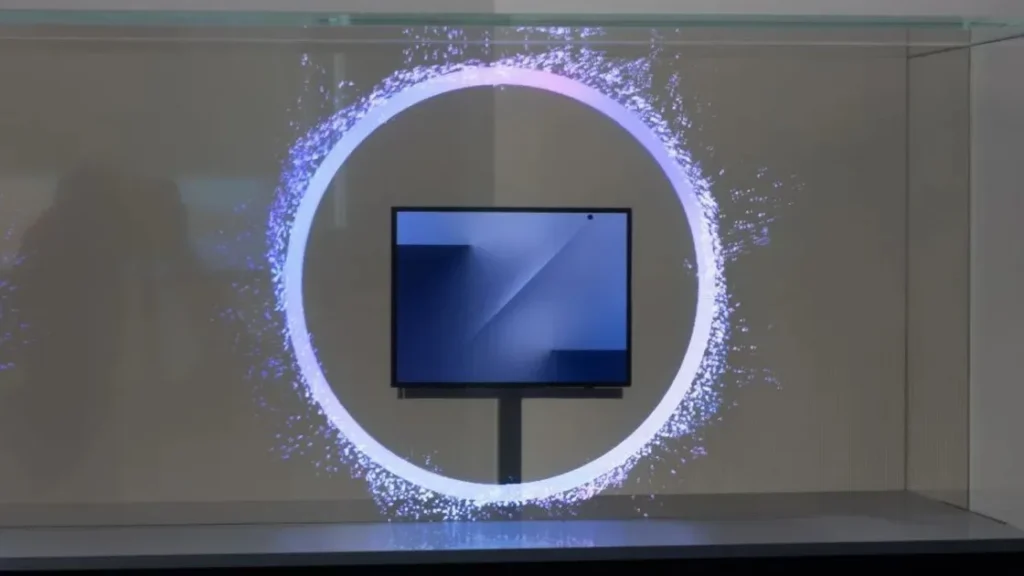
Huawei employs advanced software rendering techniques to create three-dimensional effects throughout the system. The lock screens become more dynamic with natural interactions with wallpapers, while buttons, sliders, and interface elements benefit from new lighting effects and smoother animations.
This approach aims to make the visual environment more lively while retaining the lightness characteristic of HarmonyOS.
Artificial Intelligence Becomes the Backbone of the System
The real novelty of HarmonyOS 7 lies in its artificial intelligence capabilities. Huawei claims it is its first system designed around a natively AI-centric architecture, rather than an OS with intelligent features added later.
The Celia assistant thus evolves into a much more central role, becoming a true intelligent hub capable of understanding complex intents, executing multi-step tasks, and interacting directly with the system’s applications.
To support this evolution, Huawei also introduces HarmonyOS Intelligent Agent Framework 2.0, a new platform designed to enhance interactions between the user, AI, and software services. According to the company, the success rate for complex requests now exceeds 90%.
More AI Tools in Daily Life
HarmonyOS 7 also enriches several consumer functions through AI. Among the announced new features are:
- Intelligent photo editing tools
- AI-assisted content generation
- More natural voice commands
- Deep interaction with applications
- Contextual assistance across the system
Huawei aims to bridge the gap between applications and the operating system, allowing AI to act directly across multiple services simultaneously.
Enhanced Focus on Security
In response to the rise in digital scams, Huawei introduces a new anti-fraud platform integrated into HarmonyOS 7. The system is capable of identifying:
- Suspicious QR codes
- Fraudulent websites
- Attempts to impersonate applications
- Calls from spoofed international numbers
Huawei also adds AI-based voice fraud detection aimed at protecting users against emerging fraud techniques involving synthetic voices.
Improved Performance for the Huawei Ecosystem
Huawei also announces significant performance optimizations. According to the manufacturer, HarmonyOS 7 promises up to a 15% performance improvement over the previous generation, while limiting long-term performance degradation caused by the accumulation of data and system processes.
The goal is to maintain a smooth experience even after several years of use.
First Compatible Devices Already Known
The Developer Beta version of HarmonyOS 7 is available now for several high-end Huawei devices:
- Mate 80 Pro
- Mate X7
- Mate XT Master
- Pura 90 Pro Max
- Pura X
- Pura X Collector’s Edition
- nova 15 Pro
The public rollout is expected later this year. Huawei has also confirmed that the upcoming Mate 90 series, expected in China as early as September, will be the first generation of smartphones to feature HarmonyOS 7 at launch.
Huawei Accelerates Its Software Independence Strategy
With HarmonyOS 7, Huawei continues its transformation into a fully autonomous ecosystem in response to Western restrictions. The company is no longer just aiming to provide an alternative to Android; it is gradually building a comprehensive platform where hardware, software, and artificial intelligence are designed to operate as a cohesive unit.
This evolution reflects a fundamental trend in the market: the future of operating systems will not solely depend on the interface or applications, but on the AI’s ability to understand, anticipate, and simplify daily usage.