

Google Health: After the End of Fitbit, Google Launches a Catch-Up Operation
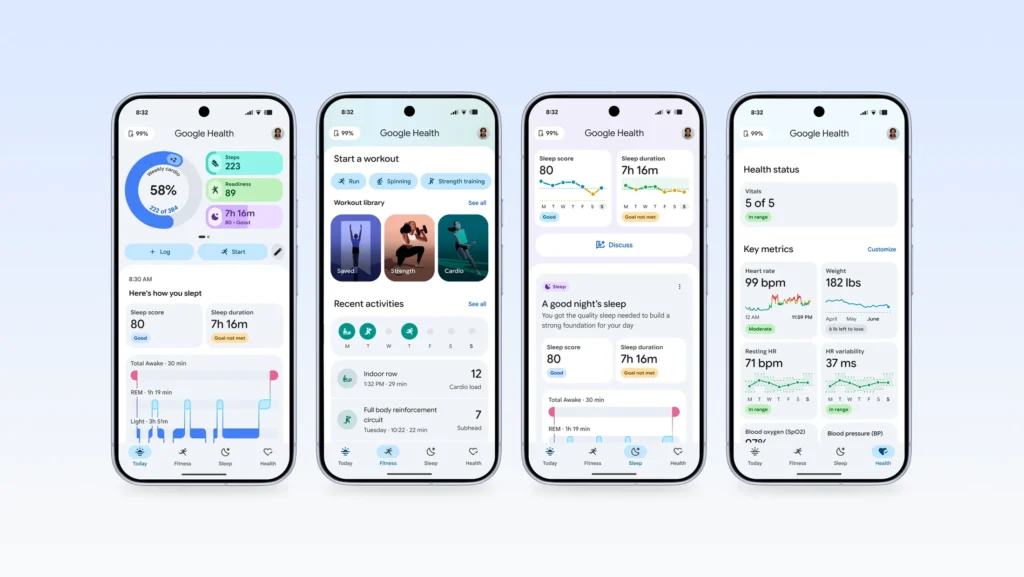
The transition from Fitbit to Google Health has not been without its challenges. Available since version 5.0, the new app officially replaces Fitbit and reorganizes the user experience around health tracking, workouts, sleep, and an AI coach powered by Gemini.
However, in response to initial criticisms, Google must already make corrections.
Workouts: The First Priority
The most noticeable issue concerns sports activities. Some runs appeared as generic workouts, a mistake that Google plans to fix soon. The addition of running splits in summaries is also among the first adjustments announced.
This is a crucial point: for former Fitbit users, a health app can change its interface, but it cannot undermine the integrity of their workout history. When a run no longer looks like a run, trust quickly diminishes.
Sleep, Nutrition, Coach: Google Refines the Experience
Google also intends to improve activity cards, TCX exports, sleep data, nutrition logs, and responses from the Coach. The new Google Health app is organized into four tabs — Today, Workouts, Sleep, and Health — for users equipped with either a Fitbit or a Pixel Watch.
Sleep tracking is expected to become clearer, with better management of naps and missing scores. On the nutrition front, Google aims to address duplicate entries caused by certain third-party connections, as well as errors linked to services like MyFitnessPal, Cronometer, or Lose It.
The Real Test: Regaining Fitbit Trust
Google is not just looking to modernize Fitbit. The company wants to establish Google Health as a central hub for wellness data, incorporating AI, connected devices, partner apps, and potentially more medical sharing in the future.
However, this ambition comes with a simple rule: before asking users to share more sensitive data, Google must prove that everyday information — running, sleep, meals, recovery — is reliable, readable, and easily accessible.
The Fitbit-to-Google Health transition could still succeed. But it must first become imperceptible where users expect it to matter most: in accuracy.



