

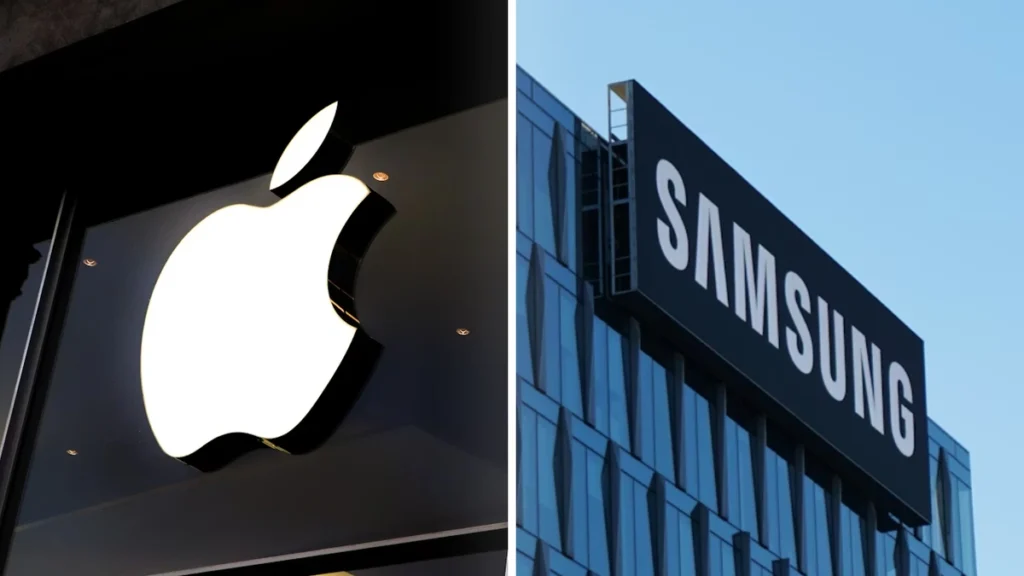
Apple and Samsung Equal in Europe with 30% Smartphone Market Share
The European smartphone market kicks off 2026 under pressure. According to Counterpoint Research, Apple and Samsung now each hold 30% market share in the first quarter, a symbolic tie in a region historically dominated by the Korean manufacturer.
Apple Catches Up with Samsung at a Crucial Time
Samsung remains slightly ahead in volume, but its lead has significantly narrowed. Its share has fallen from 33% to 30% year-over-year, while Apple has climbed from 26% to 30%.
This shift is partly attributed to product timing. The Galaxy S26 launched later in the quarter, while Apple benefited from continued strong demand for the iPhone 17 and iPhone 17e.

A Contraction in the European Market
Behind this top-tier competition, the market remains fragile. Smartphone shipments in Europe fell by 6% year-over-year in Q1 2026, against a backdrop of a more challenging macroeconomic environment.
Samsung dropped by 12%, Xiaomi by 11%, OPPO by 8%, and Honor by 4%. Apple appears to be the only major player in the top five to see growth during this period.
The Premium Segment Holds Stronger
This equality mainly reflects an increasingly polarized Europe. Consumers are renewing their smartphones less frequently, but when they do, they favor premium models, robust ecosystems, and devices designed to last for several years.
Apple benefits from its stable software ecosystem, loyalty to iOS, and a clearer product lineup. Samsung, on the other hand, possesses significant strength but relies more on the launch cadence of its Galaxy S models and the performance of its mid-range devices.
The Second Quarter Will Be Critical
The pressing question now is whether the Galaxy S26 can revitalize Samsung over a full quarter. If not, Apple might turn this tie into a sustainable advantage.
In Europe, the battle is no longer just about having the best smartphone. It’s about the ability to persuade users who change their devices less often but have higher expectations.



