

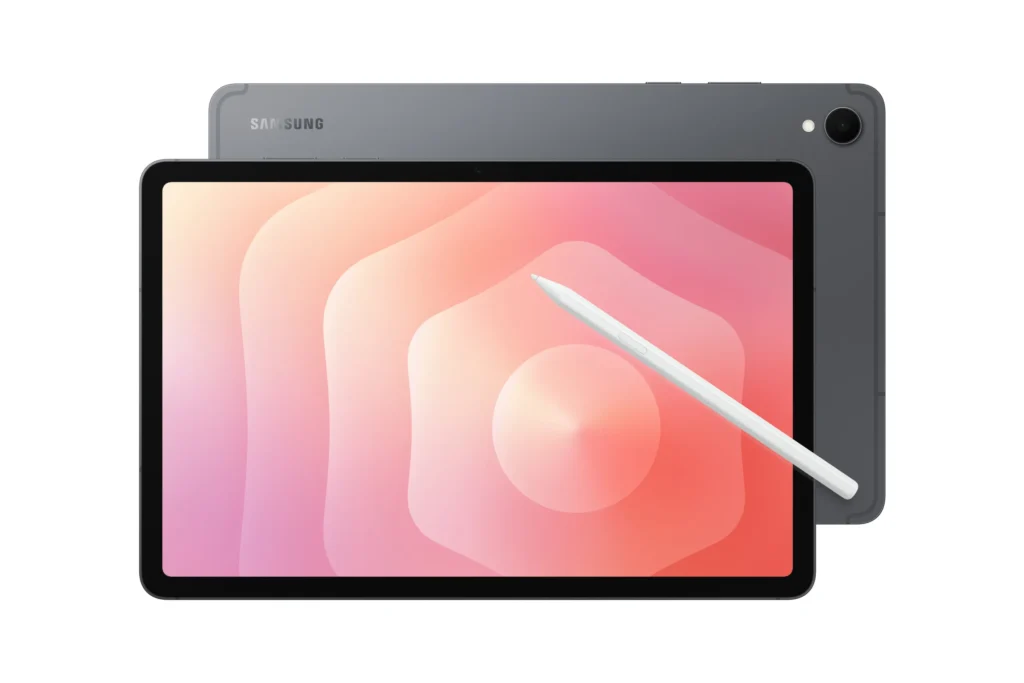
Galaxy Tab S12 : Samsung could focus on the Dimensity 9500 and onboard AI
Samsung appears to be continuing its shift towards MediaTek in its premium tablets. According to a software teardown by Android Authority, the Samsung AI Core application contains a reference to model MT6993, linked to the MediaTek Dimensity 9500, suggesting that the upcoming Galaxy Tab S12 series might once again forgo Snapdragon.
An Indication from Samsung’s AI Software
The leak does not directly mention the Galaxy Tab S12. However, the context is telling: Samsung has previously used high-end Dimensity chips in its earlier iterations of premium tablets, making the Galaxy Tab S12 a strong contender.
The Dimensity 9500, fabricated on a 3nm process by TSMC, focuses on energy efficiency, sustained performance, and local AI capabilities. For a large-format tablet, this choice makes sense: less heat generation, longer battery life, and better performance under demanding tasks, from multitasking to gaming.
On-Device AI Features
The most intriguing aspect might be the application where the chip was uncovered. Samsung AI Core reportedly mentions several onboard AI capabilities: AI-generated wallpapers, generative editing, image extension, and Image Harmonization, designed to synchronize light, color, and contrast during visual editing.
Samsung thus seems not only to aim for a more powerful tablet but primarily to create a device capable of executing more AI processes locally, with lower latency and reduced reliance on the cloud.
MediaTek Gaining Ground in the Premium Market
If this direction is confirmed, it would signify a new chapter in MediaTek’s ascendance towards high-end markets. Once viewed primarily as an economical alternative to Qualcomm, the chipmaker is becoming an increasingly credible partner for premium Android devices.
For Samsung, the strategy is clear: differentiate its tablets from its Galaxy S smartphones, optimize costs, and promote AI functions that are now as critical as raw processing power.
The Galaxy Tab S12 may thus not only be a faster tablet. It could evolve into a subtle testing ground for Samsung’s next generation of mobile AI.



