

Android Show 2026: Android 17, Gemini 4.0 and XR glasses, Google prepares for an AI revolution
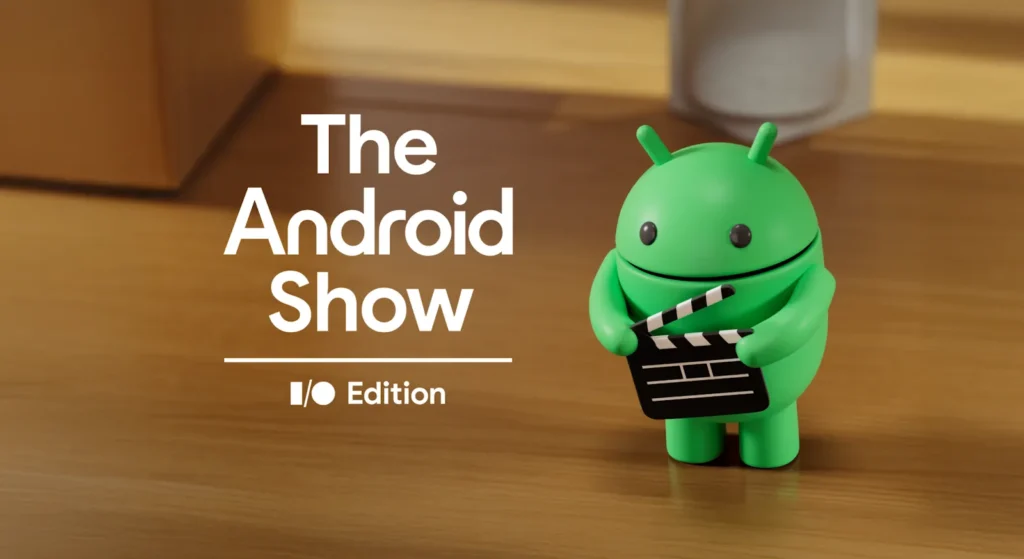
Google is clearly looking to regain control over the narrative surrounding Android. Even before the official opening of the Google I/O 2026 conference, the tech giant will host an event dedicated to Android called The Android Show: I/O Edition, scheduled for May 12.
This decision is significant, marking only the second time Google has organized a separate Android event from its traditional developer conference. Early teasers suggest that the company is preparing more than just a standard software update.
With features like Android 17, Gemini 4.0, XR glasses, and the integration of Android with ChromeOS, Google aims to demonstrate that its ecosystem is entering a new phase.
An Advanced Android Event One Week Early
The Android Show: I/O Edition will be streamed on Tuesday, May 12 at 7 PM French time on Google’s official Android platforms. This event will take place one week before the Google I/O 2026 conference, set for May 19-20 in California.
Last year, Google had already separated consumer-focused Android announcements from more technical content aimed at developers. The Android Show 2025 was used to unveil Material 3 Expressive and the launch window for Android 16.
This year, Google promises “one of the biggest years in the history of Android”. This ambitious statement suggests that the company is preparing a more profound transformation of its ecosystem.
Android 17 Could Mark a True Visual and Functional Turning Point
At the center of anticipation is Android 17.
According to various leaks, this new version may represent the most significant evolution of the system in years. Some rumors hint at a visual overhaul inspired by the “Liquid Glass” effect popularized by Apple, although several sources remain cautious on this matter.
Google usually conceals some aesthetic changes during the beta phases, so significant interface modifications are plausible.

However, the real challenge seems to lie elsewhere: agentic artificial intelligence. Android 17 could introduce features capable of proactively acting for the user, with Gemini as the central engine. The goal would be to transform Android into a system that can anticipate actions, contextualize tasks, and automate complex interactions.
Google appears to be positioning Android as a native AI platform rather than merely an operating system supplemented with AI features.
A Desktop Mode Similar to Samsung DeX in the Works
Among the most anticipated new features is a true Android desktop mode. Google is reportedly developing an experience similar to Samsung DeX, with an interface optimized for larger screens, advanced multitasking, and keyboard/mouse usage.
While Android currently has an experimental desktop mode, it remains severely limited. Android 17 could finally deliver a mature enough experience to compete with light PC use.
This development also makes sense in the context of the gradual fusion between Android and ChromeOS.
Android and ChromeOS: Towards a Unified Platform
Google is also expected to discuss the future of ChromeOS at the event.
For several months, rumors have suggested that Google is working to transition ChromeOS to a unified Android base. This strategy echoes Apple’s vertical integration among the iPhone, iPad, and Mac.
The aim would be to create a more fluid ecosystem among smartphones, tablets, and laptops with features such as:
- clipboard synchronization;
- application continuity;
- instant session sharing;
- better compatibility for Android apps on laptops.
With this convergence, Google is likely attempting to address a historic problem: the fragmentation of its software experience.
Gemini 4.0 Should Take Center Stage
It’s hard to imagine a Google event in 2026 without any mention of artificial intelligence. Gemini 4.0 is expected to be one of the major announcements at the Android Show. So far, few concrete details have leaked, but several rumors suggest an enhancement of the agentic capabilities of the assistant.
Google appears to intend to integrate Gemini deeply into Android rather than limiting it to a simple conversational interface.

The ambition is clear: to establish Gemini as an intelligent layer capable of interacting with applications, systems, and connected devices in real-time. This strategy increasingly resembles the vision of an “AI-powered OS,” where the traditional interface gradually gives way to more natural contextual interactions.
The Android XR Glasses Finally Ready?
Google might also use the event to unveil its upcoming smart glasses featuring Android XR.
The company has teased several prototypes for months without revealing a finalized product. The Android XR ecosystem remains in its infancy, with few devices actually on the market.
However, the arrival of Gemini changes the game.
Google appears intent on avoiding the mistakes of the original Google Glass by repositioning its glasses as ambient AI assistants capable of understanding the environment and providing real-time contextual information.
With competitors like Meta, Apple, and Samsung already established in the spatial computing/XR market, Google can’t afford to be a bystander.
The Pixel 11 Series Could Surprise
Finally, there could be a potential hardware surprise. While it seems less likely ahead of I/O, Google might tease—or even unveil—the Pixel 11 series.
Initial rumors suggest four models: Pixel 11, Pixel 11 Pro, Pixel 11 Pro XL, and Pixel 11 Pro Fold.
Currently, the leaks primarily indicate incremental improvements rather than a hardware revolution. But with Google, last-minute announcements are always a possibility.
Google Aims to Reclaim Its Initiative in the Post-Smartphone Era
Beyond products, this Android Show could signify a major strategic shift.
For years, Android has evolved as a mobile operating system centered on smartphones. Now, Google seems determined to transform Android into a universal platform powered by AI, capable of functioning on glasses, computers, watches, or hybrid devices.
With Gemini at the core of this strategy, Google is no longer merely selling an operating system; the company is trying to build a layer of omnipresent intelligence designed to orchestrate all daily digital activities.
This time, the competition may extend beyond hardware, focusing on how well AI can understand, anticipate, and support users continuously.



