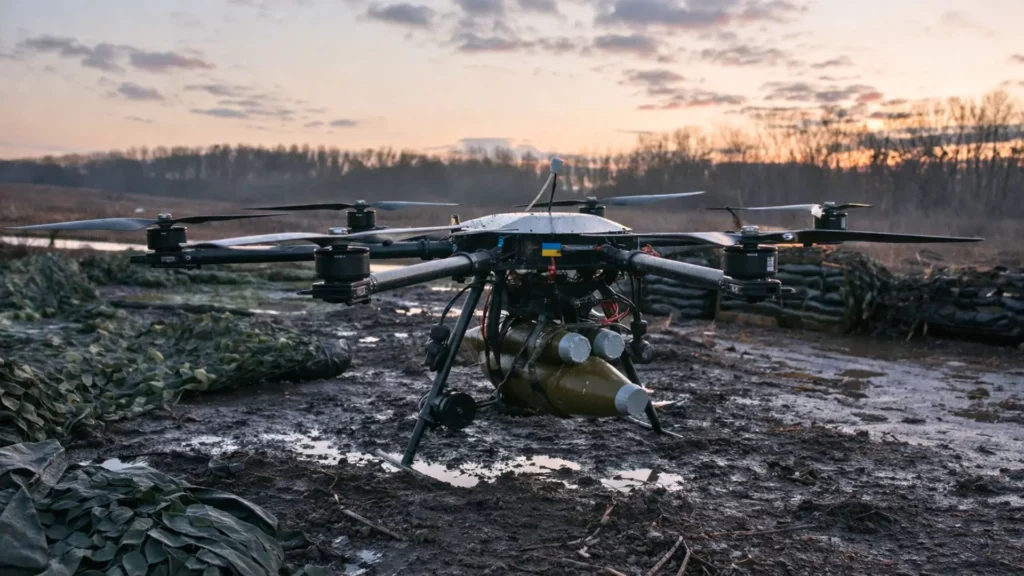
Less visible than FPVs, heavy bomber drones are gaining ground in Ukraine. Their payload, range, and varied uses are changing the dynamics of battle. Bombardment, mining, resupply, tactical relay: these devices are already reshaping close air warfare.
While FPVs dominate attention, heavy bombers are changing the tempo
If you look at the images from the front, FPVs dominate the screen. However, night strikes reveal a different reality. Heavier drones fly higher, carry more, and often return. Their media discretion masks a tactical effect that has become central since 2025.
The shift is evident in their missions. These devices do not always capture viral footage. Instead, they drop heavy payloads, resupply a position, plant mines, and conduct more sorties. This tactical endurance is changing the economics of combat.
With 20 kilograms under its wing, the Kazhan bombs, plants mines, and resupplies without exposing soldiers
The Kazhan epitomizes this upgrade. This Ukrainian bomber drone can carry up to 20 kilograms. It aims for a combat radius of 25 kilometers and has a flight time of 40 to 50 minutes. The immediate benefit is clear: a heavy payload allows for missions that are impossible for a standard FPV.
Moreover, its versatility is striking. The manufacturer highlights bombing, mining, and ammunition logistics. Other units also utilize these platforms to deliver supplies under enemy fire. This toolbox reduces human exposure and broadens a brigade’s options.
The dream of the mother drone progresses, but jamming, latency, and range still pose challenges
Next, engineers have attempted a logical leap. A heavy bomber can carry an FPV, bring it closer to the front, and then release it at the right moment. This setup increases range and provides a cleaner angle of attack. The concept of the mother drone has naturally gained appeal.
However, the reality on the ground quickly hampers momentum. The farther you distance the pilot, the worse the signal becomes. The connection loses stability, video feeds lag, and accuracy declines. In the face of jamming, this critical latency can already sabotage an attack.
Moreover, while endurance is improving, it does not solve everything. Players like Auterion are pushing AI-guided kits to circumvent jamming. However, fully autonomous swarms are still undeveloped. Currently, effective range still relies on reliable control, not just on promises of capability.
Lacking affordable missiles, Ukraine is pushing its bombers towards guided shots and a new approach
Another avenue is advancing more quickly. Rather than transport FPVs, these drones could fire from a distance. Even a few hundred meters can change the situation. A weapon that can be fired from further away exposes the aircraft less and reduces the risk of close defenses.
However, engineers are facing an old barrier: cost. Cannons have been unconvincing on drones. Guided rockets promise more but quickly escalate the cost of each mission. You can see the dilemma: gaining distance without compromising the critical mass that makes the bomber effective.
Finally, the real battle is also being fought in factories. Ukraine is seeking smaller and cheaper guided munitions. Its drone sector has already accelerated rapidly since 2022. If this development continues, these platforms could gain a second wind on the front lines.