

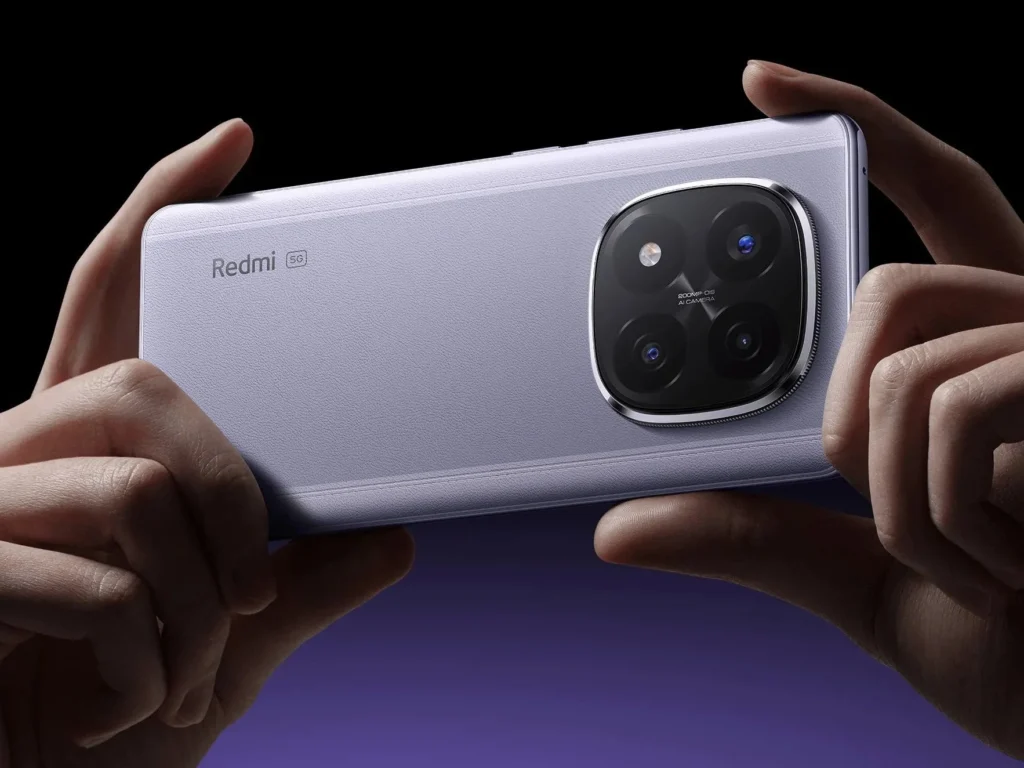
The future Redmi from Xiaomi with 10,000 mAh will eliminate battery anxiety
What if the next major breakthrough in smartphones doesn’t come from AI or photography, but from battery life? According to a leak circulated on April 17, 2026, Xiaomi is preparing to launch a mid-range smartphone with a 10,000 mAh battery, a milestone never before reached by the company.
While nothing is official at this point, the signal is strong enough to illustrate a foundational trend: the race for battery life is reaching a new level.
A leak that clearly points to Redmi
According to the information from leaker Digital Chat Station, the device is expected to belong to a mid-range offering from one of Xiaomi’s sub-brands. Although the name is not explicitly mentioned, the hypothesis that it’s a Redmi phone is credible given the brand’s historical positioning, which often prioritizes a favorable price-to-specs ratio in the mid-range segment.
However, caution is advised: at this stage, this is still a leak and not an official announcement from Xiaomi.

10,000 mAh, yes — but with 100 W to remain credible in daily use
The most striking aspect of this rumored device is undoubtedly its 10,000 mAh battery. What makes the rumor even more intriguing is the mention of a 100 W fast charging capability. This implies that Xiaomi is not only looking to set endurance records on paper but is also aiming to make this large capacity practical for real-world usage, with quick charging despite its unusual size.
Surrounding this massive battery, the spec sheet mentioned appears to align with an ambitious mid-range offering: a mid-series Dimensity chip, a metal chassis, an optical fingerprint sensor, an LTPS 1.5K display with a high refresh rate, presumably flat, and a main camera with 200 megapixels. Again, each element should be treated as a preliminary indication rather than confirmed specifications.
The real challenge: redefining the “good” mid-range smartphone
This leak is interesting not just because of the numbers involved but because of the shift in priorities it suggests. For several years, the premium mid-range has mostly aimed to mimic flagship devices in terms of photography, display, or design. A 10,000 mAh battery tells a different story: a smartphone designed for long-lasting use, intended for more intensive, mobile, and persistent activities. This is a less visually spectacular proposition but potentially more transformative in daily life. This interpretation remains speculative but is grounded in the nature of the components mentioned in the leak.
Xiaomi appears to be testing a new equation: maintaining a premium appearance—metal frame, 1.5K resolution, 200-megapixel camera—while making battery life the central focus. Such a strategy would make sense for Redmi, whose product identity is often built on a simple promise: delivering more than expected, faster than competitors, at a still competitive price.
Xiaomi may not be alone in this pursuit
The rumor takes on added significance when placed within the market context. Vivo has already officially teased a Y600 Pro featuring a 10,000 mAh battery, indicating that this threshold is becoming a reality. Meanwhile, recent leaks suggest high ambitions from Honor as well, with batteries reaching up to 11,000 mAh in testing. In other words, the battle for massive battery life is no longer an anomaly; it is starting to look like a new competitive frontier.
Furthermore, this makes the Xiaomi leak particularly credible from a strategic standpoint. When several Chinese brands converge on the same promise—extreme battery life, very fast charging, better-managed design compromises—it often signals the emergence of a new differentiation standard, initially in China and potentially beyond.
The enduring smartphone may finally become desirable
For a long time, phones with very large batteries have suffered from a rather unappealing image: bulky, heavy, and unattractive. What this leak suggests is an attempt to overcome this compromise. If Xiaomi can actually integrate a 10,000 mAh battery, 100 W charging, a fluid 1.5K display, and an ambitious camera module into a well-balanced mid-range product, battery life could transform from just a technical specification to a desirable feature.
What remains is the essential part: to see whether this prototype promise becomes an actual product. However, one thing is already clear: in 2026, the next smartphone war may not solely revolve around artificial intelligence. It could also be contested in a much more tangible arena—the remaining battery life at the end of the day.



