

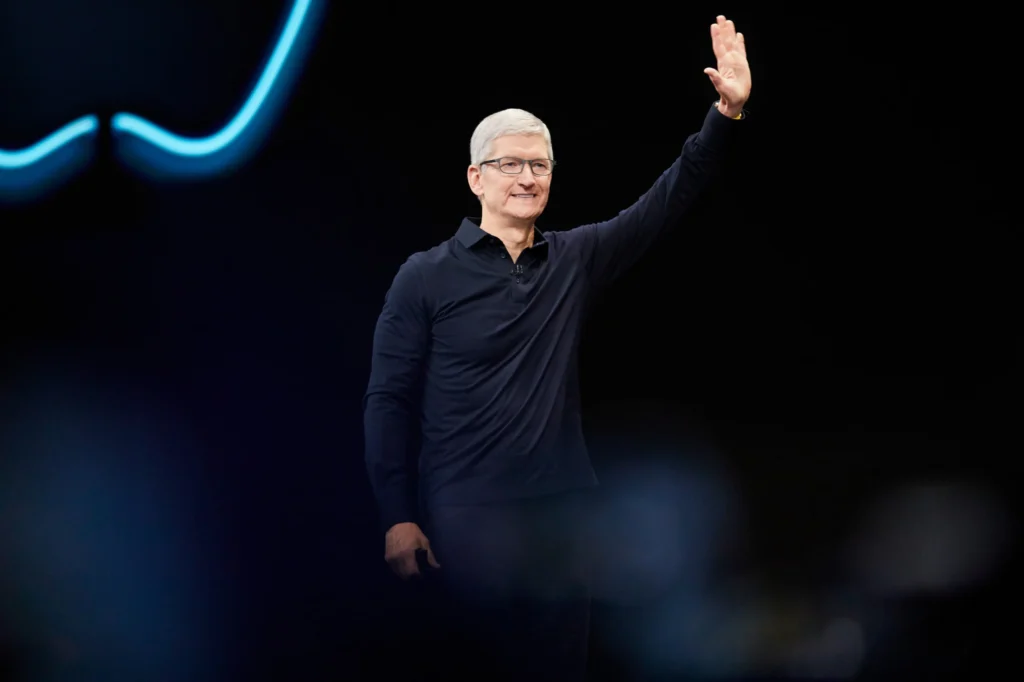
Tim Cook Leaves Apple: 15 Years of Record Growth and a Colossal Industrial Legacy
When Tim Cook took over from Steve Jobs in 2011, few believed in his potential. Fifteen years later, he leaves behind a transformed company: more massive, more profitable, and significantly more structured.
But one question lingers — what about innovation in this new era dominated by AI?
From Fragile Legacy to Global Dominance
At the start of his tenure, Apple was valued at approximately $350 billion. By 2026, its valuation exceeds $4 trillion. This is a scale of transformation rarely seen in the industry. Under Tim Cook’s leadership, revenues nearly quadrupled, profits followed a similar trajectory, and the ecosystem grew to encompass over 2.5 billion active devices.
Unlike the Jobs era, marked by product breakthroughs, Cook built a robust industrial machine. It may have been less flashy, but it was ruthlessly efficient.
The iPhone as a Backbone
Understanding this growth is impossible without mentioning the iPhone. When Cook assumed command, annual sales were around 70 million units. In the following years, sales skyrocketed, especially due to a significant strategic shift: the partnership with China Mobile in 2013.
The result? China became a key market, Apple accelerated its international expansion, and the iPhone firmly established itself as the primary revenue driver.
Then came the iPhone X in 2017, a symbol of a bold premium repositioning. The $1,000 mark was surpassed, making Apple the first publicly traded company to exceed a $1 trillion valuation.
The Service Empire: True Transformation
The most significant strategic change is not immediately evident in the products themselves. Tim Cook has profoundly developed services such as Apple Music, Apple TV+, Apple Card, iCloud, and the App Store. Today, these account for about a quarter of the company’s revenue, with significantly higher margins than hardware.
This pivot has secured Apple: recurring revenue streams, a massive installed base, and increased user dependency.
This model transforms Apple into a platform rather than just a hardware manufacturer.
Primarily an Industrial Strategy
While Jobs was a product visionary, Tim Cook is an operations expert.
His strengths include:
- Supply chain optimization
- Expansion of retail outlets (over 500 Apple Stores)
- Strategic relationships, especially in China
- Exceptional financial discipline
This positioning has allowed Apple to grow without relying on a continuous series of product “revolutions.”
The Apple Paradox in the Face of AI
Despite this success, a blind spot emerges: artificial intelligence. While Nvidia sees explosive growth and Microsoft and Google accelerate their efforts, Apple appears more reserved.
Sure, Apple Intelligence exists, with a device-centric and privacy-focused approach. However, Wall Street anticipates more: greater disruption, better visibility, and a genuine offensive strategy.
For now, growth remains largely reliant on the iPhone and services.
John Ternus: An Engineer for the Future
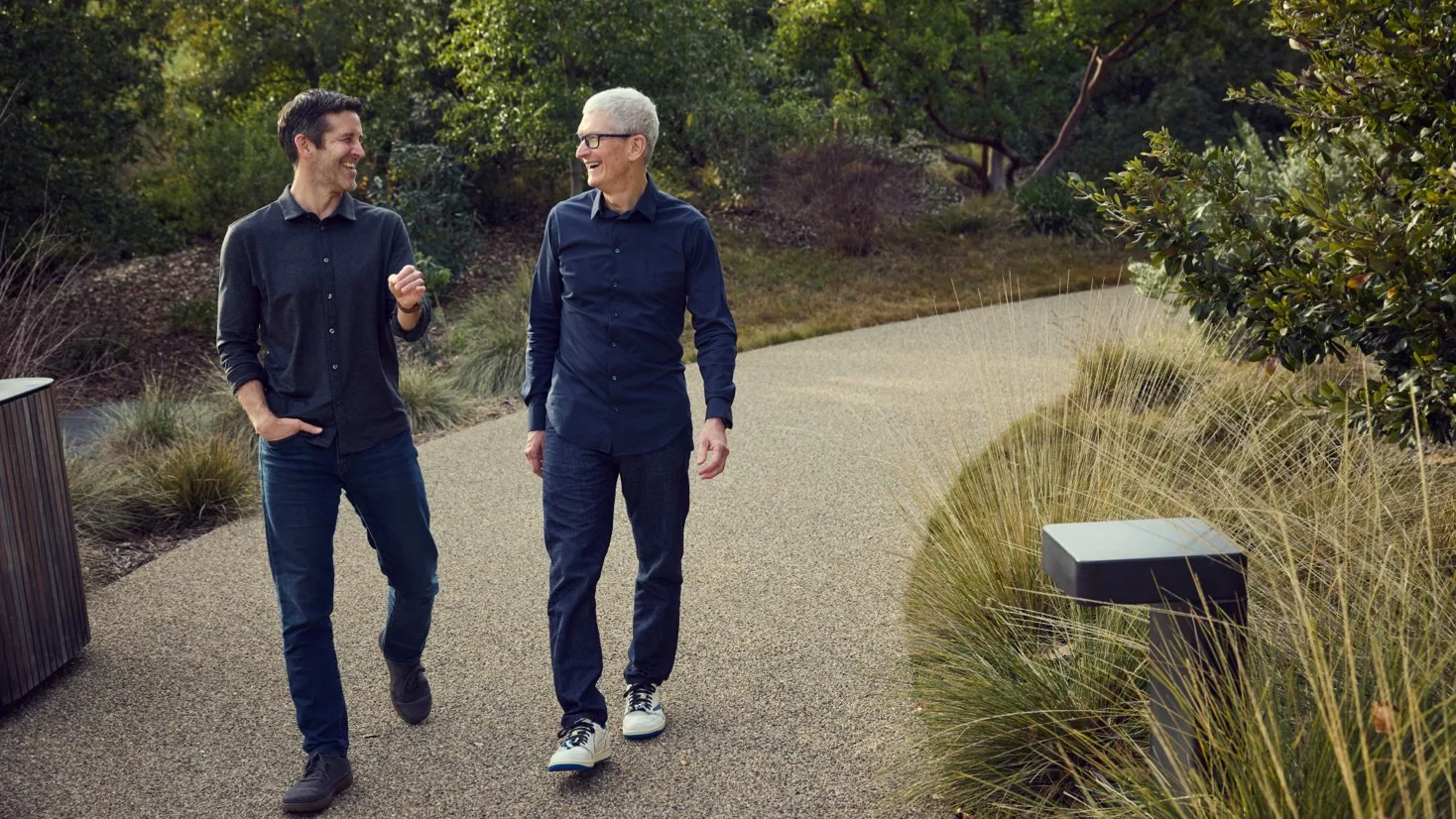
The transition is now in the hands of John Ternus, the current head of hardware. His profile: 25 years at Apple, a strong product culture, and technical expertise. Tim Cook will remain as executive chairman, ensuring a smooth transition.
The new CEO inherits a well-oiled machine… but it faces three significant challenges:
- AI: Apple must prove it can compete with current leaders.
- Dependence on China: Trade tensions and tariff risks remain a concern.
- The next product cycle: After the iPhone, Watch, and services… what will be the next big wave?
A Historic Transition
Cook’s legacy is evident: a +1900% increase in stock value, a consolidated industrial empire, and a gigantic user base. He didn’t revolutionize Apple; he transformed it into a fortress.
The future now hinges on John Ternus’s ability to reinject boldness into a machine that has become highly rational.
Because while Cook demonstrated that perfect execution can build a giant, Apple’s history also reveals that it is the breakthroughs that define eras.



