

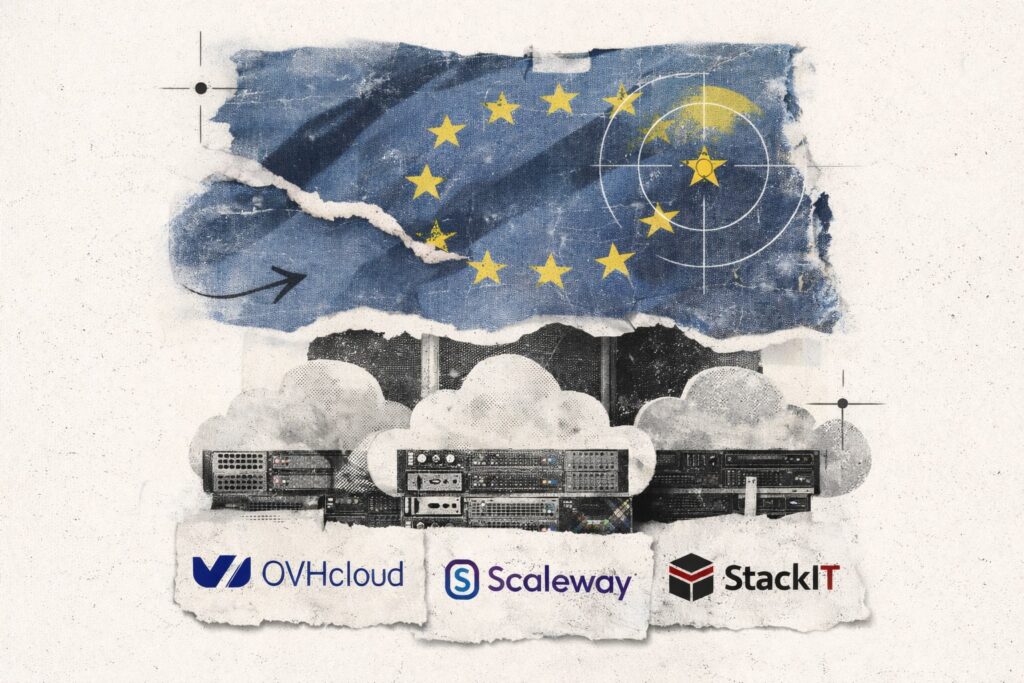
European Commission Awards €180 Million Sovereign Cloud Contract to Promote Digital Sovereignty
The European Commission has awarded a €180 million contract for sovereign cloud services over the next six years to four consortiums of European providers. This initiative goes beyond the financial aspect; it introduces the Cloud Sovereignty Framework, a new evaluation mechanism that sets a standardized and measurable method for determining digital sovereignty, which the Commission aims to make available to all organizations.
The four selected consortiums emerged from a call for proposals released in October 2025. The first consortium pairs Luxembourg’s Post Telecom with OVHcloud and CleverCloud. The second is led by StackIT, a subsidiary of the German Schwarz Group. The third consists of Scaleway, a unit of the French Iliad Group. Finally, the Belgian Proximus has partnered with S3NS—a joint venture between Thales and Google Cloud—along with Clarence and Mistral. This diversification among four beneficiaries specifically seeks to prevent dependency on a single provider.
To evaluate the bids, the Commission developed a structured assessment framework—the Cloud Sovereignty Framework—that translates digital sovereignty into objective and measurable public procurement criteria. This framework encompasses eight objectives, ranging from strategic, legal, operational, and environmental considerations to supply chain transparency, technological openness, security, and compliance with European law. Previously, it was difficult to integrate sovereignty as a contract requirement due to a lack of standardized measurement tools.
Defining Compliance, Resilience, and Technological Independence
The Framework organizes sovereignty into five levels known as SEAL, ranging from 0 to 4. Level SEAL-0 indicates a complete lack of sovereignty, while SEAL-4 requires a fully European supply chain, encompassing everything from chips to software. To be eligible, candidates needed to achieve at least SEAL-2, which stipulates data sovereignty—meaning the provider complies with European law without the client needing to implement additional technical measures for data protection.
The majority of awarded consortiums reached SEAL-3, classified as digital resilience, which adds the requirement for immunity against supply chain disruptions from non-European third parties. Post Telecom, OVHcloud, CleverCloud, StackIT, and Scaleway all attained this level, as their technologies have been developed in-house. The Commission highlights these results as evidence that European providers are narrowing the technological gap with their non-European competitors.
The Proximus/S3NS Case: Google Cloud Limited to SEAL-2
Proximus and its partner S3NS achieved SEAL-2, falling short of the SEAL-3 level reached by the other consortiums. S3NS—a joint venture between Thales and Google Cloud—is operated exclusively by European entities but relies on Google Cloud technology. The Commission explicitly points out that non-European technologies, when operated within strict frameworks, can still meet the minimum sovereignty requirements.
According to the Commission’s framework, solutions based on Google Cloud are capped at SEAL-2. SEAL-3 requires immunity from disruptions in supply chains originating from non-European entities, a criteria that an infrastructure governed by U.S. law is structurally unable to meet. While the Commission does not mention the Cloud Act directly, the framework delineates its implications clearly.
A Comprehensive Assessment Framework for Service Providers
The Commission has announced plans to release an updated version of the Cloud Sovereignty Framework, incorporating insights gained from this call for proposals. It encourages all organizations interested in adopting this approach to engage with the framework. For IT departments in the French public sector, this framework provides a comprehensive assessment tool for qualifying cloud service providers without reliance solely on the limited SecNumCloud certifications.
The Commission also stated that it is now applying the sovereignty criteria established in this framework to all its internal digital services. IT departments of organizations that fall under NIS2 or DORA obligations now have a common vocabulary through the SEAL levels to articulate their sovereignty requirements within their procurement processes, even prior to awaiting explicit regulatory transposition.
The Commission’s sovereign cloud market initiative represents a significant step towards establishing a European framework for digital sovereignty. This qualification tool is now publicly accessible, leaving it up to each IT department to determine the level of SEAL that their organization chooses to pursue.



