


MacBook Neo and iPhone 17e: Apple finally opens the door to self-repair
Apple is gradually opening a door that it had long kept nearly locked. The company has updated its Self Service Repair program to include new recent devices, such as the MacBook Neo, the iPhone 17e, the Studio Display XDR, as well as the iPad Air M4, the MacBook Air M5, and the MacBook Pro M5 Pro/M5 Max.
This program provides access to genuine Apple parts, official tools, and detailed manuals for carrying out certain repairs outside of warranty.
Apple speaks not just of repair, but of real access to parts
The crux of the update is straightforward: owners of these devices can now order or rent what they need to intervene themselves while remaining within Apple’s official framework. The French support page specifies that the Self Service Repair program targets individuals with the necessary experience to repair electronic devices, granting access to original Apple spare parts, tools, and repair manuals for out-of-warranty repairs.
For the MacBook Neo, Apple has already published a complete repair manual, along with a dedicated page for part support. Apple notes that genuine parts are designed and tested to meet its safety, performance, and reliability standards.
The MacBook Neo symbolizes a shift in tone
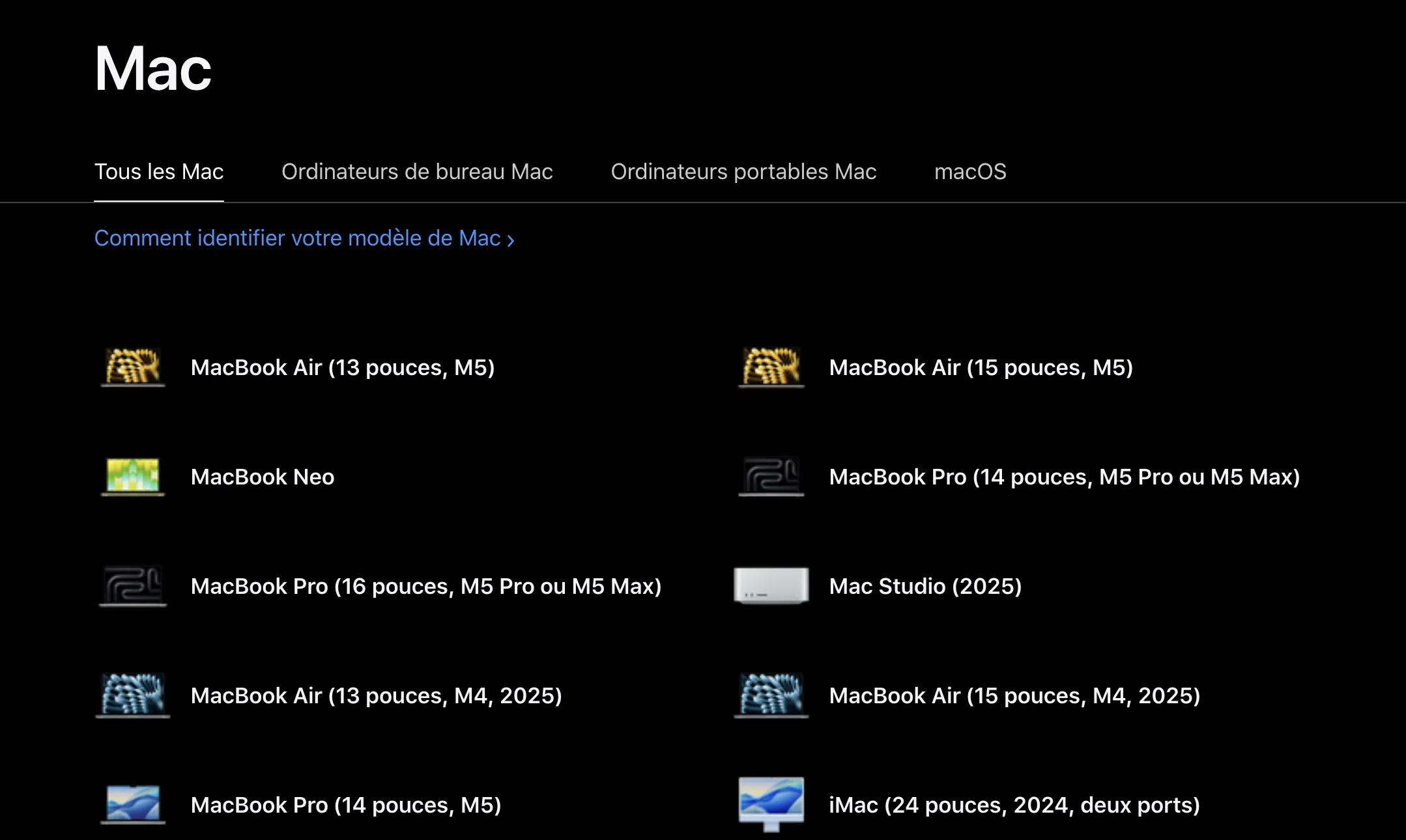
If there’s a product that makes this extension particularly appealing, it is the MacBook Neo. iFixit has dubbed it “the most repairable MacBook in 14 years,” and Apple now allows users to purchase components like the battery, the bottom casing, the audio card, and the display through its official channels.
This is significant, as Apple has long faced criticism for the reparability of its machines, particularly regarding access to components, hardware integration, and control over the spare parts supply chain. By opening the Self Service Repair program to a device already perceived as more repairable, Apple sends a stronger message that some products can now be designed for longevity and can be repaired without always going through an authorized service center.
The iPhone 17e and Studio Display XDR show that the opening goes beyond mobile
Another noteworthy aspect of this update is its diversity. The iPhone 17e also joins the list of covered devices, with components like the rear glass and the bottom speaker. Even more notably, the Studio Display XDR is included in the program, with more ambitious repairs mentioned concerning the casing, fans, or logic board.
This indicates that Apple is not just extending its initiative to the easiest products to repair; it is also starting to include more technical devices, where the very idea of personal repair seemed much more distant in the past. Again, Apple continues to impose safeguards by reminding users that the program is targeted at experienced individuals, not the general public.
A real opening, but still tightly controlled
However, one should not idealize this movement. The Self Service Repair program is not an absolute right to repair free of constraints. Apple tightly regulates the experience, providing its own manuals, parts, and tools, and emphasizes that these are out-of-warranty interventions carried out by competent individuals.
In other words, Apple isn’t abandoning its control logic; it’s just making it more accessible. Even so, this evolution remains significant. In the Apple ecosystem, the mere ability to officially repair a recent device at home with brand-approved components represents a noteworthy cultural shift.
Apple opens up without actually renouncing its principles
The most interesting part of this development is not merely the list of new compatible devices. It’s the compromise Apple seems to be trying to stabilize: more autonomy for the user without abandoning the Apple framework. The Self Service Repair program does not dismantle the brand’s model; it merely softens it.
This is likely why this expansion is credible. Apple hasn’t suddenly shifted to a completely open philosophy. It is moving forward with specific parameters, chosen products, structured manuals, and a proprietary parts supply chain. For many advanced users, this alone will be enough to transform the experience.
For advocates of the right to repair, this may only be one step. However, it’s a step that has finally been taken, and it’s a concrete one.



