

Xiaomi challenges conventions: A modular smartphone and the XRING O2 expected by late 2026?
After an already busy first half of the year, Xiaomi might ramp up its efforts further. A new leak from Kartikey Singh suggests several projects for the second half of 2026, including a highly competitive camera phone, a modular smartphone, and a new device powered by an in-house chip.
At this point, nothing is officially confirmed, but the overall trend is clear: Xiaomi seems determined to go beyond the simple annual update cycle.
A Leak Suggesting Innovation Over Routine
According to the information shared this week, Xiaomi is reportedly working on four major areas for the second half of the year: a smartphone dubbed as having the “most powerful camera of 2026,” a modular photo-focused phone, a flagship with an in-house chip, and other “cutting-edge” products yet to be detailed.
As is often the case with such information, caution is warranted: we’re talking about a leak, not a confirmed roadmap from the company.
What lends some credibility to this rumor is its context. Xiaomi has already had a robust start to the year, having launched the global Xiaomi 17 series, the Xiaomi Pad 8 and Pad 8 Pro, among other products in its ecosystem, indicating that the brand is already pursuing an aggressive schedule in 2026.
Photography Remains Central to Xiaomi’s Strategy
The most striking claim concerns the upcoming smartphone described as the definitive camera phone of 2026. While this sounds like an extravagant promise, Xiaomi has been heavily investing in this arena. The global launch in February prominently highlighted its raised partnership with Leica and emphasized its narrative around mobile imaging, particularly in low-light photography with the Xiaomi 17 Ultra.
In other words, the leak does not fabricate a narrative; it extends a strategy that has already been observable. For several generations now, Xiaomi has been striving to position itself not just as a competitive Android manufacturer but also as a credible player in the high-end camera phone segment. If this upcoming model comes to fruition, it would align with an already established trajectory.
The Modular Smartphone Could Be the Boldest Bet
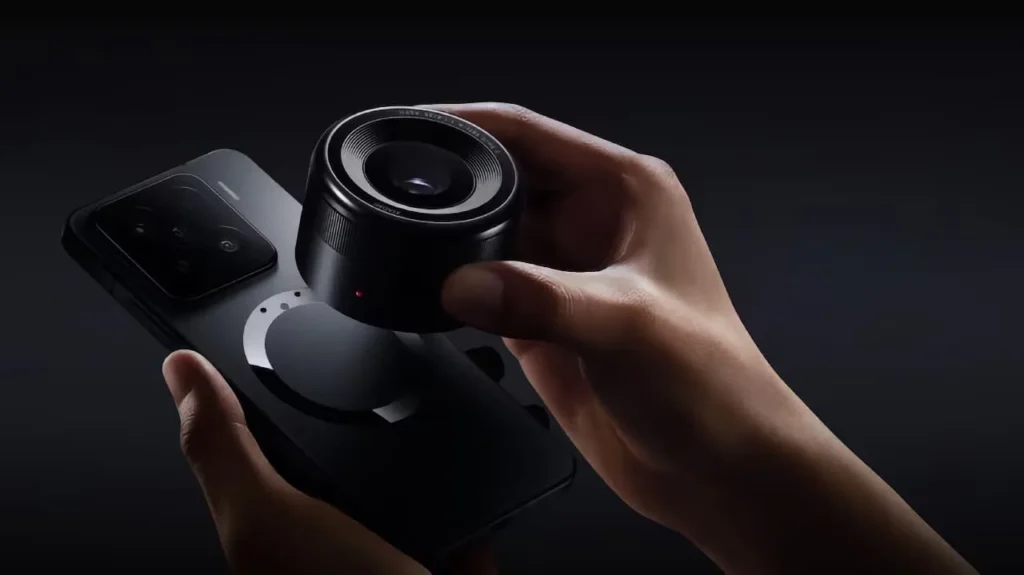
Another noteworthy element is the potential optical modular smartphone. This rumor doesn’t come without precedent. Xiaomi officially introduced its Modular Optical System at MWC 2025, a concept aimed at bridging the capabilities of traditional cameras with smartphone computational photography. The company termed it a “contextual exploration,” indicating that it was still in an experimental phase.
This is precisely what makes the rumor intriguing: if a portion of this concept transitions to a commercial product, Xiaomi would no longer merely be showcasing a trade show prototype. The brand would be attempting to convert a demonstration into a tangible offering.
This would send a strong signal, as few major smartphone players dare to invest in a real material shift in mobile photography.
XRING O2: Xiaomi Aims to Capture More Value
The third area, perhaps the most strategically significant in the long term, involves the in-house chip. Xiaomi took a significant step in 2025 with the launch of the XRING O1, its first flagship chipset developed internally, produced on a large scale as Lei Jun stated. Reuters reported that Xiaomi invested 13.5 billion yuan in its development and planned to invest at least 50 billion yuan over ten years in chip design.
In this context, the emergence of an XRING O2 in 2026 would seem logical. Xiaomi’s president, Lu Weibing, indicated at MWC 2026 that the company is likely to release an annual update of its mobile chips, giving credibility to the idea of a second-generation launch this year.
Beyond raw performance, the stakes are evident: Xiaomi seeks to minimize its reliance on third-party suppliers and better integrate hardware, software, and AI. This trajectory aligns with long-standing industry trends, as it pushes Xiaomi closer to a vertically integrated model that is historically quite valuable in technology.
Post June, a lot of new exciting products with cutting edge technologies will be launched one after another from Xiaomi.
• World’s first Optical Modular Smartphone
• Xiaomi’s 2nd 3nm Flagship Chip, XRING O2
• Xiaomi’s most ambitious Smartphone ever with Self Developed… pic.twitter.com/OozrScMHe2
— Kartikey Singh (@That_Kartikey) April 1, 2026
Xiaomi Seems to Want to Tell a Different Story than Just “Version 18 Arrives”
Individually, each of these projects may still be in the rumor stage. However, collectively, they reveal a deeper intention. Xiaomi appears to be looking not just to release new devices; the brand aims to construct a more ambitious technological narrative for the second half of 2026: enhanced photography, new hardware formats, greater chip control.
This is a clever way to stand out in a smartphone market that has become increasingly conservative. Incremental gains are often insufficient to create buzz. However, a credible modular phone, a genuine leap in mobile photography, or a more mature in-house chip can still alter the brand’s perception.
Prudence remains essential: not all discussed ideas will necessarily materialize as products, and some might be postponed, limited to China, or significantly changed before their launch. Nevertheless, even with this caveat, the leak highlights one thing: for Xiaomi, the second half of 2026 may be less about consolidation and more about large-scale experimentation.



