

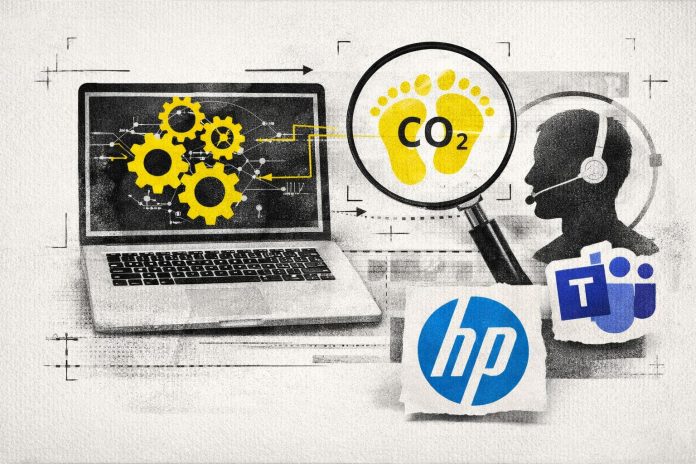
HP is enhancing its Workforce Experience Platform (WXP) precisely as endpoint management specialists and AI productivity platforms vie for dominance in the workspace. These enhancements are evolving WXP into a continuous operating layer for devices, featuring automated remediation, customized reporting, carbon footprint tracking, and integration with Microsoft Teams.
Unveiled at HP Imagine, these updates are transforming WXP into a seamless operational layer for endpoint management. For HP, this endeavor is as much about strategy as it is about technology: a hardware manufacturer focused solely on delivering interchangeable products risks losing customer relationships to those providing comprehensive services.
The shift that’s reshaping productivity platforms — seen in tools like Microsoft 365 Copilot, Google Workspace’s Gemini, and Notion AI — is also occurring at the foundational layer of IT infrastructure. These competitors aim to embed themselves within users’ daily workflows, creating an indispensable presence. HP is applying a similar strategy to physical endpoints. By positioning WXP as the intelligence interface of the workspace, the company is shifting its business model from cyclical hardware sales to an ongoing service whose value grows over time and data use.
A Ticketless Detection-Action Loop
IT operations and endpoint management specialists (such as Tanium and Nexthink) have been targeting this segment for years with a promise of neutrality concerning hardware manufacturers. In response, WXP offers the vertical coherence of an integrated stack: native telemetry from hardware, end-to-end lifecycle management, and built-in asset security. What these specialized players cannot replicate is HP’s proximity to the silicon, a foundation for its differentiation.
The latest versions of WXP Pro and Elite introduce a remediation architecture that mirrors IT operations practices. Now, each alert is accompanied by prioritized, AI-generated resolution scenarios that can be executed manually or automatically via the Workflow Builder. Routine tasks, such as memory cleanup, configuration application, and resource reclamation, are standardized into workflows triggered by events, schedules, or user requests.
The growing prevalence of AI-integrated applications in workplaces is structurally increasing pressure on device memory. WXP Pro and Elite proactively detect early warning signs, identify stressed devices, and generate recommendations based on actual telemetry from the fleet. This equips IT teams with concrete data to decide between hardware upgrades, configuration adjustments, or renewal actions without relying on a predetermined replacement cycle or human intervention at every stage.
Customized Reporting and Carbon Footprint Tracking
WXP introduces a configurable reporting layer that enables IT teams to create telemetry views tailored to their priorities, independent of predefined dashboards. This tool accurately identifies the root causes of incidents — such as memory saturation, operating system anomalies, or outdated applications — and detects trends across the fleet to inform investment decisions based on real-time data.
A carbon footprint report, set to be available in summer 2026, aggregates energy consumption by device along with associated emissions. For organizations facing non-financial reporting obligations, this native integration into the workspace management layer eliminates the need for external consolidation steps. CIOs can maintain operational coherence, managing performance, costs, and environmental impact from a single interface.
Pulse Notifications in Teams and Wolf Protect and Trace API
Pulse Notifications for Microsoft Teams allows IT and HR teams to deliver targeted messages directly within employees’ workflows. Users can be prompted to remove unused or non-compliant software and optimize their device resources without needing to contact support. This integration seeks to empower employees to actively contribute to their equipment’s performance in distributed environments where onsite intervention remains costly.
The expansion of the WXP API to include Wolf Protect and Trace functionality opens up new use cases for mobile asset management. IT teams can locate, lock, and wipe PCs remotely, even when powered off, within existing operational workflows. HP is also launching Poly+ Analyze, a premium service for HP Poly conference room devices that combines 24/7 priority support, early component replacement, and visibility into room status via Poly Lens Pro for Rooms.
The battle for the workplace is now being fought on two fronts: the application layer at the top of the stack with AI productivity suites, and the hardware and operational layers at the bottom through endpoint management platforms. By adding automation, reporting, Teams integration, and asset security to WXP, HP is making its presence in the IT infrastructure increasingly hard to circumvent. Manufacturers that build this extensive service offering retain customer relationships, while those who do not become mere hardware suppliers, providing a substrate of value captured elsewhere.



