

Vivo X300 Ultra: Real-Life Photos Reveal a Photography Powerhouse
Following an official teaser in “Film Green”, the Vivo X300 Ultra has now been spotted in real-life photos, this time in a beige hue.
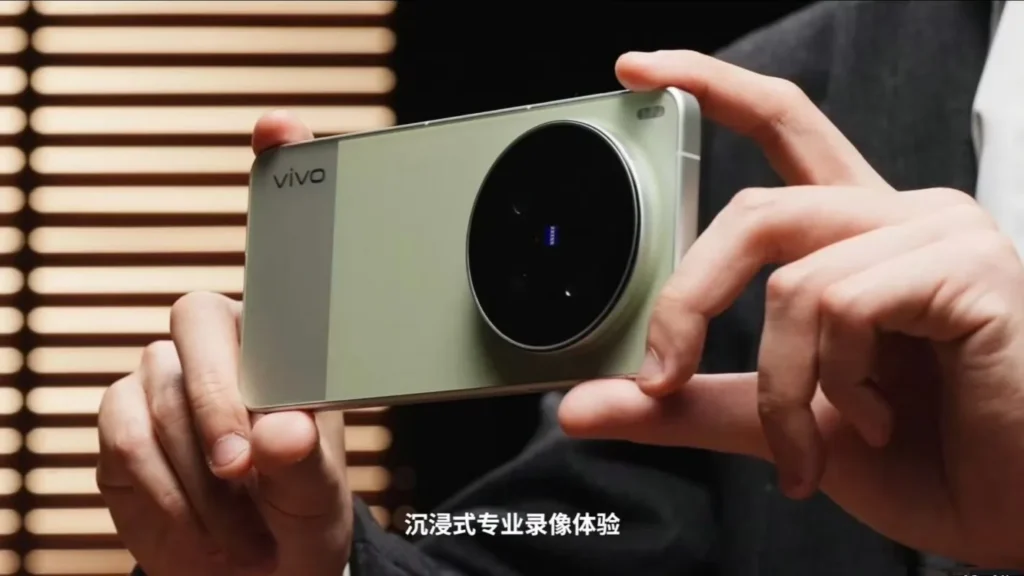
These shots reveal Vivo’s intent to stand out rather than blend in — this smartphone is designed to function as a pocket-sized camera, proudly flaunting its rear camera module.
Vivo X300 Ultra: ZEISS Featured, Giant Camera Module
The recently published photos showcase the Vivo X300 Ultra dominated by an enormous circular camera block branded with ZEISS, particularly noticeable in profile views. The beige version also features a textured finish on its surface, an aesthetic detail that adds character to an otherwise minimalist design.
The metallic frame, volume/power buttons, and connectivity options (USB-C, speaker grille, SIM tray) adhere to the classic luxury smartphone design language — but everything points to a clear message: the camera is the star of the show.
A Leaked “About” Page: Snapdragon, In-House Imaging Chips, and a Massive Battery
The most intriguing aspect comes from a leaked image showing settings on the screen, revealing several key specs: Snapdragon 8 Elite Gen 5, 16 GB of RAM, 512 GB of storage, and the inclusion of two imaging chips from Vivo (VS1 and V3+), complementing the main SoC. The displayed battery capacity reaches 6,600 mAh.

At this point, it’s important to remain cautious — an image of a system menu is still a leak. However, this aligns with Vivo’s trend of recently launching Ultra models: enhancing the photography processing layers to manage the rendering (HDR, color, texture, noise) in a more “cinematic” way rather than a straightforward “smartphone” approach.
The Focus is on the Back: 200 Megapixel Sensors and Assured “Photo” Focal Lengths
Vivo has already begun crafting part of the narrative. According to a company representative quoted by the media, the Vivo X300 Ultra would feature a primary Sony LYTIA-901 sensor, utilizing a 35 mm approach — a more “photographer-centric” focal length compared to the standard wide-angle often seen in smartphones, which is typically flattering but also more distorted.
For the telephoto lens, Vivo has teased a 200-megapixel ZEISS periscope based on a Samsung HP0 sensor, touted as a central element of its “Ultra” arsenal.
The remaining features (50-megapixel ultra-wide-angle, multispectral sensor, 50-megapixel AF selfie camera, multiple configurations, and possible satellite communication on the 1 TB version) mainly circulate as rumors, plausible yet not officially confirmed.
Vivo Seeks Less “Smartphone Photography” and More True Camera Grammar
The Vivo X300 Ultra seems to be a statement: Vivo wants the phone to convey the essence of photography even before clicking the shutter. The decision to adopt a 35 mm main sensor, the massive camera module, the ZEISS co-branding, and dedicated imaging chips all work towards a single strategy: shifting the discussion from mere specifications (200 megapixels) to the quality of the output.
Moreover, this approach responds to market demands. While everyone promises “the best camera,” Vivo aims to create a more nuanced difference: a distinct character, a unique style — almost a particular color science. The hope is that premium users are seeking more than just sharp images; they want a personal touch.
The Vivo X300 Ultra is shaping up: final design, dual color identity (Film Green for teasers, beige in live photos), and specifications that clearly outline a high-end flagship. If Vivo confirms the combination of the LYTIA-901 at 35 mm and the 200-megapixel ZEISS periscope, we might just witness one of the most “photographic” smartphones of its generation — a device that doesn’t merely resemble a phone with an excellent camera, but a camera that can also make phone calls.



