

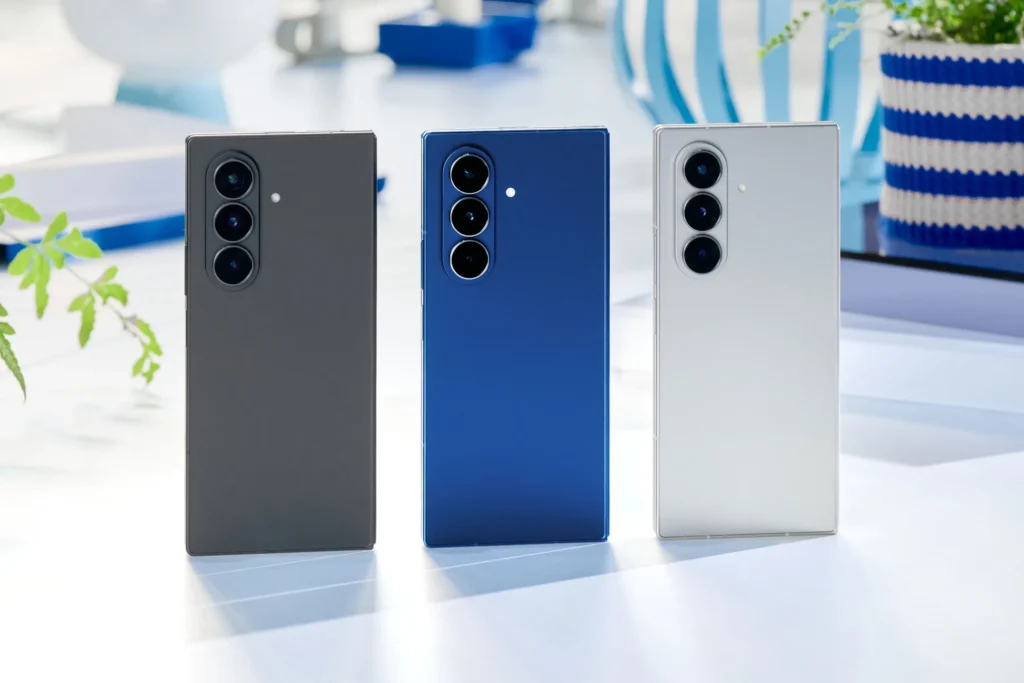
Galaxy Z Fold 8: Why Samsung Refuses to Increase Its Prices Despite Inflation?
Despite the ongoing rise in component costs, Samsung may choose not to raise the price of the Galaxy Z Fold 8. This speculation, reported by several specialized sources in recent days, may largely be explained by the impending arrival of the first foldable iPhone, which Bloomberg still estimates at around 2,000 dollars.
At this price point, Apple would directly enter the same pricing territory as the Fold.
Apple Already Changing the Foldable Market Equation
This makes the situation intriguing. For a long time, the Apple foldable was imagined as a far more expensive product, sometimes projected at around 2,400 dollars, according to older estimates.
However, recent projections suggest a launch price closer to 2,000 dollars, positioning it as a premium option still comparable to the current high-end foldables. Bloomberg also reports that Apple aims for a device with a large internal screen, designed to appeal to both loyal iPhone users and those already interested in Android foldables.
In this context, Samsung may no longer rely solely on a price gap to justify its historical lead in this segment. If Apple reaches this price point, the Galaxy Z Fold 8 will need to compete primarily on its product quality, ecosystem, and technical maturity.
A Complex Decision Given Rising Costs
The challenge is that Samsung does not operate in a favorable environment. Reuters reported at the end of February that the surging memory prices are already impacting the entire smartphone market in 2026, prompting analysts to revise their sector forecasts. This pressure directly affects premium manufacturers, who must absorb rising costs related to DRAM, NAND, and advanced AI components.
The situation is even more sensitive as Samsung has indicated that the rising component costs have influenced its pricing strategies for other lines, including the Galaxy S26. Therefore, keeping the Fold 8 at the same price as the Fold 7 would be less a comfortable gesture and more of a strategic compromise.
Samsung May Be Planning a More Ambitious Galaxy Z Fold 8
Another complicating factor: the Galaxy Z Fold 8 may not simply be a refresh. Multiple rumors suggest a new approach to the screen that aims to significantly reduce or even visually eliminate the central crease. Speculation indicates that both the Galaxy Z Fold 8 and Apple’s foldable may target a “crease-free” experience.
In other words, Samsung may be preparing a product that is more expensive to manufacture while still needing to maintain a similar price point to stay competitive with Apple. This is a classic market leader gamble: accepting pressured margins to prevent a new entrant from turning its arrival into an irresistible event.
The Real Challenge: Preventing Apple from Redefining the “Normal Price” of a Premium Foldable
At its core, this is not just a matter of dollars. It’s a battle of perception. If Apple launches its first foldable iPhone at around 2,000 dollars, that price will instantly become a mental benchmark for the entire category. Samsung therefore has a vested interest in preventing Apple from being seen as the brand that makes premium foldables “affordable” for the mass market.
Nothing is official yet, and we should treat this information as what it is: credible rumors, not announcements. However, the mere fact that Samsung is already speculated to be considering its pricing strategy in response to Apple clearly shows one thing: even before its launch, the foldable iPhone is already impacting the market.



