

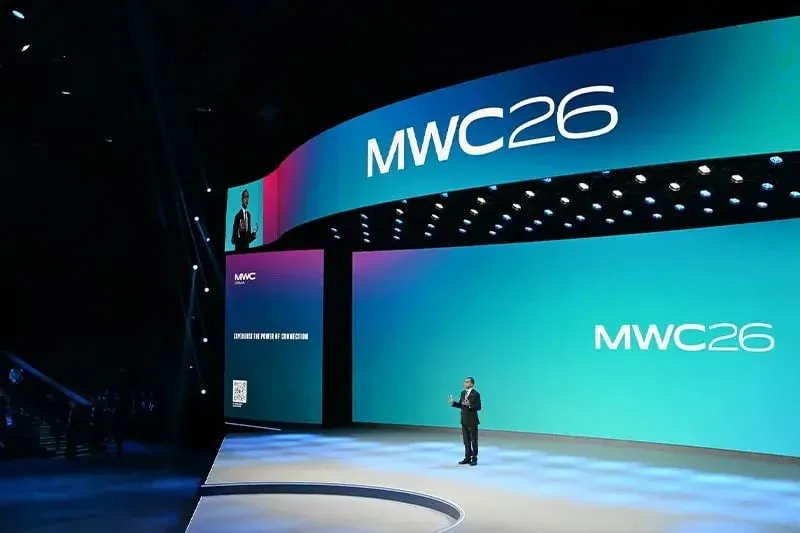
MWC 2026: Day 1 Marks the Dawn of ‘Post-Smartphone’ Devices
The Mobile World Congress 2026 opened its doors on Monday, March 2, in Barcelona (Fira Gran Via) for four days of announcements, demos, and very ‘post-smartphone’ visions.
From the very first day, one thing is clear: the event is no longer just a mobile trade show.
Manufacturers are here to test concepts (modularity, foldable screens, hybrid formats), while the telecom industry escalates its discourse around ‘standalone’ 5G, ‘agentic’ AI applied to networks, with 6G as a backdrop.
The Tone is Set: ‘Complete the 5G’, Industrialize AI, Strengthen Security
From GSMA, the opening came with a clear message: accelerate investments in standalone 5G, make AI more open and inclusive, and treat digital security as a systemic priority. The opening statement also highlighted the report from The Mobile Economy 2026 (economic impact figures, 5G progress, ‘usage gap,’ and the rise of cybercrime costs).
Smartphones: The Year of Serious ‘Foldables’… and Weird Ideas
Motorola Razr Fold: Motorola Moves to a ‘Large Foldable’ as Flagship
Motorola officially detailed its Razr Fold, a ‘book-type’ model clearly targeting the premium segment: a large battery (silicon-carbon), recent Snapdragon chip, fast charging, and a significant focus on photography (50-megapixel main sensor, stabilized 3x optical telephoto, ultra-wide/macro).
The announced European price is very premium, with a strategy of staggered availability depending on the markets.
Honor: A Foldable IP69 and a ‘Robot Phone’ with Motorized Camera Arm
Honor made bold moves on two fronts:
- Magic V6: An ultra-thin foldable, but especially highlighted for its durability, featuring an IP69 certification (a symbolic milestone in the race for foldable durability).
- Robot Phone: A very show-floor concept, equipped with a camera arm that deploys and follows the subject, announced with a 200-megapixel sensor and an ‘AI + tracking’ logic.

Xiaomi: The Photo-Phone in Partnership with Leica, Plus a ‘Leitzphone’ Edition
Xiaomi arrived with the Xiaomi 17 Ultra and a flurry of accessories, putting photography at the center. The manufacturer confirmed a collaboration with Leica (optics/treatments), a very ‘telephoto’ approach (200 megapixels with a variable focal range), and a large battery, all accompanied by other products (tracker similar to AirTag, ultra-thin power bank, smartwatch, and tablet).

In the same spirit, Xiaomi also showcased a co-branded Leica Leitzphone, designed as a ‘photography’ object, featuring Leica interface/filters and a rotating ring reminiscent of a camera.

Nothing: Teasing and Colors, but No Major ‘Day One’ Announcement Yet
Nothing primarily generated excitement around the Phone (4a) (variants and colors), rather than making a massive hardware announcement at the opening.
PCs, Tablets, Gaming: Modularity Becomes a Playground Again
Lenovo ThinkBook Modular AI PC Concept: A ‘Framework-like’ Device with Double Screen
Lenovo showcased a spectacular concept: a laptop that combines interchangeable ports (on-demand, based on usage) and a dual-screen approach (a second OLED panel attached to the back of the lid, with a kickstand). This is the kind of concept typical at MWC: not necessarily ready for commercialization as is, but designed to test the public’s appetite for more ‘plug & play’ modularity.

Lenovo Legion Go Fold Concept: A Foldable Windows Console, Half Console, Half Mini-PC
Another demonstration showcased a Windows console built around a foldable screen, with detachable controllers, that can transform into a small ‘laptop’ via a case/keyboard. It’s a mix of trends (PC gaming console + foldable) that the trade show loves to present.

Honor MagicPad 4: The Ultra-Thin Android Tablet as a Selling Point
Honor also officially introduced a very thin tablet (design argument), the MagicPad 4, featuring a 165 Hz OLED screen and a high-end technical specification, presented as a premium product.

AI ‘in Real Life’: Voice Assistants, Glasses, Operator Services
Deutsche Telekom: An AI Call Assistant + AI Glasses (Concept)
Deutsche Telekom presented a triggerable call assistant (keyword-based), focused on translation, summarization, and especially ‘conversation → action’ transformation (reservation, forms, follow-up). The operator also showcased AI glasses (concept) aimed at hands-free interaction, with real-world recognition and information in the user’s field of vision.
Google Cloud: AI to Automate the Network, Up to Levels 4/5
On the ‘cloud & telco’ side, Google Cloud announced a series of initiatives to promote automation (level 4/5), emphasizing network data (graphs, digital twins, real-time prediction) and collaborations with several operators and partners.
Networks, 6G, Satellite: The First Day Raises the ‘Near Future’ Level
Qualcomm X105: 5G-Advanced Modem with ‘Agentic’ AI, and Gateway to 6G
Qualcomm unveiled its X105 modem, presented as a 5G-Advanced platform integrating AI components on the modem/RF side (handover, radio optimization, network conditions), and designed as a key milestone to prepare for 6G testing phases.

MediaTek: 6G, Edge AI, Automotive, Data Centers
MediaTek also took advantage of MWC to expand its narrative: beyond smartphones, the ambition now reaches towards 6G (with AI), edge AI, automotive, and even data center infrastructure.
Starlink Mobile: V2 to Move Towards ‘Text + Data + Voice + Video’, with DT in the Loop
On the satellite-to-phone front, Starlink detailed the trajectory for ‘Starlink Mobile’, with a V2 generation announced as capable of going beyond just messaging, and a partnership strategy with operators (including Deutsche Telekom mentioned as a European partner).
Trends That Stand Out From Day 1
- Foldables are changing status: we’re no longer just talking about design, but about durability (IP), battery life, photography… in short, product maturity.
- Photography is becoming a premium differentiator again, with almost ‘camera-like’ approaches (200-megapixel telephoto, modes/filters, accessories, special editions).
- Modularity is back (ports, additional screens, hybrid devices), especially in concept form, but with genuine use ideas.
- AI is emerging from apps: it’s being integrated into calls, glasses, and network operations, all with a common obsession: saving time and automating.
- 6G is already present… as a narrative: not as a product, but as a compass influencing announcements (modems, radio AI, satellites, edge).
Conclusion: What to Expect from Days 2, 3, and 4 of MWC 2026
The first day of MWC 2026 set the stage: more ambitious smartphones (especially foldables), AI infiltrating everywhere—from the modem to the call center—and a telecom discourse very focused on standalone 5G, network automation, and the early signs of 6G.
However, as often happens in Barcelona, ‘day one’ is primarily a teaser. Days 2, 3, and 4 should delve deeper into several key areas.
1. More Concrete Product Announcements (and Pricing)
While some brands have already revealed their flagships, we still await:
- Details on European availability and specific timelines.
- Clearer pricing strategies, especially regarding ultra-premium foldables.
- Potential surprises on the mid-range front, a segment often less publicized but crucial in volume.
MWC is also the perfect venue for more in-depth technical demonstrations, far from the meticulously planned keynotes.
2. AI: Beyond Marketing, Measurable Use Cases?
AI is everywhere in the speeches. The real question for the coming days:
- What truly differentiating use cases will be showcased on the booths?
- What concrete integrations with Android, operators, or cloud services?
- What commitments on data protection and sovereignty?
After a very ‘agentic’ 2025, 2026 could mark the transition from promises to industrialization.
3. Networks: 5G SA, Operator APIs, and Preparing for 6G
Discussions should intensify around:
- Network APIs exposed to developers.
- Monetization of standalone 5G.
- The first credible technical building blocks towards 6G (not just prospective slides).
MWC remains primarily a telecom trade show: B2B announcements and infrastructure updates, sometimes less visible in the media, can be strategically critical.
4. The ‘Concepts’ Testing the Future
The concepts revealed on the first day (modular PCs, foldable consoles, robotic-arm phones…) may not be 2026 products, but they provide clues about:
- The new formats manufacturers are exploring.
- The evolution of the hardware–AI relationship.
- The fields of innovation beyond traditional smartphones.
Future days will clarify which are mere technological showcases… and which could genuinely hit the market.
In summary, this first day confirmed that MWC 2026 is no longer just the smartphone show, but the showcase for the entire digital ecosystem: devices, networks, cloud, AI, and satellite.
It remains to be seen, by the end of the week, which announcements will truly define 2026… and which will remain at the demonstration stage.



