

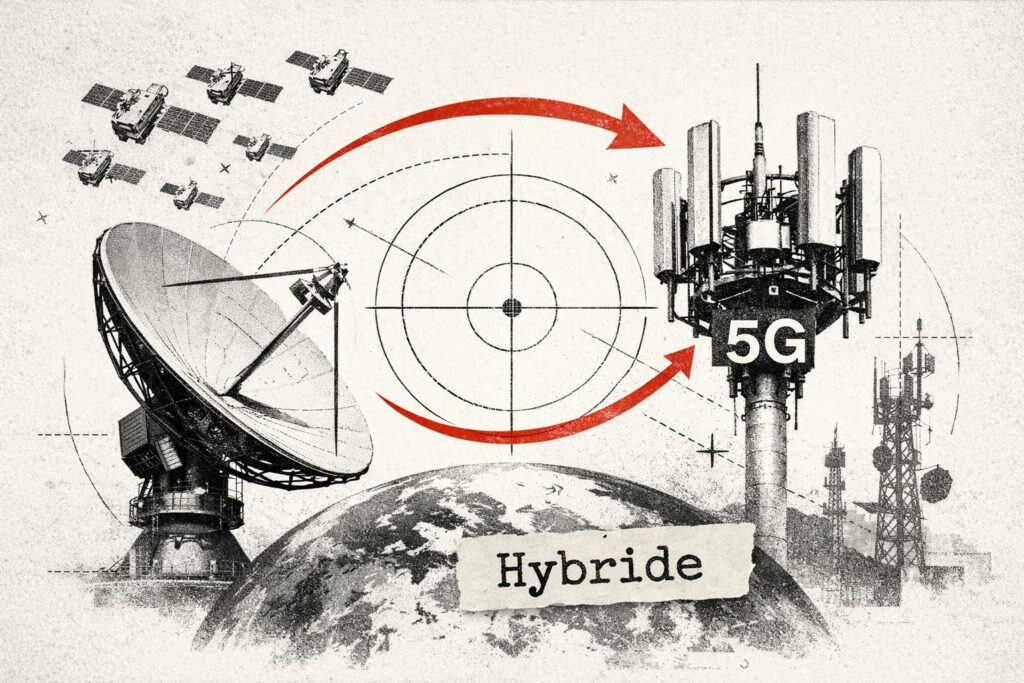
Constellation Group Launches Tyr Networks: A New Frontier in Hybrid Satellite and 5G Connectivity
Constellation Group, a French IT services company with 800 employees and 1,500 clients, has announced the launch of Tyr Networks, a subsidiary focused on hybrid satellite and 5G connectivity. The company also unveiled Tyr One, a unified software platform designed to manage wide area networks (WAN). In an era where satellite technology is transforming into a standard infrastructure, the real value lies not in accessing orbital capacity but in the software layer that orchestrates satellite and terrestrial networks. This is the core mission of Tyr Networks.
The initiative comes at a pivotal time, coinciding with the rush towards mega Low Earth Orbit (LEO) constellations. This unprecedented investment surge in LEO satellites has never been seen before in telecommunications history. Starlink currently operates between 7,000 and 8,000 satellites and has received FCC approval to deploy an additional 7,500 Gen2 satellites. Amazon’s Project Kuiper plans to launch 3,236 satellites, targeting commercial operations by 2026 with user terminals expected to cost around $400 each. Eutelsat OneWeb has secured 1.5 billion euros in recapitalization from the French government in 2025, with its LEO revenues skyrocketing by 60% in the first half of the 2025-2026 period. The company has ordered another 440 satellites from Airbus Defence and Space since January 2026.
Simultaneously, the sovereign European IRIS² constellation, developed under a mandate from the European Commission with Eutelsat as a founding member of the consortium SpaceRISE, is in the rollout phase. The global market value for satellite mega-constellations, estimated at $5.55 billion in 2025, is projected to surge to $27.3 billion by 2032, representing an annual growth rate of 25.5%. This capacity inflation is expected to significantly lower bandwidth and terminal costs, rendering satellite services competitive with fiber in mid-tier segments within two to three years.
Tyr One Leverages SDN Principles for WAN Management
As competition intensifies among various satellite constellations based on price and coverage, the differentiator will shift from merely accessing satellite capacity to the ability to intelligently orchestrate multiple constellations based on performance, cost, and sovereignty constraints. This means overseeing the entire hybrid WAN in real-time and ensuring continuity regardless of the underlying orbital provider. Entities that develop this software layer ahead of satellite commoditization will be well-positioned to capitalize on value. This is the strategic opening that Constellation is creating with Tyr Networks today.
At the heart of this strategy lies the Tyr One platform, which employs Software Defined Networking (SDN) principles across enterprise WANs—integrating LEO satellites, mobile 5G, and terrestrial fiber or DSL connections—managed from a single console. The abstraction of the transport layer allows Tyr Networks to remain operator-agnostic; whether connections are provided by Starlink, OneWeb, or Telesat Lightspeed, monitoring, dynamic routing, sovereign encryption, and operational maintenance are seamlessly managed within Tyr One. The platform boasts a promised availability of 99.99%, with rapid deployment of new sites achievable within 24 hours.
This architecture addresses a significant operational challenge faced by IT managers in multi-site organizations: the numerous monitoring consoles, varied operator SLAs, and differing service levels based on connection types create blind spots in incident detection and lead to extended resolution times, particularly in critical situations. The case of Clarins illustrates this challenge well: a secure satellite connection was deployed at a site without fiber eligibility in less than a week, fully integrating with the company’s information system. Stéphane Louerat, Clarins’ CIO, describes the outcome as “a managed, robust, and agnostic infrastructure.” This is exactly the comprehensive solution that Tyr One aims to deliver at scale.
Satellite Technology Approaches Commoditization
For Constellation, establishing Tyr Networks as an independent subsidiary with Arnault Hugues as president and Yann Belot as CEO signals a strategic intent to build a business that will operate autonomously from the rest of the IT services group’s portfolio. The goal is to double the number of satellite connection points from 1,200 to 2,400 within the first year. This ambitious growth targets significant commercial acceleration, likely fueled by the group’s network of 14 agencies and its existing 1,500 clients.
Sovereign positioning is a key selling point against Starlink’s dominance in the enterprise market. Growing concerns among French and European authorities regarding the use of Starlink in sensitive environments—linked to Elon Musk’s political posture since 2024 and questions surrounding the applicability of U.S. law to data flows through its constellations—create a market opportunity that Tyr Networks is strategically set up to exploit. Characteristics such as French governance, independence from any single constellation, and embedded sovereign encryption within Tyr One address the qualification criteria for vital operators (OIV), essential service operators (OSE), and organizations subject to ANSSI recommendations.
Preparing for the Satellite-Terrestrial Convergence
For CIOs leading network infrastructure transformation plans, the acceleration of LEO deployments alters decision-making parameters over the next 12 to 24 months. The question is no longer whether satellite technology has a place in the enterprise WAN—current market projections and ongoing deployments answer that. Instead, the focus shifts to what hybrid governance architecture to adopt, and what level of sovereignty to maintain over data flows, before upcoming regulations like NIS2 and the European AI Act impose stricter technology choices.
Tyr Networks offers a comprehensive, turnkey solution from design to deployment, operation, and supervision for companies looking to anticipate this convergence without having to internalize hybrid WAN expertise while retaining control over their network infrastructure. In a market where multiple constellations will soon compete directly, long-term value will lie in the orchestration software layer and the ability to switch orbital providers without overhauling the monitoring architecture. This is the promise of Tyr One, and the timing of its launch, coinciding with the rapid democratization of satellite technology, is far more significant than it may initially appear.



