

Apple ‘Experience’ on March 4, 2026: Affordable MacBook, M5 Macs, iPhone 17e, and iPad… What to Expect
Apple has sent out invitations for a “special Apple Experience” on March 4, 2026, featuring a rare twist: three simultaneous press briefings in New York, London, and Shanghai.
Instead of a traditional Apple Park keynote with a livestream, this event will adopt a “hands-on” format designed for attendees to touch, test, and compare products.
This logistical choice signals Apple’s desire to regain control over its spring launch cycle, focusing on highly practical products like Macs, iPads, and potentially entry-level iPhones without the dramatic flair of a global conference.
A Localized Format Reflecting the Goal: Maximizing Hands-On Experience
The term “Experience” and the events scheduled in these three major cities suggest a setup more akin to a showroom than a theatrical performance. Reports indicate that the format is designed to provide direct access to a greater number of devices, possibly showcasing multiple lines simultaneously—which aligns with rumors of a “wave” of refreshes coming in early March.
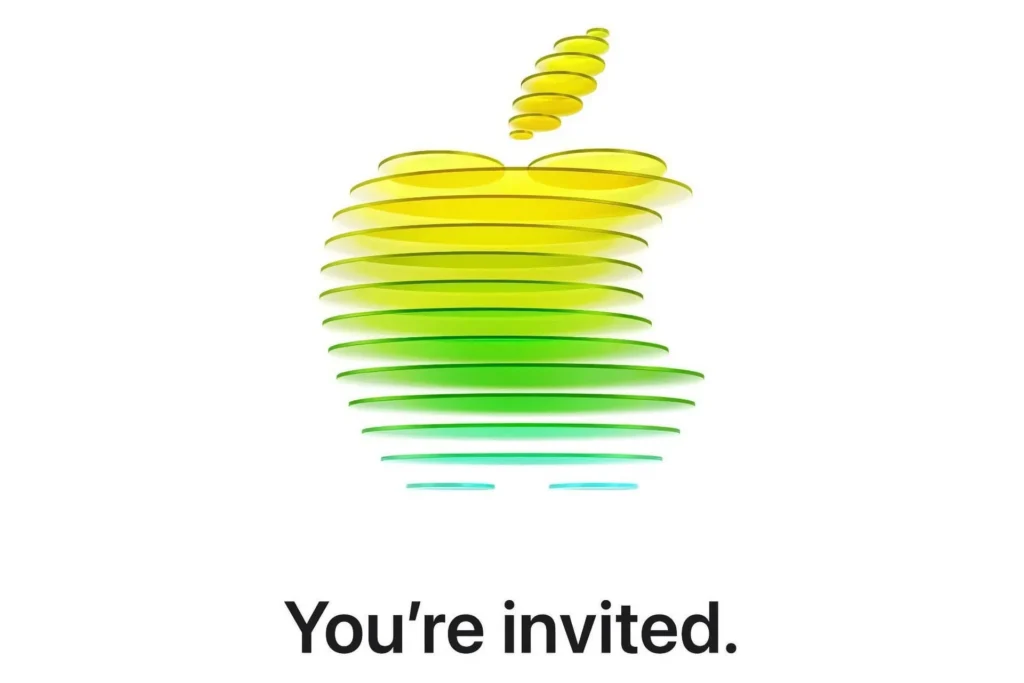
The invitation features an Apple logo composed of yellow, green, and blue circles, hinting further at a colorful, youthful product likely aimed at a volume market.
Macs Take Center Stage: The Prospect of a More Affordable MacBook
The most logical candidate for this multi-city format is the Mac—specifically, the idea of a more affordable MacBook. Reports from various media outlets, attributed to Mark Gurman, suggest that Apple is developing a cheaper model that could potentially run on an A18 Pro chip (more aligned with iPhones than M-series chips), and it may come in brighter, eye-catching colors.

If this “low-cost MacBook” is confirmed, the stakes are significant: Apple aims not just to sell another Mac, but to re-establish its entry-level segment in competition with Windows education PCs and Chromebooks—without compromising on the premium feel (aluminum chassis, high finish, long software support).
In tandem with this, we also expect to see more traditional refreshes:
- MacBook Air M5 (a logical iteration within the Air line),
- MacBook Pro M5 Pro/M5 Max (focused on performance),
- and possibly new Mac displays.
iPhone 17e: The “Value” Card That Fits the Timeline… But Remains Uncertain
The name circulating in iPhone discussions is iPhone 17e. Some market indicators (inventory levels, calendar rumors) point to a forthcoming release, but sources vary in their predictions about the timing—and Apple has demonstrated its capability to launch an “iPhone” quietly without any event.
In the context of an “Experience,” the iPhone 17e could be introduced as a volume product, just like the more affordable MacBook: less spectacle, more hands-on testing, more Q&A.
iPad and iPad Air: A Spring Refresh That Makes Sense and Is Profitable
Rumors are also circulating about iPads:
- An updated entry-level iPad,
- A refreshed iPad Air (often cited with a more recent chip).
For Apple, these are ideal products for a “hands-on” format: improvements can be noticed within 30 seconds (smoothness, display, accessories), and they tend to have longevity through educational and family markets.
Studio Display 2: An Awaited Upgrade (But Not Necessarily “120 Hz”)
Lastly, the Studio Display 2 is back in the rumor mill. Key points include: a refresh rate higher than 60 Hz (with 90 Hz mentioned several times), and an A19 chip to manage camera/audio/processing.
Again, the “Experience” format makes sense here: a display is best sold visually (responsiveness, anti-reflective qualities, rendering), and Apple has everything to gain by offering real tests rather than simply pitching.
Apple Prepares for a “Product” Focused Spring, Not “Show”
March 4 seems less like a grand event and more like a conversion operation: taking potentially numerous, sometimes subtle new products (chips, battery life, displays), and making them immediately desirable through hands-on testing. In a market where AI dominates keynotes, Apple may be opting for the opposite: showcasing tangible hardware and letting the strategy unfold in between the lines.
If the affordable MacBook is indeed the centerpiece, it will also send a deeper signal: Apple is not merely trying to “premiumize” personal computing; it wants to reclaim the entry-level market with its own definition of “budget.”



