

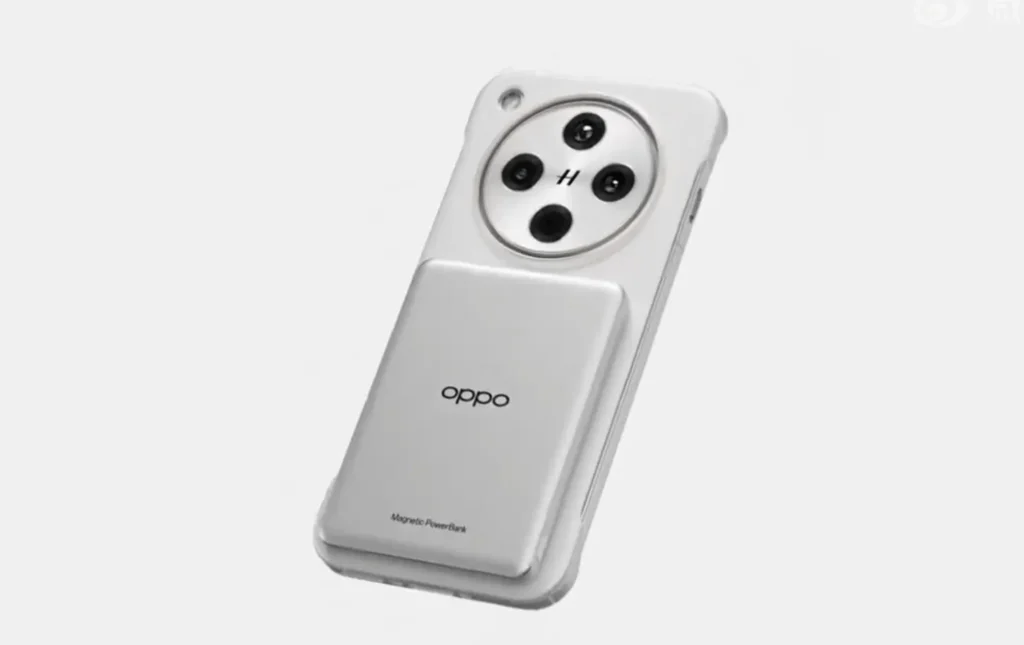
OPPO Find X10: integrated magnets like MagSafe— the practical detail that could change the Android ecosystem
OPPO has yet to launch any campaign for the Find X10, but rumors are already suggesting a surprisingly concrete evolution: magnets built directly into the chassis.
Instead of an increase in megapixels or vague AI promises, this design choice, if confirmed, could make magnetic accessories as seamless on Android as they are on the iPhone.
A Weibo Leak, a Vague Term… and a Very Clear Interpretation
The leaker on Weibo Smart Pikachu mentions the introduction of a “magnetic closure” produced locally in the second half of 2026. Many observers see this as the equivalent of MagSafe, meaning a ring of magnets built into the phone to align chargers and accessories without needing a dedicated case.
At this stage, it is, of course, just a rumor, but the wording and the timeline (H2 2026) align with the expected launch window for the Find X10 in China, often rumored to be around late summer or autumn.
OPPO “Qi2 Ready”: The Frustrating Compromise
The credibility of this claim is amplified by OPPO’s previous flirtation with the idea… without fully committing. On several recent flagships, the brand has communicated magnetic compatibility via accessories, but without native magnets: the solution was to use a proprietary magnetic case.
This is precisely the criticism directed at a segment of the premium Android market today: “Qi2, yes… but only with a case.” The experience becomes less immediate, less “snap,” and less obvious in daily use.
Why Native Integration Matters
Opting for no case isn’t just an aesthetic whim; it provides practical advantages:
- Chargers and external batteries that always position correctly (stable alignment)
- Reliable car mounts without clamps
- Wallet/grip that remains stable
- Fewer charging failures due to improper alignment
Moreover, this integration establishes an ideal foundation to fully utilize the Qi2 logic. Qi2, in its “Magnetic Power Profile” version, is explicitly designed around magnetic alignment—building on the MagSafe technology brought by Apple to the Wireless Power Consortium.
OPPO Could Make an Ecosystem Bet, Not Just a Technical Feature
If there’s one area where smartphones are increasingly similar, it’s in the high-end market. Displays are excellent, chips are comparable, and photo quality often hinges on algorithms. In this context, a material choice that alters daily routines can become a true differentiator.
By integrating magnets “natively,” OPPO would convey three messages:
- To the user: “You can enter a magnetic accessories ecosystem without constraints.”
- To accessory makers: “You can design for us without relying on an official case.”
- To the Android market: “Magnetic isn’t a niche option; it’s a premium standard.”
The paradox is that this seemingly “simple” evolution is also an engineering decision: magnets, coils, interference, thickness, thermal dissipation… everything must align. OPPO has the resources to take this risk, and historically, the brand enjoys material bets that enhance real-life experiences (charging, design, modules).
For now, we await more concrete indications (certifications, official accessories, industrial renderings). However, if the Find X10 truly debuts with integrated magnets, OPPO could catalyze a movement that Qi2 has promised for two years: making magnetic charging and accessories natural on Android, not “conditional.”



