

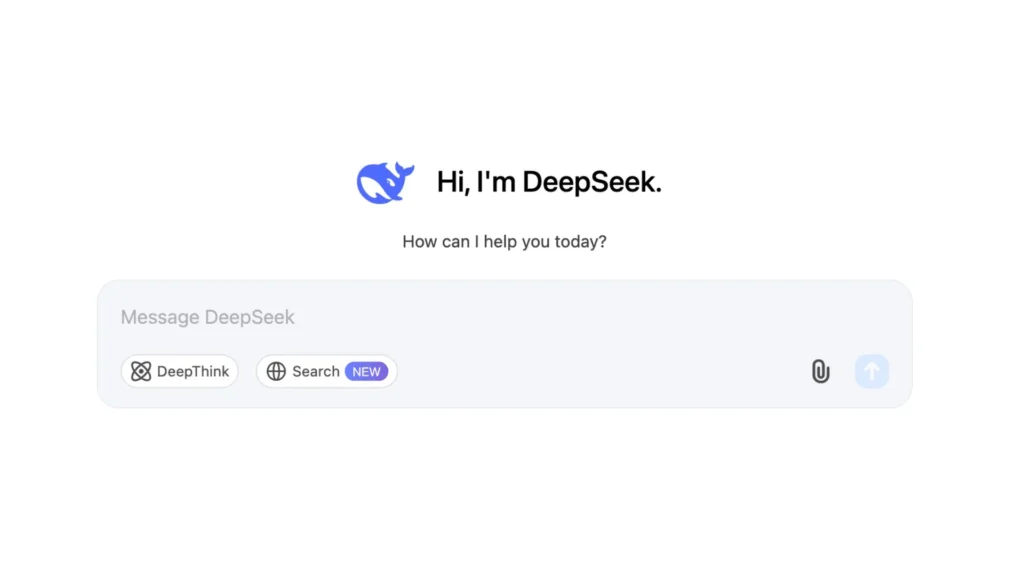
DeepSeek Search: The AI Search Engine Aiming to Challenge Google and Yahoo Scout
DeepSeek appears no longer satisfied with being merely “the impressive model.” According to a series of job postings discovered in January, the Chinese startup is preparing an AI search engine capable of handling multiple languages and multimodal queries — text, images, audio.
In other words, it’s a product designed for real life, where queries often come in the form of… a screenshot, a photo, or a voice note.
The announcements mention the development of a multilingual and multimodal AI search engine, as well as everything that differentiates a demo from a daily-use service: training data, evaluation systems, infrastructure, and even components for “persistent” agents (capable of operating with less human supervision).
This is a significant signal: DeepSeek seems to aim for a search that yields actionable results, not just a list of links. Behind this, agents may follow through: finding information, then acting (summarizing, comparing, filling out forms, making reservations, notifying).
DeepSeek Search: Why Multimodal Changes the Game (Especially on Mobile)
The bet is clear: modern search is no longer just about “keywords.” On smartphones, the most frequent queries look more like:
- “What is this menu/panel/screen bug?” (image)
- “Do you understand what this person is saying?” (audio)
- “What should I do here?” (photo + context)
A multimodal AI search can handle this “native chaos” of reality and generate a direct response — something traditional search engines still struggle with, often turning users into keyword operators.
Why It Matters for Google (and the Entire Market)
Google remains the default destination, but habits are evolving: users want a quick, useful answer in a conversational format, with the possibility for follow-up questions. DeepSeek arrives just as the industry shifts towards the “response engine”: Yahoo has recently launched Scout, an AI engine focused on providing answers, while Google promotes its own conversational modes.
The stakes aren’t just technical. It’s about distribution:
- Will DeepSeek Search become a mainstream website/app?
- Will it integrate as an API within already massive Chinese apps?
- Will it serve as a “search” module in an existing assistant?
This choice will determine whether it challenges Google “from the top” (premium, power users) or “from the mass” (pre-installation, partnerships, super-apps).
DeepSeek, the Precedent R1… and the Focus on Efficiency
This movement seems consistent with DeepSeek’s DNA: shaking up the market by prioritizing efficiency over sheer brute force. In 2025, DeepSeek had already made a significant impact with models touted as highly competitive at lower costs, triggering a ripple effect throughout the AI ecosystem.
And at the end of 2025, the team continued to publish research on efficiency and “agentic” performance, reinforcing the notion of a natural progression towards usage-driven products.
What to watch for now:
- The quality of the responses: AI search rarely fails in “style,” but often in reliability (hallucinations, shaky sources). The mentions of evaluation tools in recruitment are encouraging… but everything hinges on execution.
- The sourcing policy: visible links and traceability, or “black box” responses? (this is crucial in terms of relations with publishers and the open web).
- Persistent agents: if DeepSeek combines search with agents, we transition from a search engine to an operating assistant, which changes expectations… and risks.
- Regulatory pressure: DeepSeek has already been under scrutiny from some regulators regarding security/data issues. Making a public search product inevitably increases exposure.
DeepSeek may not be trying to “kill Google.” However, by preparing a multimodal and multilingual search engine, it aims squarely at the area where Google is most vulnerable: the moment a user wants an answer, not merely a navigation.



