

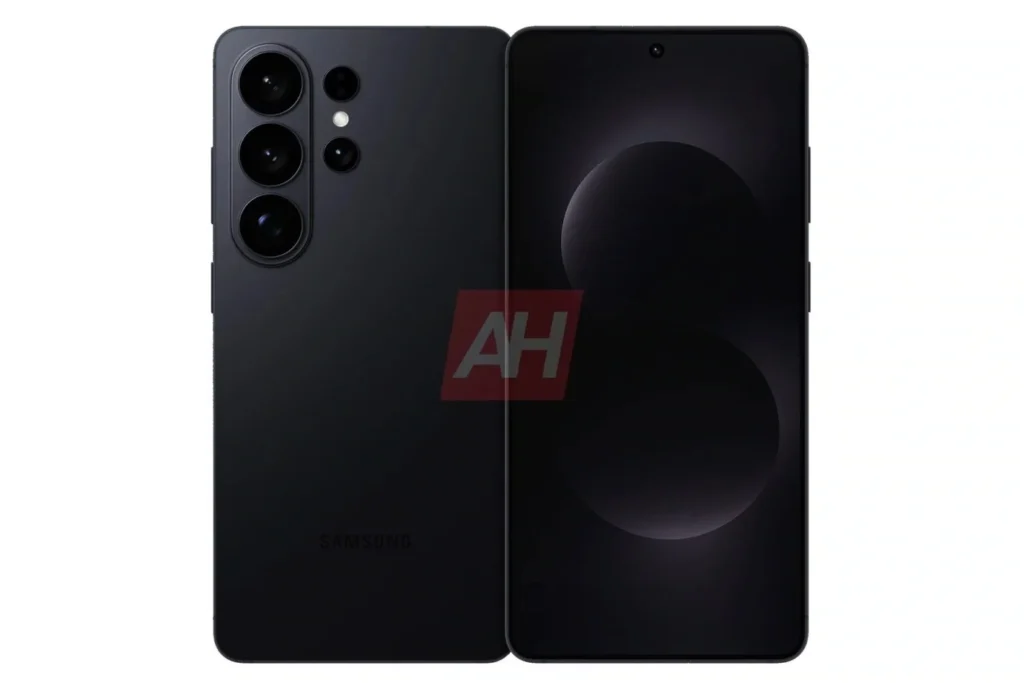
Exynos 2600 vs Snapdragon 8 Elite Gen 5 « for Galaxy » : Le Galaxy S26 Ultra enfin prêt à réconcilier les deux puces ?
Just a few moments after appearing on Geekbench, the Galaxy S26 Ultra begins to tell the story that Samsung navigates with ease yet apprehensively: a “for Galaxy” version of the Snapdragon that performs exceptionally well… while the Exynos tries to bridge the gap, but hasn’t quite managed to turn the tables yet.
The listing discovered (model SM-S948U, indicating a US/unlocked variant) shows scores of 3,466 in single core and 11,035 in multi-core tests on Geekbench 6. In comparison, the Galaxy S25 Ultra typically scores around 3,137/9,769, based on commonly cited results.
The most intriguing aspect isn’t just the significant gain, but rather the context: the chip appears to be underclocked in this test. The metadata suggests 2 cores at 4.19 GHz and 6 cores at 3.55 GHz, while higher frequencies are often claimed for the “standard” Snapdragon.
This implies that these scores may not accurately represent the “final” performance of a retail model.
Samsung Galaxy S26 (SM-S942U) on Geekbench
– Snapdragon 8 Elite Gen 5 (for Galaxy)
>> 6 Cores @ 3.63 GHz
>> 2 Cores @ 4.19 GHz
>> Adreno 840 GPU
– 12GB RAM
– Android 16Galaxy S26 Pro moniker doesn’t exist as per – https://t.co/9cnEUnXhum#Samsung #GalaxyS26… pic.twitter.com/OLoKVuUAPF
— Anvin (@ZionsAnvin) January 12, 2026
Snapdragon 8 Elite Gen 5 “for Galaxy”: Power and Thermal Strategy
The “for Galaxy” label doesn’t always signify maximum frequencies: Samsung may choose a more conservative profile to regulate temperature, consumption, and especially sustained performance. The presence of an underclock in an early benchmark aligns well with this optimization logic (rather than just “winning” a screenshot).
Another detail: listings also indicate 12GB of RAM and Android 16 (likely One UI 8.5), which corresponds to devices still in internal testing, far from final firmware.
What About the Exynos 2600? Numbers Are Close but the Story Is Longer
The most persistent rumor regarding the Exynos 2600 highlights Geekbench scores around 3,309/11,256 points. On paper, this suggests that Samsung has reduced the gap. However, two clarifications prevent hasty conclusions:
- A more advanced fabrication node (often cited as 2 nm for Exynos versus 3 nm for Snapdragon) does not guarantee a raw victory: it all depends on architecture, frequencies, thermal dissipation, and software tuning.
- Geekbench tells us very little about sustained performance (throttling) or real-world efficiency in mixed usage (camera, network, embedded AI). This is often where the “best” chipset is determined.
Implications for 2026: A More Expensive Range and a Battle of Perception
Simultaneously, multiple leaks indicate a launch at the end of February 2026 (commonly dated around February 25) with availability in March, accompanied by rumors of price increases in the range of 30-50 dollars depending on markets.
If Samsung raises prices, the company will not have the luxury of a “two-speed” perception perceived as unfair. Hence, the challenge: ensuring that the Exynos remains “close enough” not to be a marketing liability, even if the Snapdragon maintains an edge in specific scenarios.
In short: the Galaxy S26 Ultra appears set for significant enhancements. However, the real competition won’t be about a solitary score; it will focus on consistency, battery life, thermal management… and Samsung’s ability to make the chip difference negligible in everyday use.



