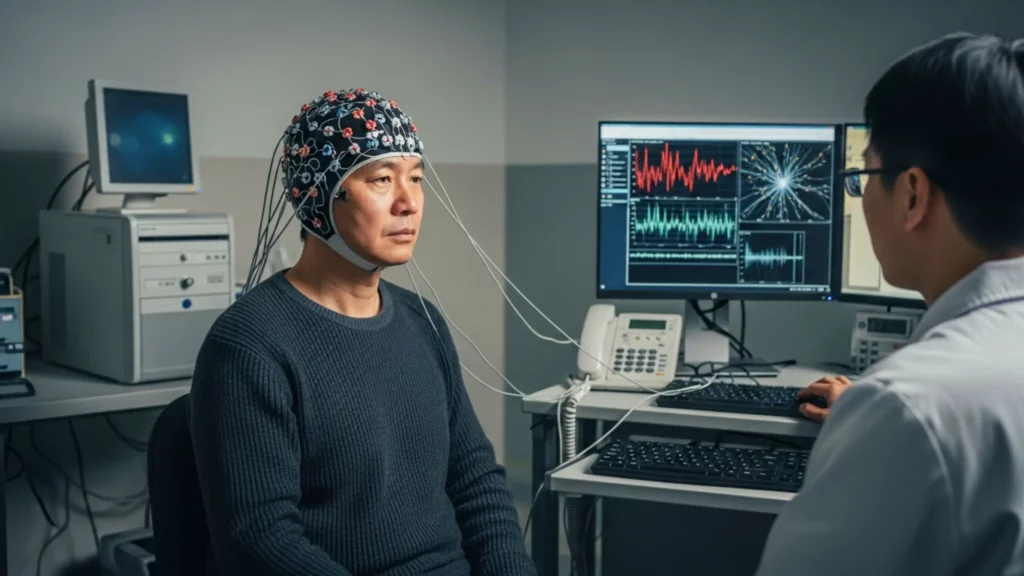
China is developing a structured strategy for brain-computer interfaces, also known as BCIs. These technologies capture and analyze brain activity and are primarily used for medical, industrial, and risk prevention applications.
A detailed government roadmap aimed at structuring a complete Chinese brain-computer interface sector
Brain-computer interfaces are being researched in several countries. For instance, American companies are already working on neural implants. In China, seven government departments have published a coordinated government plan to structure a national sector dedicated to emerging technologies.
This document outlines technical and industrial objectives for 2030, with intermediate milestones set for 2027. Additionally, it includes the development of advanced electrodes, specialized algorithms, common standards, and large-scale production capabilities.
Several Chinese companies are already participating in the program, including NeuroXess and NeuCyber NeuroTech, which are conducting supervised clinical trials. These trials enable patients to control digital interfaces, facilitating the restoration of certain communication functions.
Medical applications focused on rehabilitation and disability compensation, with regulatory and data considerations
The medical applications of brain-computer interfaces are the primary focus of development. These devices assist patients with paralysis or motor disorders by translating neural signals into actionable commands.
The interfaces allow control of computers or prosthetics and support assistive communication systems. They also contribute to neurological rehabilitation and functional compensation following accidents or specific medical conditions.
However, the use of these technologies necessitates the collection of sensitive neural data. Official documents reference a regulatory framework and mention standardized clinical protocols for data protection, though they do not detail oversight mechanisms.
Non-medical uses oriented towards industrial safety, accident prevention, and physiological status monitoring
Beyond the medical field, the government plan describes applications related to industrial safety and professional risk prevention. Brain-computer interfaces could be used for analyzing the physiological signals of operators, helping to identify fatigue or inattention.
These devices are relevant to sectors exposed to critical industrial infrastructure, such as energy or mining. Furthermore, documents mention implants and external sensors integrated into wearable equipment aimed at providing early warnings.
Technological development observed internationally in a context of scientific and industrial competition
The development of brain-computer interfaces in China is being monitored internationally. This trend is part of a global scientific and industrial competition, particularly concerning advanced technologies and artificial intelligence, with increased investments in advanced technologies.
Chinese authorities are mobilizing public and private resources to support research and industrialization. Meanwhile, on a global scale, these technologies raise discussions about their regulation, use, and data practices in medical applications.