

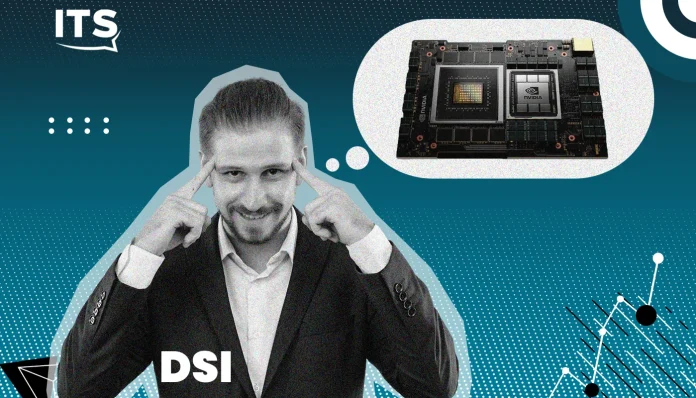
The ongoing pressure on semiconductors, rising memory prices, and the accelerating investments in AI are disrupting the traditional supply mechanisms relied upon by IT departments. The prevailing forecasts paint a troubling picture: the industry and its distribution networks can no longer guarantee the balance of price and availability. This scenario necessitates a reevaluation by IT leaders who must consider stock management, contractual security, and source diversification from a fresh perspective, sometimes counterintuitive.
The global semiconductor market is currently experiencing a paradox. While industry statistics show historic growth, this expansion is predicated on a continual tension between supply and demand. According to the latest projections from the World Semiconductor Trade Statistics (WSTS), the market is expected to grow by over 20% in 2025, reaching approximately $772 billion, and nearing $975 billion in 2026. However, beneath these impressive figures lies a harsher reality for IT departments. The most strategic segments, particularly memory and AI-related components, remain structurally constrained. For IT leaders, the pressing question is no longer theoretical: how can they secure prices and availability in a market where stakeholders themselves acknowledge the permanence of these pressures? Is a return to stockpiling, at least partially, necessary?
The WSTS indicates that the growth dynamics of the global market are primarily driven by memory and logic chips, with expected increases of around 28% and 37% respectively in 2025. The Semiconductor Industry Association also emphasizes that total revenue continues to grow by more than 20% year over year. This acceleration reflects the substantial impact of AI industrialization and the central role of data centers, but it also exposes a structural imbalance. Demand is outpacing the actual available production capacity in certain critical categories.
Rising Prices and Pressured Availability
This tension is not just a theoretical projection made by external analysts; it is explicitly acknowledged by the manufacturers themselves. Micron Technology, a leading global player in DRAM and NAND memory, indicates in its financial communications that challenging market conditions are expected to persist beyond 2026. While the company anticipates a 20% increase in its memory shipments in 2026, this will not eliminate the gap between demand—particularly that driven by AI data centers—and the actual available capacity. Micron even notes that their DRAM production may only meet 50% to 66% of the needs expressed by their key clients, representing a particularly rare and explicit industrial warning.
These industrial announcements have direct and measurable consequences. When manufacturers state that they can only meet between half and two-thirds of the DRAM demands from their strategic partners, it inevitably leads to price pressures, unfavorable trade-offs for certain customer segments, and extended supply timelines. Several industry reports already suggest marked price increases for server memory and next-generation modules, with double-digit hikes anticipated over the coming quarters and additional growth expected in the medium term.
Another relevant phenomenon is the prioritization of industrial capacity. An increasing share of global DRAM production is now allocated to meet the needs of data centers and AI environments. The WSTS notes that the memory segment is becoming a key driver of the market, precisely because it is heavily demanded for these advanced applications. As a result, more traditional segments—including equipment renewal, hybrid infrastructures, and workstations—face intensified competition for the remaining available volumes. This dynamic contributes to ongoing pressure on both pricing and availability.
A Rapidly Growing Yet Inherently Unstable Market
The overarching message from industry organizations is clear: while the market is advancing quickly, it is doing so out of balance. The trajectory towards nearly $1 trillion in revenue by 2026 is not accompanied by any returned fluidity. On the contrary, it reveals a constrained industrialization, where every additional point of capacity released by manufacturers is quickly consumed by AI projects and cloud infrastructures. The WSTS underscores that growth is concentrated in memory-intensive segments, confirming that the current tensions are not just a short-term anomaly but a direct consequence of a profound transformation in digital usage.
For IT departments, these quantifiable realities change the nature of management. The implicit assumption that the industry’s growth would automatically stabilize prices and reduce lead times no longer holds true. When industry players announce partial availabilities and when official projections indicate demand for memory will outstrip supply at least until 2026—and potentially beyond—continuity in IT projects can no longer rely solely on the premise of a fluid market. IT leaders must now view volatility as a structural variable rather than a transient phase.
What IT Leaders Must Organize in Response to Market Instability
This new reality confronts IT departments with significant operational trade-offs. Significant cost increases for certain families of components, potential delays, and the very real risk of not obtaining timely resources needed for AI, cloud, or infrastructure modernization projects demand a transformation of supply governance. It is no longer sufficient to deal with a temporary strain; instead, there is a need to sustainably organize operational resilience in the face of an inherently unstable market.
To Stock or Not to Stock
This context imposes three particularly structured requirements. First, budgeting must be able to accommodate high and volatile price scenarios, with built-in financial safety margins from the outset. Next, a more strategic contractual management approach is needed, based on multi-year commitments, volume security clauses, and a genuine diversification of suppliers to avoid critical dependencies. Finally, an active material anticipation policy should be implemented, which includes targeted stockpiling of critical components that are slow to obtain as industry figures confirm that availability will remain partial and prioritized. In other words, IT departments no longer wait for the market to stabilize; they equip themselves to operate sustainably in an environment where constraint becomes the norm.
The available data suggests a balanced yet pragmatic stance. On one hand, WSTS projections and industry communications indicate that tensions surrounding memory and certain critical segments will not dissipate quickly. The figures speak for themselves: a global market valued at $772 billion in 2025, with nearly $975 billion expected in 2026, but a memory capacity that remains inadequate to meet all demand, with manufacturers openly admitting they can only fulfill 50% to 66% of the DRAM requests from their clients.
On the other hand, building massive inventories would remain economically risky and potentially counterproductive. Therefore, the most robust approach involves combining targeted safety stock of critical and hard-to-obtain components with tailored contractual agreements and a reasoned diversification of supplies. In a market where growth is now accompanied by instability, organizations that can align material anticipation with contractual security and architectural flexibility will undoubtedly enjoy a competitive edge.



