

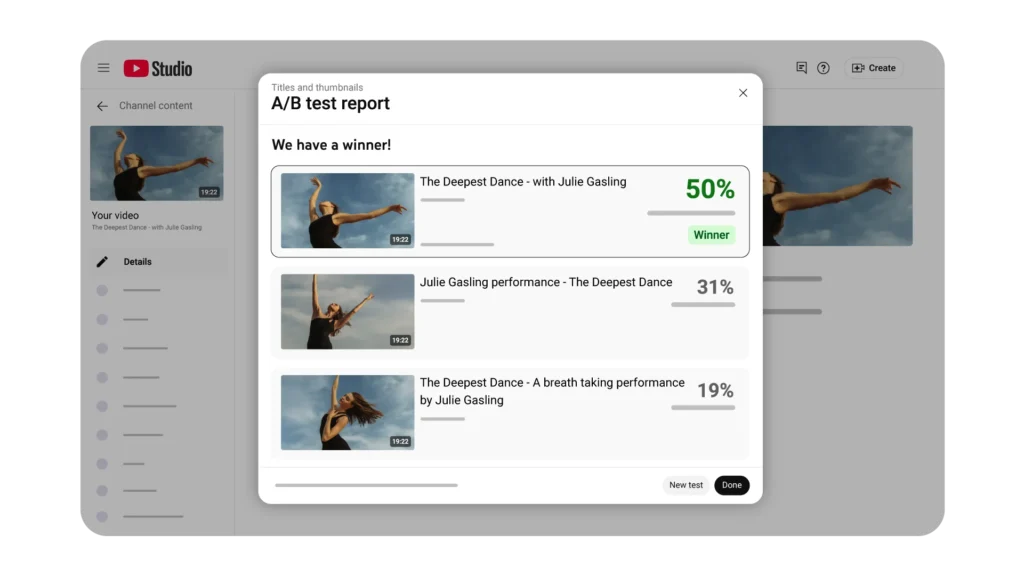
YouTube allows A/B testing of multiple titles for a single video
YouTube has rolled out one of its most significant updates for creators: the ability to test multiple titles for a single video. After a limited phase with a small group in July, this feature is now available to all creators utilizing the advanced features of YouTube Studio.
It’s official: the title of your video is no longer fixed, and YouTube will help you choose the one that truly attracts viewers.
Up to three titles in competition — and YouTube chooses the winner
Creators can now propose up to three titles, or combinations of title + thumbnail, which YouTube will fairly test with viewers for a duration of up to two weeks. The winning combination, which generates the most watch time, will be applied automatically.
The key criterion is thus the watch time, not clicks. YouTube aims to avoid “clickbait” titles that lead to quick backtracking. If no clear result emerges, YouTube simply reverts to the original combination.
Good news: creators can ignore the result and manually apply their preferred version.
Thumbnails + titles: YouTube creates a true optimization laboratory
Previously, YouTube Studio primarily allowed testing of multiple thumbnails (A/B testing), a feature that has become essential for professional channels. With the introduction of title testing, YouTube finally completes the equation.
Title + thumbnail = the most important duo in YouTube marketing. This new tool moves the platform closer to a genuine “Ads Manager” for creators…but applied to organic content.
Current limitations
This feature is currently restricted to the desktop version, usable only on long public videos, livestream archives, and podcast episodes, but it is not available for “Made for Kids” videos or adult-restricted content.
On paper, it’s a small feature, but it represents a significant transformation in the creation logic.
Why? The title is no longer a gamble: it becomes a science. Furthermore, by automatically selecting the version that maximizes watch time, YouTube encourages creators to optimize for content quality, not just clicks. Additionally, the platform diminishes the advantage held by large teams. Until now, only professional studios performed title testing through private uploads, reuploads, external testing, or social monitoring. Now, even a solo creator can compete on the same level.
Finally, YouTube continues to differentiate itself from TikTok. Where TikTok relies on raw flow and immediacy, YouTube is increasingly establishing itself as a professional platform for premium creators. The competition between formats remains fierce, but in terms of tools… YouTube is taking a solid lead.
And by 2026, optimizing content will no longer just happen in editing…but right from the first line: the title.



