

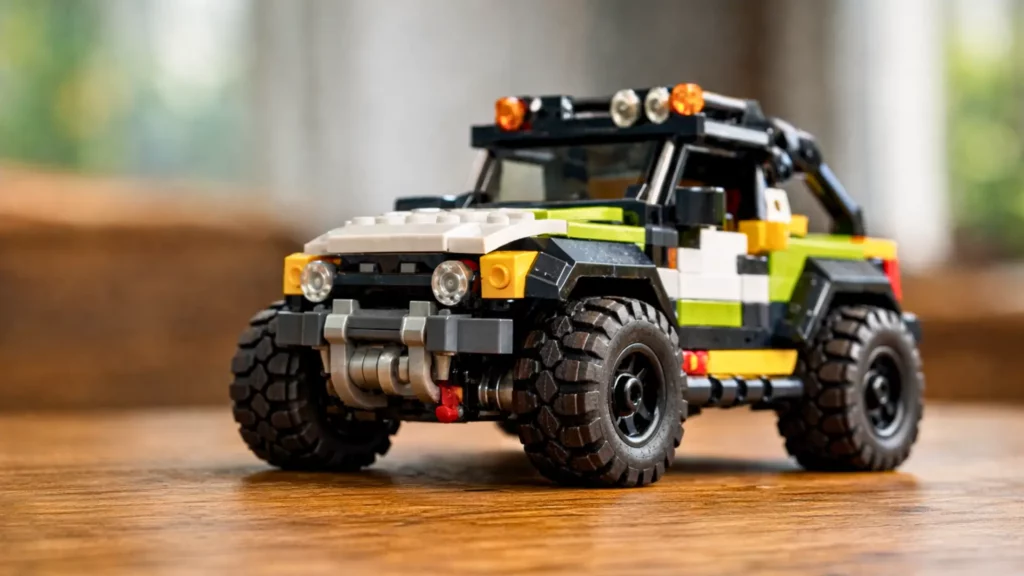
With over 300 million units produced each year, LEGO quietly surpasses the giants of the tire industry. As we enter 2026, the Danish group is accelerating its ecological transition. Its new recycled tires are already present in dozens of boxes.
Every year, LEGO produces over 300 million miniature tires in 65 different sizes
LEGO doesn’t just produce colorful bricks. The company also manufactures over 300 million tires each year, offering these pieces in 65 different sizes, from motorcycles to all-terrain trucks. As a result, it surpasses traditional manufacturers in overall volume.
However, behind these numbers lies a significant environmental challenge. Production relies on energy-intensive processes, and the end-of-life for toys raises concerns. Many end up in landfills, aggravating the overall environmental impact of plastic.
In response to the climate emergency, the group launches tires made with over 30% recycled materials
To address these criticisms, LEGO is now rolling out tires composed of over 30% recycled materials. The company recovers used fishing nets, marine ropes, and some treated oils, transforming these materials into a new high-performance polymer.
This material, known as rSEBS, retains the properties of conventional rubber but reduces dependency on fossil resources. The teams have conducted several years of research and now ensure compliance with quality and safety standards.
Since the end of 2025, this next-generation tire has been included in approximately 120 sets, with deployment accelerating in 2026. Thus, the brand is gradually integrating this innovation into its flagship lines, maintaining a seamless play experience for users.
A clear objective: transition to renewable and recycled materials by 2032
This shift is merely a step. LEGO has set a clear goal: to achieve a 100% sustainable range by 2032. The company aims to incorporate more renewable materials throughout all its products, not just in tires.
In parallel, the group is exploring alternatives for its iconic bricks. It’s testing a plant-based polyethylene sourced from sugarcane. This comprehensive strategy seeks to reduce the carbon footprint across the entire production chain.
Why this strategy could redefine the toy industry and influence its competitors
By focusing on a seemingly minor component, LEGO sends a strong message. The company demonstrates that a major player can transform its industrial volumes. This gradual transition sets a precedent in an industry historically reliant on virgin plastic.
Additionally, pressure mounts on competitors. Consumers demand greater transparency, and retailers are already valuing responsible products. In this context, LEGO’s approach becomes a driving force for industry innovation and a powerful commercial argument.
Finally, this change enhances the group’s credibility with investors and families. The brand thus strengthens its responsible image. With these new recycled tires, it shows that even a small piece can embody significant industrial transformation.



